CM Dhami Charts Uttarakhand's Road to 2047 at Raibar Summit
Synopsis
Chief Minister Pushkar Singh Dhami addressed the 'Raibar Uttarakhand @26: Mission 2047' summit in Dehradun, detailing the state's development model spanning UCC, House of Himalayas branding, sports infrastructure, and horticulture — all anchored to the Viksit Bharat 2047 vision.
Key Takeaways
Raibar Uttarakhand @26: Mission 2047 was held at the IRDT Auditorium, Dehradun on 15 November 2026 , convening intellectuals, educators, entrepreneurs, and civil society.
Uttarakhand enacted India's first post-independence Uniform Civil Code in February 2024, covering marriage/divorce registration, a ban on polygamy, and women's rights protections.
The House of Himalayas brand, launched around 2023, unifies marketing for products from SHGs, farmers, and women entrepreneurs to access national and international markets.
Hosting the 38th National Games showcased the state's sports infrastructure; a new sports policy links medal-winning athletes to government service opportunities .
The Apple Mission promotes modern apple cultivation to raise farmer incomes, backed by a broader push into medicinal plants and aromatic crops.
CM Dhami framed the 2047 goal as encompassing social justice, women's empowerment, youth opportunities, healthcare, and environmental conservation — not just economic growth.
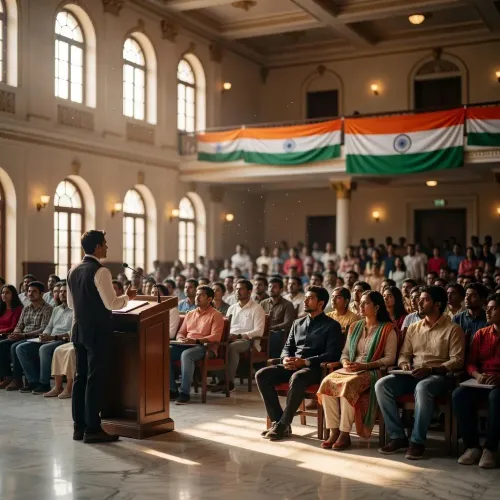
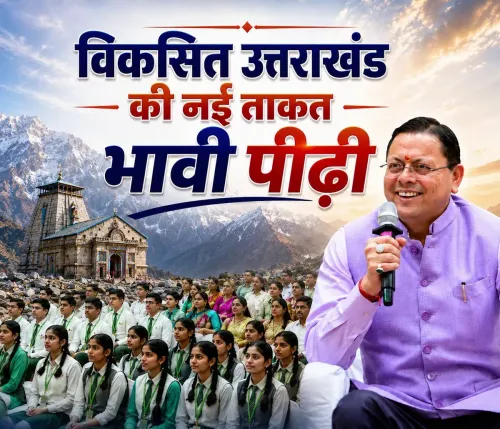
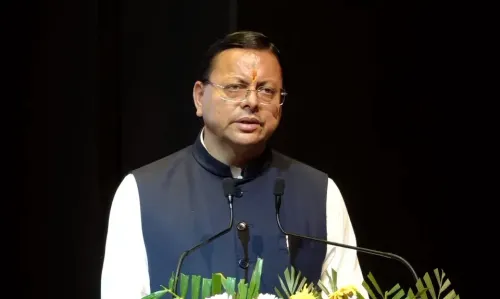
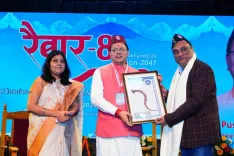
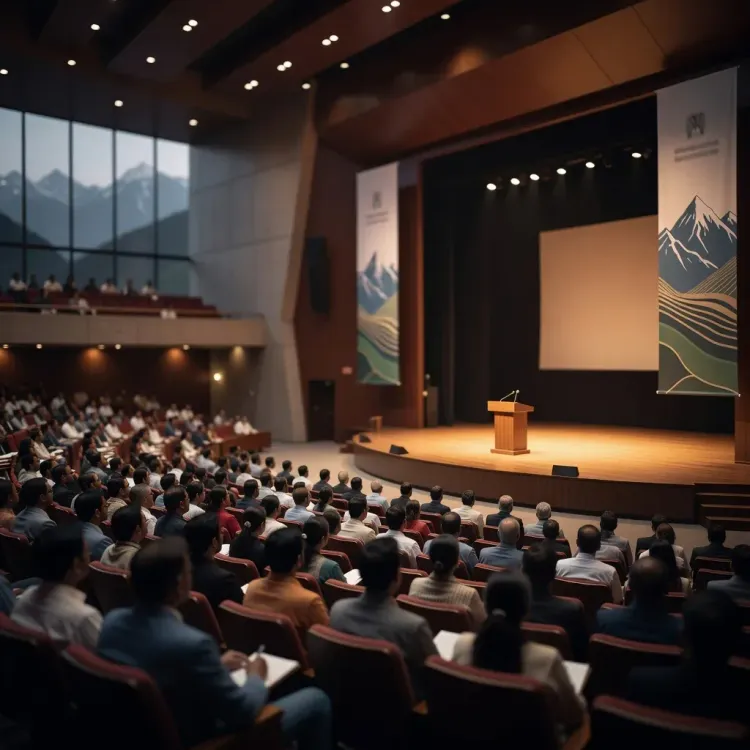
A packed auditorium in Dehradun, a Chief Minister on the dais, and a question on every intellectual's lips: what does a 'developed Uttarakhand' actually look like by 2047? Chief Minister Pushkar Singh Dhami answered that at the 'Raibar Uttarakhand @26: Mission 2047' programme held at the IRDT Auditorium, Dehradun on Sunday, 15 November 2026, engaging a room full of academics, entrepreneurs, social workers, and citizens in a wide-ranging dialogue on the state's development blueprint.
Development that reaches the last person in line
Dhami opened with a framing that sets the tone for everything his government is building toward: development cannot stop at GDP. 'The goal of a developed Uttarakhand is not limited to economic progress alone,' he said, listing social justice, women's empowerment, youth opportunity, better education and healthcare, strong infrastructure, environmental conservation, and a strengthened local economy as equally non-negotiable pillars. The model, he stressed, must be tailored to Uttarakhand's unique geography, culture, and social conditions — and its benefits must reach, in his words, the last person in society (समाज के अंतिम व्यक्ति). The framing directly echoes India's national Viksit Bharat 2047 framework, which sets the centenary of independence as a horizon for inclusive, high-quality growth.
UCC: What Uttarakhand's historic first actually means on the ground
Uttarakhand made national history when its Assembly passed the Uniform Civil Code (UCC) Bill in February 2024 — the first Indian state to enact such a law after independence. At Raibar, Dhami walked the audience through how the legislation was built: consultations with legal experts, stakeholder groups, social organisations, and ordinary citizens before a draft was finalised and the full legislative process completed. The UCC's core purpose, he said, is to guarantee equal rights and an equal legal framework for every citizen regardless of religion or personal law.
Practically, the code introduces streamlined registration of marriages and divorces, a ban on polygamy, and strengthened protections for women's rights. Dhami described it as 'an important step toward strengthening women's honour, dignity, and self-reliance' — a signal that the government frames the reform as a gender-equity measure at least as much as a legal-uniformity one.
House of Himalayas: Putting Uttarakhand's forests and fields on the global shelf
The Chief Minister highlighted the House of Himalayas brand — launched around 2023 — as the state's bid to turn local produce into a globally recognised identity. The initiative consolidates production, quality standards, packaging, marketing, and market access for products from self-help groups (SHGs), farmers, women entrepreneurs, and local producers under a single umbrella brand. Dhami said the platform is generating new employment and self-employment in rural areas while giving producers a better price for their goods — a direct answer to the decades-old problem of middlemen eroding hill farmers' margins.
38th National Games and the new sports policy
Uttarakhand's hosting of the 38th National Games earned a prominent mention as evidence of the state's rising organisational and infrastructure muscle. The CM called it 'a great achievement that displayed the state's sports capabilities, infrastructure, and organisational efficiency at the national level.' A new sports policy is now directing investment toward playgrounds, stadiums, and training centres across the state. Notably, athletes who win medals at national and international competitions will now be eligible for government service positions — a concrete incentive designed to keep talented young athletes from leaving the state.
Apple Mission and the horticulture bet
Rounding out the development picture, Dhami spoke about agriculture and horticulture — sectors where the mountains are an asset, not an obstacle. Uttarakhand's terrain is naturally suited to high-value fruits, medicinal plants, and aromatic crops. The state's Apple Mission is specifically promoting modern apple cultivation techniques to lift farmer incomes beyond what traditional crops allow. The government is actively steering farmers toward higher-yield, higher-income alternatives while preserving traditional practices.
Raibar 2047 was not a press conference — it was a public intellectual reckoning with what the next two decades must deliver. The harder test, as always, lies in converting auditorium commitments into hill-district realities.
Point of View
With the UCC enactment already giving Uttarakhand an outsized national profile disproportionate to its size. The bundling of gender-equity (UCC, women's SHGs), rural economy (House of Himalayas, Apple Mission), and youth engagement (sports policy, National Games) into a single development narrative is a deliberate political architecture — it broadens the constituency for the BJP-led state government beyond any single reform. The critical variable is last-mile delivery: Uttarakhand's dispersed hill geography has historically diluted even well-designed welfare schemes, and the gap between Dehradun auditorium commitments and remote district realities will define the government's legacy heading into the centenary year.
NationPress
15 Nov 2026
Frequently Asked Questions
What is Raibar Uttarakhand @26: Mission 2047?
It is a dialogue programme organised by the Uttarakhand government where Chief Minister Pushkar Singh Dhami engaged with intellectuals, academics, entrepreneurs, and citizens to discuss the state's development vision for 2047, aligned with India's Viksit Bharat 2047 framework.
Is Uttarakhand's Uniform Civil Code actually in force?
Yes. The Uttarakhand Assembly passed the UCC Bill in February 2024, making it the first Indian state to enact a Uniform Civil Code after independence. It covers marriage and divorce registration, bans polygamy, and strengthens women's legal rights.
What is the House of Himalayas brand?
House of Himalayas is a state government branding initiative launched around 2023 to market local Uttarakhand products — from SHGs, farmers, and women entrepreneurs — under a unified umbrella brand with improved packaging, quality standards, and access to national and international markets.
What is Uttarakhand's Apple Mission?
The Apple Mission is a state horticulture programme promoting modern apple cultivation techniques suited to Uttarakhand's mountainous terrain, aimed at raising farmer incomes beyond what traditional crops provide.
What benefits do athletes get under Uttarakhand's new sports policy?
Under the new sports policy, athletes who win medals at national and international competitions are eligible for government service positions. The policy also provides training support, financial assistance, and improved sports infrastructure including stadiums and training centres.