Uttarakhand CM lays out farm, jobs and tourism agenda
Synopsis
Uttarakhand's Chief Minister detailed a multi-sector push covering apple cold-chain infrastructure, the Mahak Kranti aromatic-crop policy, stricter recruitment laws for youth, Char Dham and Manaskhand tourism upgrades, border-village development, and lessons from the 2023 Silkyara tunnel rescue.
Key Takeaways
Post-harvest apple logistics programme promotes pack houses and controlled-atmosphere storage to raise farm-gate returns for Uttarakhand growers.
Mahak Kranti Niti targets lemongrass, mint, damask rose and cinnamon cultivation with integrated processing and market-linkage support.
High-value crops including kiwi, mushrooms, polyhouse vegetables and off-season produce are being promoted on limited hill land to raise incomes.
A strict anti-cheating law now governs recruitment exams; multiple self-employment schemes including the Mukhyamantri Saur Swarozgar Yojana target rural youth.
Manaskhand Mandir Mala Mission connects ancient Kumaon temples with improved roads to broaden pilgrimage tourism beyond the four Char Dham shrines.
The Silkyara tunnel rescue of November 2023 , which saved 41 workers , was cited as a model of state-central coordination under crisis conditions.
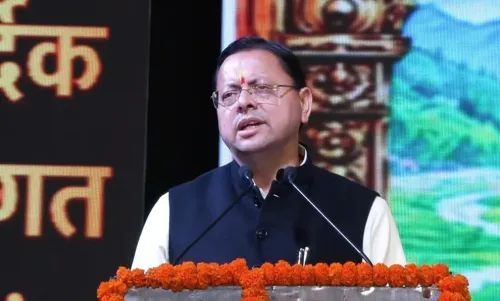
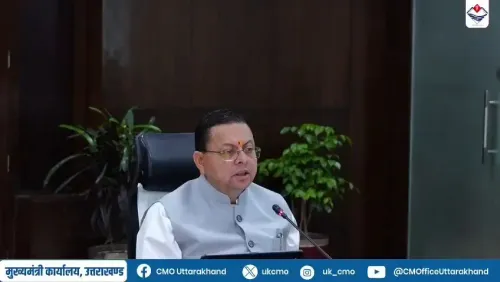
From apple orchards in the high Himalayas to border villages that once hemorrhaged population, Uttarakhand Chief Minister's Office on Sunday, 15 November 2026 shared a wide-ranging policy address by the Chief Minister that maps out the state's economic playbook — linking post-harvest cold chains, aromatic-crop revolution, anti-cheating laws, and pilgrimage upgrades into a single, ambitious narrative.
Apple orchards get a supply-chain overhaul
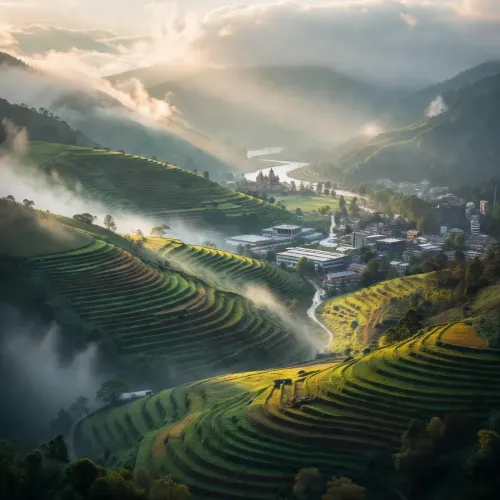
At the heart of the agriculture push is a simple diagnosis: Uttarakhand's hill farmers grow good apples but lose value at every downstream step. The Chief Minister said the state is investing in high-quality saplings, intensive horticulture, modern irrigation and the physical infrastructure orchards need — but crucially, is extending that investment beyond the farm gate. Pack houses, controlled-atmosphere storage centres, grading lines, packaging units and cold-transport links are all being promoted under a post-harvest apple logistics programme, with the explicit aim of ensuring farmers capture more of the final price.
Kiwi, mushroom cultivation, polyhouse vegetable farming, beekeeping and off-season vegetables are also being pushed as high-value options for landholdings that are often just a few terraced bighas — a recognition that income growth on hill land must come from yield quality and diversification, not acreage expansion.
Mahak Kranti Niti: the scent of a second income stream
The Chief Minister's most distinctive agricultural pitch was for the Mahak Kranti Niti — literally the 'Fragrance Revolution Policy' — which targets a belt of aromatic and medicinal crops suited to Uttarakhand's altitude and climate. Lemongrass, mint, damask rose (Damask gulab), cinnamon and other fragrant varieties can, the CM argued, generate supplementary earnings for households already growing food crops. But the policy goes further than cultivation: the state is building out oil-extraction units, processing lines, packaging facilities and market linkages in partnership with farmers, entrepreneurs and research institutions. Aromatic crop economies have transformed incomes in pockets of Himachal Pradesh and Jammu; Uttarakhand is betting it can replicate that trajectory at scale.
Stricter exam rules and self-employment schemes for restless youth
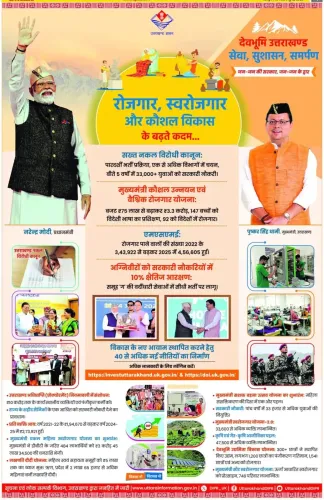
Unemployment and out-migration are perhaps the state's most stubborn political wounds. The Chief Minister addressed both frontally. On government jobs, he pointed to a strict anti-cheating law now in force — with hard provisions against irregularities in recruitment examinations — as the foundation of a credible, merit-based hiring process. The message to aspirants: the system is being cleaned up.
On self-employment, the state is running several named schemes in parallel: the Mukhyamantri Swarozgar Yojana, the Mukhyamantri Saur Swarozgar Yojana (solar-linked livelihoods) and the Veer Chandra Singh Garhwali Paryatan Swarozgar Yojana for tourism ventures. Add skill-development programmes, MSME and start-up incentives, agri-processing units and IT sector outreach, and the CM's argument is that rural districts need not export their young people to the plains — if local resource-based enterprise is catalysed deliberately.
Char Dham, Manaskhand temples and year-round pilgrimage
Tourism is the third pillar. The Chief Minister reaffirmed the state's commitment to making the Char Dham Yatra — the annual circuit to Yamunotri, Gangotri, Kedarnath and Badrinath — safer, smoother and better serviced through reinforced roads, drinking-water supply, healthcare posts and traffic management. A parallel bet on winter travel promotion aims to end the sharp off-season revenue cliff that leaves mountain towns quiet for half the year.
He also highlighted the Manaskhand Mandir Mala Mission, which is upgrading ancient temples and sacred sites across the Kumaon region with improved access roads and visitor amenities — a programme designed to distribute pilgrimage economics beyond the four main shrines and seed local trade and employment in smaller hill towns.
Silkyara: a rescue that defined inter-agency coordination
The CM revisited the Silkyara tunnel disaster in Uttarkashi — the November 2023 collapse that trapped 41 workers underground for more than two weeks — as a defining test of his administration. He described the operation as the state's highest-priority response, run in continuous coordination with the central government, NDRF, SDRF, the Army and multiple technical specialists. All 41 workers were brought out safely. The CM framed the rescue not as a closed chapter but as proof of what state-centre coordination and administrative sensitivity can achieve under extreme geographic and technical pressure — a standard, he implied, the state intends to hold itself to.
The agenda the Chief Minister has laid out is vast. The test, as always in hill-state governance, is execution speed — whether cold-chain infrastructure reaches apple growers before the next harvest, whether anti-cheating laws translate into clean exam cycles, whether Manaskhand's temples draw pilgrims before budgets shift. Uttarakhand has the vision on paper; the mountains will grade the delivery.
Point of View
So it must grow through value-chain depth and crop diversification — a logic that underpins both the apple logistics programme and the Mahak Kranti aromatic-crop push. Pairing that with stricter recruitment integrity signals an attempt to retain educated youth who might otherwise migrate, addressing the out-migration problem from both the demand side (more jobs) and the supply side (trustworthy public hiring). The invocation of the Silkyara rescue as a governance benchmark is politically deliberate — it converts a crisis into a credential, asserting state competence at a moment when mountain infrastructure projects face scrutiny. Whether the schemes achieve programmatic depth or remain aspirational will likely determine the government's credibility heading into the next electoral cycle.
NationPress
15 Nov 2026
Frequently Asked Questions
What is the Mahak Kranti Niti in Uttarakhand?
The Mahak Kranti Niti is an Uttarakhand government policy promoting the cultivation of aromatic and medicinal plants — including lemongrass, mint, damask rose and cinnamon — along with supporting oil extraction, processing, packaging and market linkages to give farmers an additional income stream.
What is the Manaskhand Mandir Mala Mission?
The Manaskhand Mandir Mala Mission is a state scheme to restore and upgrade ancient temples and religious sites in the Kumaon region of Uttarakhand, connecting them with better roads and facilities to promote religious tourism and boost local employment.
What happened in the Silkyara tunnel rescue?
In November 2023, a tunnel under construction near Silkyara in Uttarkashi district collapsed, trapping 41 workers underground. A multi-agency rescue involving the state government, NDRF, SDRF, the Army and technical specialists successfully extracted all 41 workers safely after more than two weeks.
What self-employment schemes is the Uttarakhand government running for youth?
The state is running the Mukhyamantri Swarozgar Yojana, the Mukhyamantri Saur Swarozgar Yojana for solar-linked livelihoods, and the Veer Chandra Singh Garhwali Paryatan Swarozgar Yojana for tourism ventures, alongside various skill-development programmes targeting rural and urban youth.
How is Uttarakhand improving Char Dham Yatra infrastructure?
The state is strengthening roads, drinking-water supply, healthcare facilities and traffic management along the Char Dham pilgrimage circuit to Yamunotri, Gangotri, Kedarnath and Badrinath, while also promoting winter travel to extend tourism activity beyond the peak summer season.