Amit Shah launches Bharat Taxi, NHEC cooperative in Pune

Synopsis
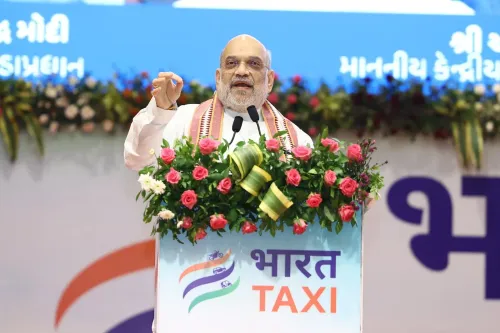
Union Home Minister Amit Shah launched the 'Bharat Taxi' cooperative taxi service and laid the foundation stone of the NHEC Multi-State Cooperative Society in Pune on 15 November 2026, extending the Centre's post-2021 push to build a formal cooperative economy beyond agriculture.
Key Takeaways
Amit Shah presided over two cooperative-sector events in Pune on 15 November 2026 .
The NHEC Multi-State Cooperative Society held its formal ground-breaking ( bhoomi-pujan ) ceremony. 'Bharat Taxi' , a cooperative-model urban taxi service, was officially launched in Pune.
The Ministry of Cooperation was established in July 2021 as India's first standalone ministry for the sector.
The cooperative framework is being deliberately extended from agriculture and credit into housing and urban services .
Pune's strong cooperative tradition made it the symbolic and practical choice for both launches.
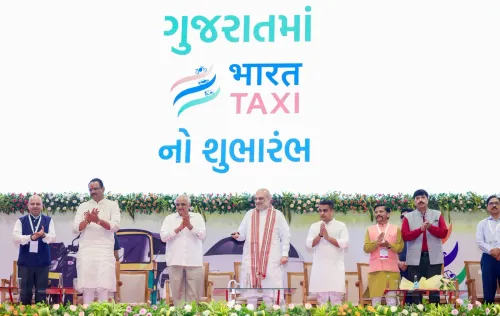
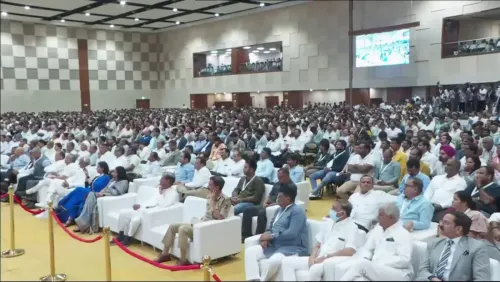
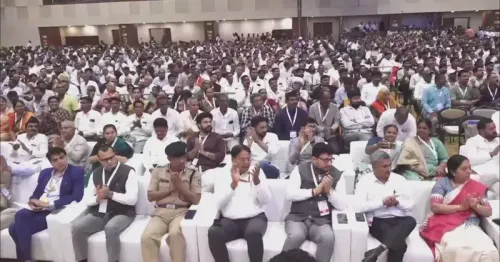
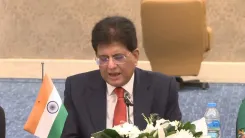
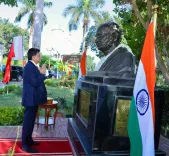
Two ceremonies, one city, one minister — Union Home Minister Amit Shah travelled to Pune on Sunday, 15 November 2026 to preside over the ground-breaking of the NHEC Multi-State Cooperative Society and the formal launch of 'Bharat Taxi', a cooperative-model urban taxi service, marking another step in the Centre's push to expand India's formal cooperative economy beyond farms and credit unions.
Shah live-streamed both events directly from Pune, posting on X in Hindi and Marathi — 'भूमिपूजन व शुभारंभ समारोह से लाइव' ('live from the ground-breaking and launch ceremony') — signalling the significance the Ministry of Cooperation attaches to both initiatives.Why Pune, and why cooperatives now
Pune is not an accidental venue. The city sits at the heart of Maharashtra's dense cooperative network — housing societies, credit cooperatives and urban consumer bodies have deep roots here. The Centre's decision to anchor the NHEC multi-state society's first physical milestone in Pune is a deliberate nod to that institutional heritage.
The Ministry of Cooperation itself is barely five years old. Created in July 2021, it was India's first standalone ministry dedicated entirely to the cooperative sector — a signal that the government intended to treat cooperatives as a serious economic vehicle, not just a rural welfare instrument. Since then, legislative attention to multi-state cooperative societies has intensified, with reforms aimed at better governance, broader membership and more transparent auditing.
Bharat Taxi: cooperative model meets urban mobility
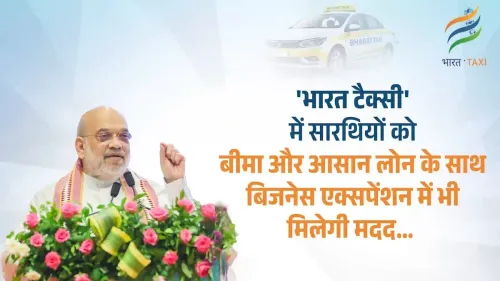
The launch of Bharat Taxi as a cooperative-run taxi service represents something newer: the extension of the cooperative framework into platform-style urban transport. Where ride-hailing giants operate on a corporate aggregator model, a cooperative taxi service would — in principle — route surplus back to driver-members rather than external shareholders. The specifics of Bharat Taxi's operational structure were not detailed in the post, but its launch under the cooperative ministry's umbrella makes the intent clear.
Urban transport cooperatives remain rare in India's major cities; if Bharat Taxi demonstrates a viable model in Pune, it could become a template other state-level cooperative federations seek to replicate.
Shah's expanding cooperative portfolio
As Minister of Cooperation — a portfolio he holds alongside Home — Shah has consistently used inaugurations and ground-breakings to underscore the government's ambition to build a 'cooperative-first' layer across housing, services and agriculture. The NHEC ground-breaking and the Bharat Taxi launch together illustrate that arc: one project anchors cooperative housing, the other moves into daily urban services. Both are multi-state in character, extending their potential reach well beyond Maharashtra.
Pune has just become the visible launch-pad for a cooperative expansion that, if the follow-through matches the ceremony, could reshape how India's urban middle class and working drivers interact with the sector.
Point of View
Particularly in Maharashtra ahead of ongoing electoral calculations. The Ministry of Cooperation, now five years old, is visibly trying to prove it can deliver tangible urban products, not just rural credit reform. Extending the cooperative model to platform transport is the most ambitious structural test yet: if Bharat Taxi holds its governance together, it validates a replicable model; if it fractures on operational complexity, it will invite scrutiny of the broader cooperative expansion agenda.
NationPress
15 Nov 2026
Frequently Asked Questions
What is Bharat Taxi and how is it different from other cab services in India?
Bharat Taxi is a cooperative-model urban taxi service launched in Pune on 15 November 2026 under Union Home Minister Amit Shah. Unlike corporate ride-hailing platforms, a cooperative structure channels earnings back to driver-members rather than external shareholders, though its full operational model has not yet been officially detailed.
What is the NHEC Multi-State Cooperative Society?
NHEC is a multi-state cooperative society whose ground-breaking ceremony was held in Pune on 15 November 2026, presided over by Union Home Minister Amit Shah. Its specific objectives could not be independently verified, but the event was organised under the auspices of the Ministry of Cooperation.
When was India's Ministry of Cooperation created and why?
The Ministry of Cooperation was created by the Government of India in July 2021 to give dedicated policy attention to the cooperative sector, which had previously been managed as a sub-division within the Agriculture Ministry. Amit Shah was appointed its first minister.
Why was Pune chosen for the launch of Bharat Taxi and the NHEC cooperative?
Pune has one of India's most established urban cooperative ecosystems, with deep roots in housing, credit and consumer cooperatives. Its institutional heritage made it a natural choice for the Centre to anchor new multi-state cooperative ventures.
What is a multi-state cooperative society in India?
A multi-state cooperative society is registered under the Multi-State Cooperative Societies Act and operates across more than one state, allowing its membership and operations to extend beyond a single state's boundaries. The central government, through the Ministry of Cooperation, regulates and supervises such societies.