Amit Shah launches Bharat Taxi in Gujarat, targets 125 cities by March 2027
Synopsis
Bharat Taxi is not just another cab app — it is a cooperative movement backed by the Home Ministry, where drivers own a stake instead of paying commissions. With nearly 7 lakh drivers already onboard in under five months and Gujarat now added to the fold, the platform's bid to reach 125 cities by March 2027 is the most ambitious cooperative push into urban mobility India has seen.
Key Takeaways
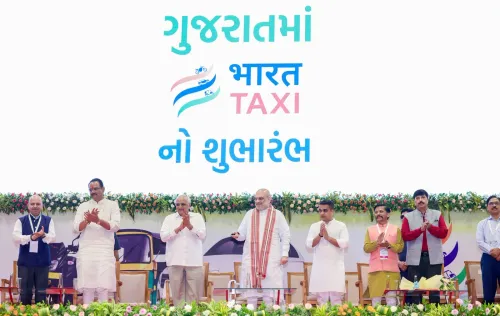
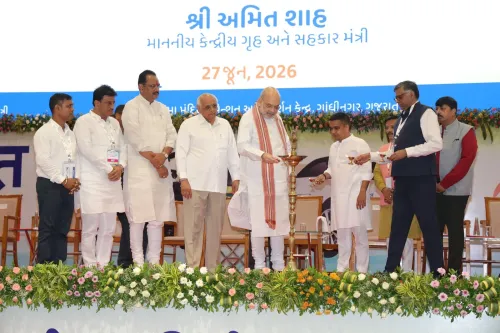
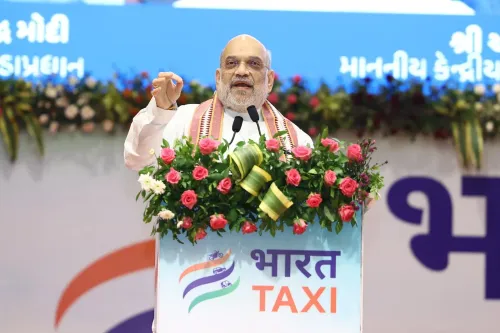
Amit Shah launched Bharat Taxi in Gujarat on 27 June at the Mahatma Mandir Convention Centre, Gandhinagar .
The platform targets 125 cities and 30 major urban centres across India by March 2027 .
Nearly 7 lakh Sarathis (drivers) and 38–40 lakh customers have registered since the national launch on 5 February .
Gujarat had pre-enrolled more than 1.5 lakh drivers and over 7 lakh customers before the formal state launch.
MoUs were signed with Gujarat Metro Rail Corporation , Adani Airport Holdings , Western Railway , AAI , Ahmedabad Municipal Corporation , and the Gujarat State Cooperative Bank .
Drivers are stakeholders under a cooperative ownership model; SBI will offer vehicle loans at concessional rates.
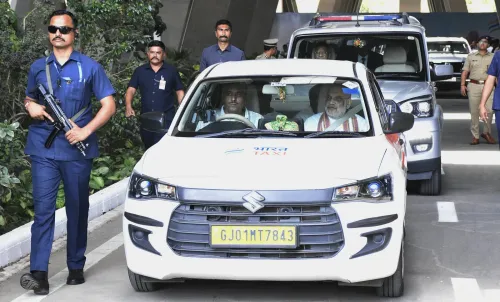
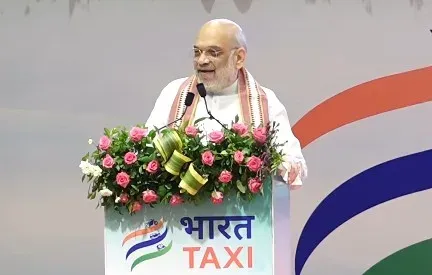
Union Home and Cooperation Minister Amit Shah on Saturday, 27 June launched Bharat Taxi in Gujarat, marking the cooperative ride-hailing platform's formal entry into the state. The event, held at the Mahatma Mandir Convention Centre in Gandhinagar, also saw Shah outline plans to scale the service to 125 cities and 30 major urban centres across India by March 2027.
Key Developments at the Launch
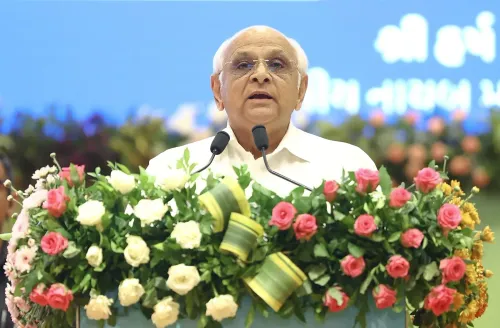
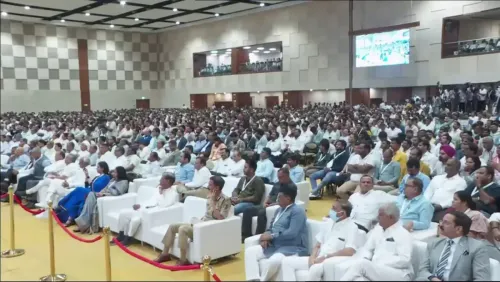
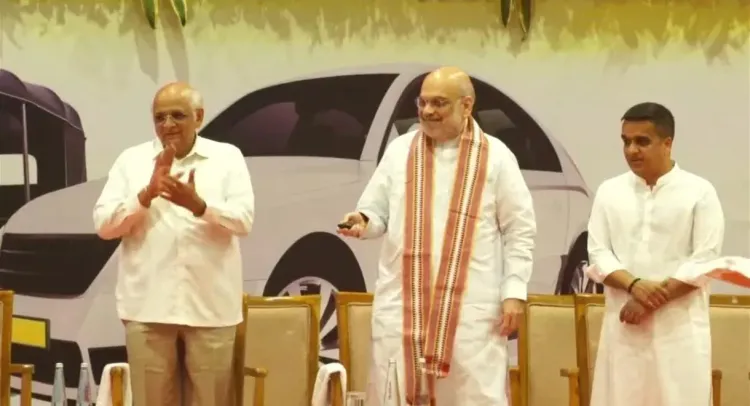
The event was attended by Gujarat Chief Minister Bhupendra Patel, Deputy Chief Minister Harsh Sanghavi, senior state ministers, cooperative leaders, and thousands of drivers — referred to by the platform as 'Sarathis'. A series of Memorandums of Understanding (MoUs) were also exchanged with public sector and institutional partners to strengthen Bharat Taxi's operations across the state.
The agreements were signed with the Gujarat Metro Rail Corporation, Gujarat State Cooperative Bank, Adani Airport Holdings Limited, the Western Railway's Ahmedabad Division, the Airports Authority of India for Surat, Rajkot, and Vadodara airports, Ahmedabad Municipal Corporation, and the Gujarat State Traffic Branch of the police. Organisers said these tie-ups would integrate taxi services with metro stations, railway facilities, airports, and urban transport infrastructure.
Platform Growth and the Cooperative Model
Bharat Taxi Chairman and GCMMF Managing Director Dr Jayen Mehta described the launch as a milestone for the cooperative sector, stating the initiative rests on the principle that drivers should also be owners. He noted the platform had grown rapidly since its launch on 5 February this year.
'In less than five months, nearly seven lakh Sarathis have joined us, while 38 to 40 lakh customers have registered on our app. At present, we are active in only two to three states,' Mehta said. He added that Gujarat alone had already enrolled more than 1.5 lakh drivers and over 7 lakh customers ahead of the formal state launch.
The platform operates on a cooperative ownership model under which drivers are stakeholders rather than commission-paying partners. It also offers a WhatsApp-based airport booking service, has established Sarathi Assistance Centres, and has tied up with the State Bank of India to facilitate vehicle loans at concessional interest rates. Agreements with electric vehicle manufacturers have also been signed to support cleaner transport.
Expansion Roadmap
The statewide rollout will initially cover Ahmedabad, Gandhinagar, Surat, Vadodara, Rajkot, Anand, Bhavnagar, Amreli, Mehsana, Jamnagar, and Valsad, with further expansion planned across the state. Nationally, the platform aims to reach the capitals of 30 major states and more than 125 cities within one year.
Mehta invoked the origins of the cooperative movement to contextualise the ambition, noting that Amul had started with just two village milk cooperatives and 250 litres of milk before growing into the world's largest cooperative organisation with an annual turnover exceeding ₹1 lakh crore. 'The concept of Sahkar Taxi is a new vision for the cooperative sector,' he said.
What It Means for Drivers and Passengers
The platform's model is designed so that, in Mehta's words, 'every rupee spent by a customer should go directly into the bank account of our Sarathi brothers' — a direct contrast to the commission-based structures of private aggregators such as Ola and Uber. This comes amid growing nationwide discontent among cab drivers over high platform commissions and lack of welfare benefits.
Notably, the launch was timed just before the completion of five years of the Ministry of Cooperation, which Shah heads. With cooperative institutions now entering mobility, fintech, and retail, the ministry is visibly expanding the cooperative model well beyond its traditional agricultural base. How effectively Bharat Taxi scales beyond its early adopter states will be closely watched by both the cooperative sector and the broader ride-hailing industry.
Point of View
Surge pricing transparency, and driver earnings against entrenched incumbents. The MoU blitz with airports, metro rail, and municipal bodies gives it institutional access that private players lack — that is the genuine structural advantage worth watching.
NationPress
26 Sept 2026
Frequently Asked Questions
What is Bharat Taxi and how does it work?
Bharat Taxi is a cooperative ride-hailing platform where drivers are stakeholders rather than commission-paying partners. Launched nationally on 5 February, it operates on the principle that earnings go directly to drivers, and it offers services including WhatsApp-based airport booking and SBI vehicle loans at concessional rates.
Where will Bharat Taxi expand by March 2027?
The platform plans to reach 125 cities and the capitals of 30 major states across India by March 2027. In Gujarat, the initial rollout covers Ahmedabad, Gandhinagar, Surat, Vadodara, Rajkot, Anand, Bhavnagar, Amreli, Mehsana, Jamnagar, and Valsad.
How many drivers and customers has Bharat Taxi enrolled so far?
As of the Gujarat launch on 27 June, nearly 7 lakh Sarathis (drivers) and 38 to 40 lakh customers had registered on the platform in under five months. Gujarat alone had pre-enrolled over 1.5 lakh drivers and 7 lakh customers before the formal state launch.
What MoUs did Bharat Taxi sign at the Gujarat launch?
Bharat Taxi signed agreements with Gujarat Metro Rail Corporation, Gujarat State Cooperative Bank, Adani Airport Holdings Limited, Western Railway's Ahmedabad Division, the Airports Authority of India for Surat, Rajkot and Vadodara airports, Ahmedabad Municipal Corporation, and the Gujarat State Traffic Branch. These partnerships are aimed at integrating taxi services with metro, railway, and airport infrastructure.
How does Bharat Taxi differ from Ola and Uber?
Unlike Ola and Uber, which charge drivers a commission on each ride, Bharat Taxi operates on a cooperative ownership model where drivers are members and stakeholders. The platform states that every rupee spent by a customer goes directly to the driver, and it provides additional welfare benefits including membership certificates, welfare kits, and access to concessional vehicle loans through SBI.