CM Fadnavis launches 'GCC Industry @ 2030' book in Pune
Synopsis
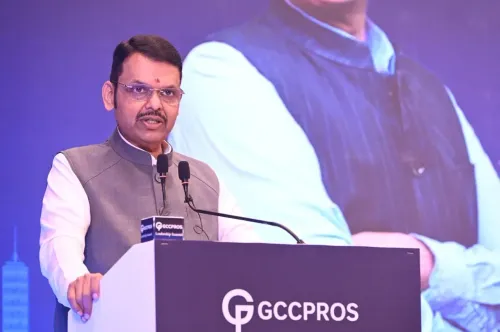
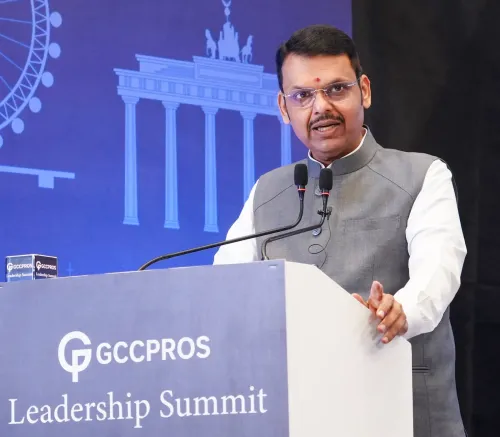
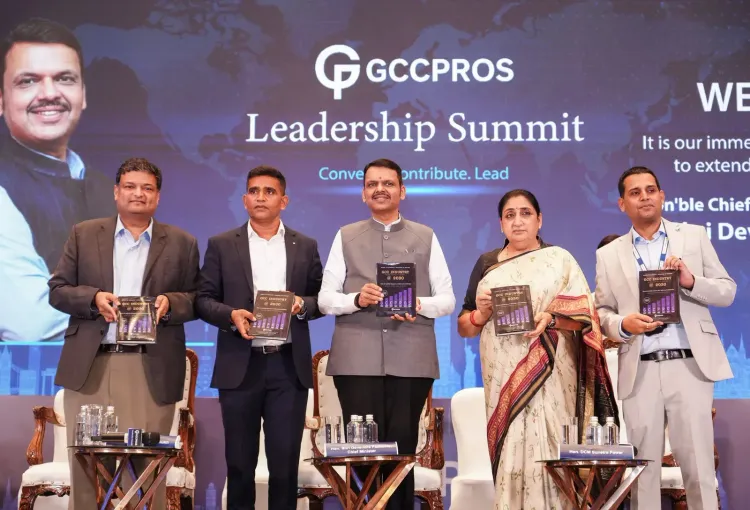
Chief Minister Devendra Fadnavis launched 'GCC Industry @ 2030' at the GCCPros Leadership Summit in Pune on August 11, 2026, positioning Maharashtra at the forefront of India's Global Capability Center sector as competition among states intensifies ahead of the decade's end.
Key Takeaways
Chief Minister Devendra Fadnavis released the book 'GCC Industry @ 2030' in Pune on August 11, 2026 .
The launch took place at the GCCPros Leadership Summit , a sector-focused industry event.
Pune is one of India's established hubs for multinational Global Capability Centers, competing with Bengaluru, Hyderabad, and Chennai.
Maharashtra has actively sought to position itself as the leading GCC destination through infrastructure and talent advantages.
The book targets the GCC sector's projected growth arc through 2030 , a period of significant expansion driven by AI and services globalisation.
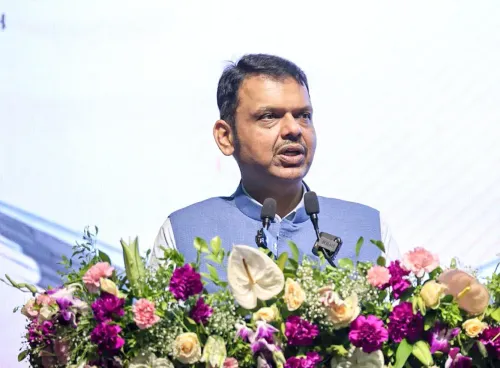
Pune's growing stature as India's Global Capability Center capital got a fresh stamp of ambition on Tuesday, August 11, 2026, when Chief Minister Devendra Fadnavis took the stage at the GCCPros Leadership Summit to release a forward-looking industry volume that maps the sector's trajectory to the end of the decade. The Chief Minister's Office of Maharashtra confirmed the launch of 'GCC Industry @ 2030' — a book charting the future of one of India's fastest-growing enterprise services segments.
Pune's GCC moment and what the summit signals
Pune has steadily evolved from a manufacturing and education city into a preferred destination for multinational Global Capability Centers — the in-house offshore units that handle everything from software engineering to financial analytics for global corporations. The GCCPros Leadership Summit, hosted by GCC_PROS, brings together industry leaders, policymakers, and practitioners to shape the sector's direction, making it a natural venue for a publication of this kind.
The release of 'GCC Industry @ 2030' at such a platform signals that Maharashtra is not content to merely host GCCs — it wants to be seen as the state setting the intellectual and policy agenda for the sector's next chapter.
Maharashtra's competitive push to lead India's GCC race
Maharashtra — home to both Mumbai's financial infrastructure and Pune's deep technology talent pool — has long competed with states like Karnataka, Telangana, and Tamil Nadu for GCC investments. Multinationals setting up capability centers weigh factors including talent availability, real estate, connectivity, and state-level incentives. Chief Minister Fadnavis, who has made industrial promotion a signature of his tenures in office, has consistently positioned Maharashtra as the premier destination for high-value services investment.
A book launch anchored by the Chief Minister at an industry summit is a deliberate act of statecraft — it places Maharashtra's government visibly at the centre of a conversation that will shape billions of dollars in corporate location decisions over the next four years.
The GCC sector's India story heading into 2030
Global Capability Centers have transformed India's services export economy over the past two decades, shifting from back-office support to high-end functions including product development, AI research, and strategic operations. Industry projections consistently point to continued expansion, with Indian cities competing intensely for the next wave of GCC setups. A publication titled 'GCC Industry @ 2030' speaks directly to that competitive intelligence need — giving investors, policymakers, and professionals a shared framework for the years ahead.
For Maharashtra, the timing is pointed. As global corporations reassess their capability center footprints in a post-pandemic, AI-accelerated world, being the state that convenes and publishes on the sector's future is a soft-power play with hard economic stakes.
The next move to watch: whether the summit and the book's release translate into concrete state-level GCC incentive announcements or policy follow-through from Mantralaya.
Point of View
Not just a facilitator. This fits a broader pattern of Indian state governments competing not just on incentives but on narrative, seeking to be the state that 'owns' a particular industry's story. With the GCC sector increasingly central to India's services export ambitions, Maharashtra's early positioning on the 2030 horizon could influence corporate location decisions and talent flows for years. The real test will be whether the summit's momentum produces measurable policy follow-through.
NationPress
11 Aug 2026
Frequently Asked Questions
What is the book 'GCC Industry @ 2030' about?
The book 'GCC Industry @ 2030' addresses the projected trajectory of India's Global Capability Center sector through the year 2030. Its specific content was not detailed in the official announcement.
What is a Global Capability Center (GCC)?
A Global Capability Center is an in-house offshore unit set up by a multinational corporation to handle specialised functions — such as software development, data analytics, finance, or R&D — from India, leveraging local talent and cost advantages.
Why is Pune significant for the GCC sector?
Pune is one of India's established GCC hubs, offering a large pool of engineering and technology talent, relatively lower costs than Mumbai, and strong connectivity — making it a preferred location for multinational capability centers.
What is GCCPros and what does it do?
GCC_PROS is an organisation that hosts leadership summits and events focused on the Global Capability Center industry, bringing together corporate leaders, policymakers, and professionals to shape the sector's direction.
How is Maharashtra competing in the GCC space?
Maharashtra competes with states like Karnataka, Telangana, and Tamil Nadu for GCC investments by leveraging Mumbai's financial infrastructure and Pune's technology talent pool, with Chief Minister Fadnavis actively promoting the state as a premier destination for high-value services investment.