Pune to become Deep Tech, GCC hub and Growth Engine by 2030: CM Fadnavis
Synopsis
Maharashtra CM Fadnavis didn't just lay foundation stones in Pune — he staked the city's identity on a 2030 deadline. With ₹950 crore already recovered in BOT premiums, metro-ready flyover designs, a record-speed airport land acquisition, and a 35% national GCC share already in hand, Pune's infrastructure bet is ambitious in scale. The real question is whether execution will match the vision.
Key Takeaways
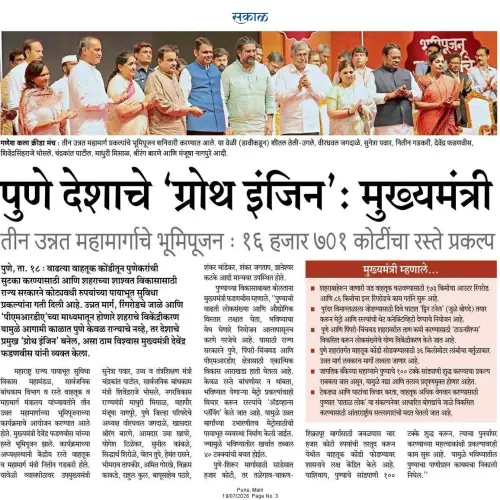
CM Devendra Fadnavis launched three elevated corridor projects — Pune–Shirur , Talegaon–Chakan–Shikrapur , and Hadapsar–Yavat — on 18 July at Ganesh Kala Krida Manch, Pune.
The three BOT corridors have generated upfront government premiums totalling ₹950 crore (₹500 crore + ₹300 crore + ₹150 crore).
All corridors are pre-designed to accommodate future metro lines, cutting future alignment costs by at least 40 per cent .
A 173-km Outer Ring Road and 86-km Inner Ring Road are due within two years , projected to cut inner-city congestion by 30 per cent .
Pune currently holds nearly 35 per cent of all GCCs setting up in India; the state targets positioning it as the country's Deep Tech and GCC hub by 2030 .
Over 50 per cent of land acquisition for Purandar International Airport is complete, described as a national record for speed.
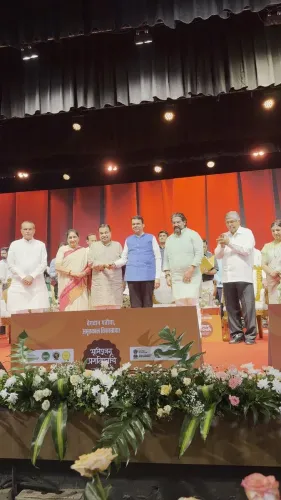
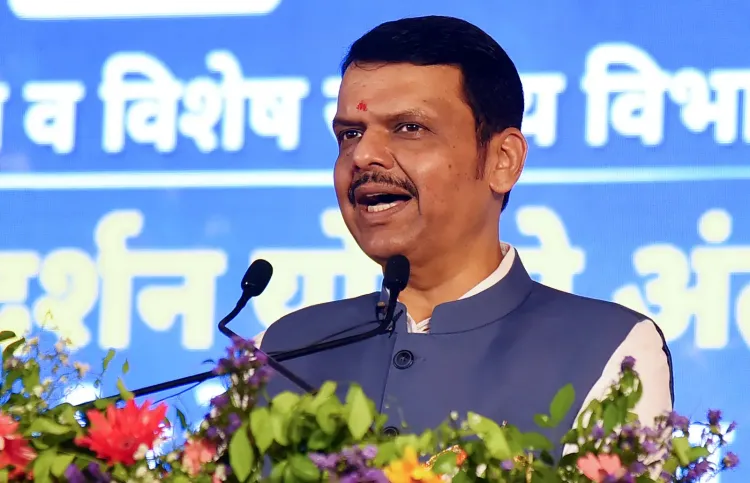
Maharashtra Chief Minister Devendra Fadnavis on Saturday, 18 July declared that Pune is firmly on course to emerge as a premier global destination for Deep Tech and Global Capability Centres (GCCs), calling the city the country's future 'Growth Engine' by 2030. The announcement came at the foundation stone-laying ceremony for three major elevated corridor projects held at Ganesh Kala Krida Manch in Pune.
Three Elevated Corridors Launched
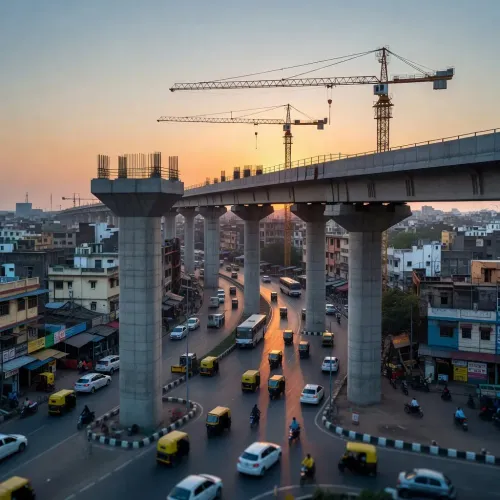
The three corridors — Pune–Shirur, Talegaon–Chakan–Shikrapur, and Hadapsar–Yavat — will be implemented by the Maharashtra State Road Development Corporation (MSRDC) on a Build-Operate-Transfer (BOT) basis. Together, they have already generated upfront premiums for the state government: ₹500 crore from the Pune–Shirur corridor, ₹300 crore from Talegaon–Chakan–Shikrapur, and ₹150 crore from Hadapsar–Yavat — a combined total of ₹950 crore.
Fadnavis revealed that all three elevated corridors have been pre-designed to accommodate future metro lines. Integrating metro structural design into current flyover blueprints, he said, would ensure zero disruption during future metro construction and reduce future alignment costs by at least 40 per cent.
Purandar Airport and Ring Road Plans
To strengthen connectivity to the upcoming Purandar International Airport, the state government is planning a double-tube tunnel through Dive Ghat to support both road and metro transit. More than 50 per cent of land acquisition for the airport has already been completed, which officials described as a national record for speed.
A 173-km Outer Ring Road and an 86-km Inner Ring Road are slated for completion within two years and are projected to reduce inner-city traffic congestion by 30 per cent.
What Union Minister Gadkari Said
Union Minister for Road Transport and Highways Nitin Gadkari said the three elevated corridors would dramatically curb traffic gridlocks and pollution across Pune. Citing land acquisition constraints that limit conventional highway expansion, he said international engineering solutions were being adopted — including technology developed in Malaysia that extends the distance between structural pillars from 30 metres to 120 metres, enabling a single-pillar design capable of simultaneously supporting a surface road, an elevated flyover, and a metro line.
Gadkari also noted that the upcoming Surat–Nashik–Ahilyanagar–Solapur highway would divert 40 to 45 per cent of North-to-South commercial transit away from Pune and Mumbai, easing freight pressure on both cities.
GCC Dominance and Economic Stakes
Deputy Chief Minister Sunetra Pawar described the projects as economic 'game changers,' noting that the Hadapsar–Yavat route would save commuter time while the Talegaon–Chakan–Shikrapur corridor would boost freight logistics in Pune's manufacturing and IT belts. Pune currently accounts for nearly 35 per cent of all GCCs setting up operations across India — a share that the state government is seeking to consolidate through improved infrastructure.
Public Works Department Minister Shivendrasinhraje Bhosale added that resilient infrastructure is essential as Maharashtra targets becoming a $1 trillion economy within India's broader $5 trillion national goal. Upon completion, the three structures will collectively form the longest network of elevated corridors in India.
Sustainability and Water Management
Fadnavis also addressed long-term urban sustainability, highlighting that extensive Sewage Treatment Plants (STPs) are being established with support from JICA and the World Bank to recycle urban wastewater — a critical measure as Pune's population and industrial base continue to expand toward 2030.
With foundation stones laid and premiums already collected, the immediate test for the state will be execution speed — translating headline commitments into completed corridors within the promised timelines.
Point of View
But infrastructure has chronically lagged that economic weight. The decision to pre-embed metro capacity into flyover structures is genuinely smart engineering; the 40 per cent cost reduction claim, however, deserves independent verification before it becomes a policy template. The ₹950 crore in upfront BOT premiums signals private-sector confidence, but BOT projects in Maharashtra have a mixed delivery record. The 2030 'Growth Engine' label will be earned on the ground — in completed ring roads and functional airport connectivity — not at foundation stone ceremonies.
NationPress
17 Oct 2026
Frequently Asked Questions
What are the three elevated corridor projects launched in Pune?
The three projects are the Pune–Shirur Corridor, the Talegaon–Chakan–Shikrapur Corridor, and the Hadapsar–Yavat Corridor. They will be built by MSRDC on a Build-Operate-Transfer (BOT) basis and together generated ₹950 crore in upfront premiums for the Maharashtra government.
Why is Pune being called India's 'Growth Engine' by 2030?
CM Devendra Fadnavis used the term to describe Pune's trajectory as a leading hub for Deep Tech and Global Capability Centres (GCCs). Pune already accounts for nearly 35 per cent of all GCCs setting up operations across India, and the state is investing in infrastructure to consolidate that position.
How will the elevated corridors accommodate future metro lines?
All three corridors have been pre-designed with metro structural integration built into current flyover blueprints. According to CM Fadnavis, this approach will ensure zero disruption during future metro construction and reduce future alignment costs by at least 40 per cent.
What is the status of the Purandar International Airport project?
Over 50 per cent of land acquisition for the Purandar International Airport has been completed, which officials described as a national record for acquisition speed. The government is also planning a double-tube tunnel through Dive Ghat to connect the airport via both road and metro.
How will the ring roads reduce Pune's traffic congestion?
A 173-km Outer Ring Road and an 86-km Inner Ring Road are slated for completion within two years and are expected to reduce inner-city traffic congestion by 30 per cent. Union Minister Nitin Gadkari also noted that the upcoming Surat–Nashik–Ahilyanagar–Solapur highway will divert 40 to 45 per cent of North-to-South commercial traffic away from Pune.