CM Fadnavis launches groundbreaking for 3 Pune elevated highways
Synopsis
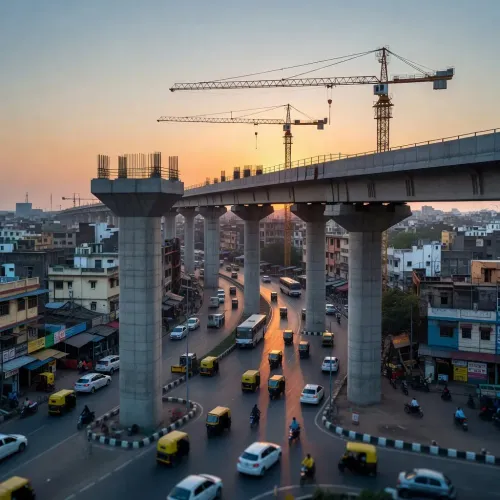
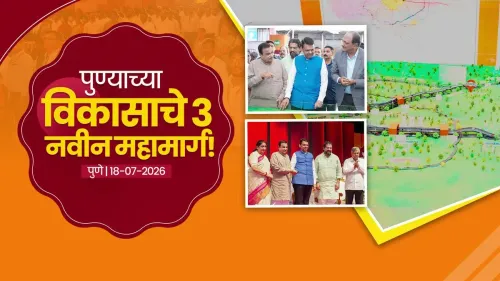
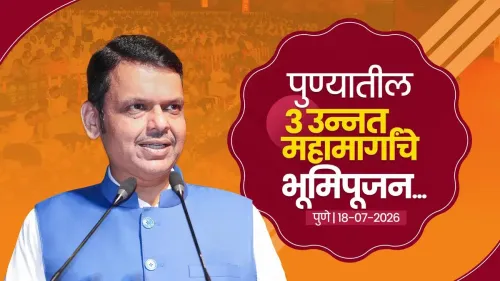
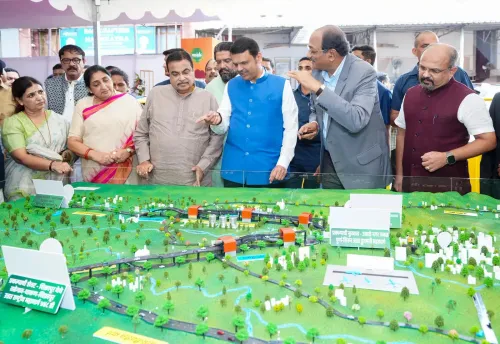
Maharashtra CM Devendra Fadnavis on 18 July 2026 performed the groundbreaking for three elevated highways around Pune — Pune-Shirur, Hadapsar-Yavat, and Talegaon-Chakan-Shikrapur — targeting chronic congestion on key national highway corridors serving the city's expanding industrial and residential fringe.
Key Takeaways
Three elevated highways — Pune-Shirur, Hadapsar-Yavat, and Talegaon-Chakan-Shikrapur — had their groundbreaking on 18 July 2026 in Pune.
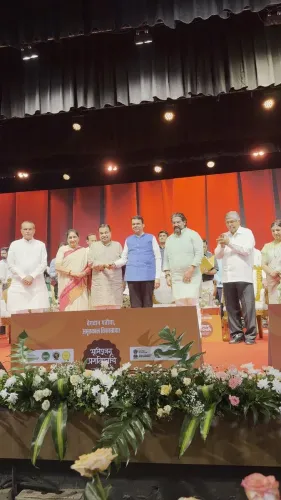
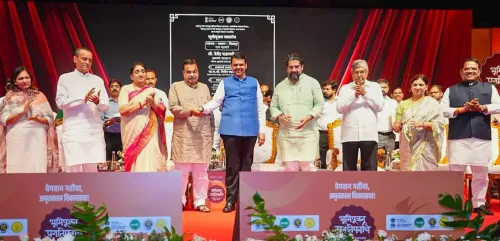
CM Devendra Fadnavis personally presided over the bhoomi pujan ceremony, signalling political priority for the projects.
The corridors target congestion on the NH-65 and NH-48 stretches serving Pune's eastern and northern peripheries.
The Chakan-Talegaon stretch is critical for India's automotive supply chain, with major manufacturers based in the zone.
Next steps include tender awards, land acquisition progress, and potential integration with Pune Metro and ring-road plans.
Daily commuters and logistics operators serving Pune's satellite towns are the primary beneficiaries.
Maharashtra Chief Minister Devendra Fadnavis on Saturday, 18 July 2026, inaugurated the groundbreaking ceremony for three elevated expressways in the Pune region — the Pune-Shirur, Hadapsar-Yavat, and Talegaon-Chakan-Shikrapur corridors — marking a significant push to ease congestion across one of India's fastest-growing metropolitan zones.
Context
Fadnavis shared a live update on X at 4:21 PM IST, announcing the bhoomi pujan (groundbreaking) of the three elevated highways under the hashtags #RoadDevelopment and #Connectivity. The post, streamed live from Pune, confirmed the simultaneous launch of all three corridors in a single ceremony, signalling the state government's intent to treat the Pune metropolitan fringe as a unified infrastructure zone.
The three stretches connect Pune's urban core to its rapidly expanding eastern and northern peripheries. Pune-Shirur links the city to the Shirur taluka along the NH-65 corridor; Hadapsar-Yavat extends connectivity from Pune's southeastern industrial belt; and Talegaon-Chakan-Shikrapur serves the dense auto and manufacturing cluster around Chakan, one of India's largest automotive hubs.
Policy Backdrop
Maharashtra has pursued elevated and grade-separated corridors around Pune as a structural response to chronic congestion on the NH-65 and NH-48 stretches, which serve both commuter and heavy freight traffic. State road development programmes have consistently emphasised public-private partnership models and linkages with central government funding to accelerate such projects.
The Fadnavis administration has positioned large-scale infrastructure as a cornerstone of its governance agenda since returning to power. Elevated corridors of this nature are typically integrated into broader urban mobility frameworks, including ongoing Pune Metro expansion phases and the city's proposed ring-road network, which together aim to decongest a city whose population has grown well past 70 lakh in the urban agglomeration.
Stakeholders and Impact
Daily commuters between Pune and satellite towns such as Shirur, Yavat, and Shikrapur stand to benefit most directly, with elevated alignments designed to reduce travel times and eliminate at-grade intersections that cause peak-hour gridlock. Logistics operators serving the Chakan-Talegaon industrial belt — home to plants of major automobile manufacturers — have long flagged road connectivity as a bottleneck to supply-chain efficiency.
Real-estate and commercial activity along these corridors is also expected to see renewed interest following the formal groundbreaking, as infrastructure announcements historically accelerate development approvals in peripheral Pune zones. Local civic bodies and the Pune Metropolitan Region Development Authority (PMRDA) will be key implementation partners as the projects move from ceremony to construction.
What's Next
The immediate milestones to watch include the award of engineering, procurement, and construction tenders, progress on land acquisition along the three alignments, and the release of detailed project reports that will confirm costs, timelines, and phased opening schedules. Integration with the Pune Metro interchange nodes and the proposed outer ring road will determine how effectively these corridors reduce pressure on the city's arterial network.
With Pune's infrastructure needs growing in tandem with its role as a national IT and manufacturing centre, the pace at which these elevated highways move from groundbreaking to commissioning will be a key measure of the Fadnavis government's infrastructure delivery record ahead of future electoral cycles.
Point of View
And anchoring all three launches in a single live-streamed event maximises visibility with the city's large, politically engaged middle class. The choice of corridors is also strategically layered: the Chakan-Talegaon stretch serves industry, Hadapsar-Yavat serves the densely populated southeastern belt, and Pune-Shirur addresses commuter pressure on a high-traffic national highway — covering economic, demographic, and electoral bases in one ceremony. Whether the projects sustain momentum through land acquisition and tendering will ultimately define their legacy.
NationPress
17 Oct 2026
Frequently Asked Questions
Which three elevated highways were inaugurated near Pune in July 2026?
The three elevated highways are Pune-Shirur, Hadapsar-Yavat, and Talegaon-Chakan-Shikrapur. Their groundbreaking ceremony was held on 18 July 2026, presided over by Maharashtra CM Devendra Fadnavis.
What is the significance of the Talegaon-Chakan-Shikrapur elevated highway?
The Talegaon-Chakan-Shikrapur corridor serves one of India's largest automotive manufacturing clusters. It is expected to ease supply-chain bottlenecks for major automobile manufacturers based in the Chakan industrial zone near Pune.
What is a bhoomi pujan in the context of infrastructure projects?
A bhoomi pujan is a traditional groundbreaking ceremony in India that marks the formal commencement of a construction project. It typically involves a religious ritual and is attended by senior political figures to signal official sanction and public commitment to the project.
How will these elevated highways help Pune commuters?
The elevated alignments are designed to eliminate at-grade intersections that cause peak-hour gridlock, reducing travel times between Pune and satellite towns like Shirur, Yavat, and Shikrapur. They also aim to decongest national highway stretches NH-65 and NH-48.
What are the next steps after the groundbreaking of Pune's elevated highways?
Key milestones include the award of construction tenders, completion of land acquisition along the three alignments, and release of detailed project reports confirming costs and timelines. Integration with Pune Metro interchange nodes and the outer ring road is also being planned.