CM Fadnavis, Gadkari Review Mini Models of 3 Pune Elevated Highways
Synopsis
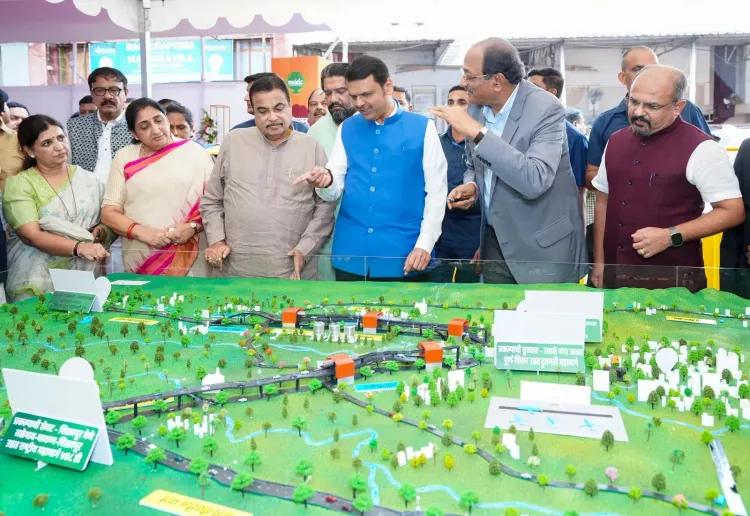
Chief Minister Devendra Fadnavis and Union Minister Nitin Gadkari reviewed mini models of three proposed elevated highway corridors around Pune on 18 July 2026 — the Pune–Shirur, Talegaon–Chakan–Shikrapur, and Hadapsar–Yavat alignments — in a joint inspection attended by senior state ministers, an MP, and Pune's Mayor.
Key Takeaways
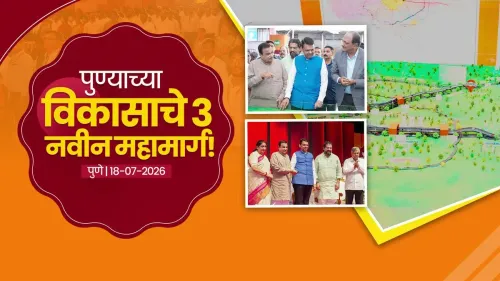
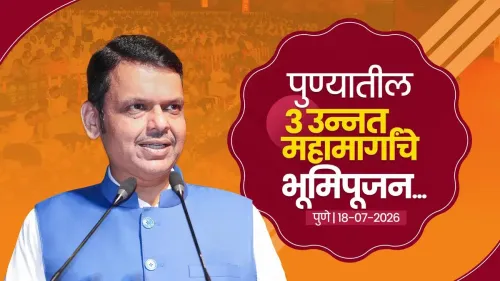
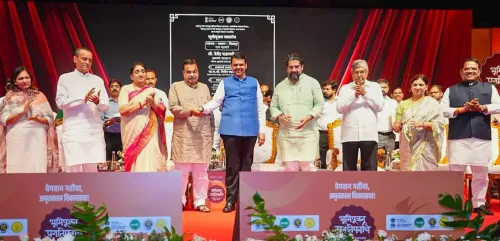
CM Devendra Fadnavis and Union Minister Nitin Gadkari jointly reviewed mini models of three Pune elevated highway corridors on 18 July 2026 .
The three corridors are Pune–Shirur , Talegaon–Chakan–Shikrapur , and Hadapsar–Yavat elevated highways.
The review covered planned stops, link roads, and passenger facilities across all three alignments.
Deputy CM Sunetra Ajit Pawar , senior ministers, an MP, and Pune Mayor Manjusha Nagpure were present, reflecting broad political and civic backing.
The corridors target congestion on routes serving Pune's IT parks, Chakan automobile clusters , and regional logistics hubs.
Next steps include finalisation of Detailed Project Reports , land acquisition notifications, and environmental clearances before tenders can be floated.
Chief Minister Devendra Fadnavis and Union Minister Nitin Gadkari jointly reviewed mini models of three proposed elevated highway corridors in Pune on Saturday, 18 July 2026, examining planned stops, link roads, and associated facilities across all three alignments. The Chief Minister's Office of Maharashtra announced the review, underscoring the state government's push to fast-track grade-separated road connectivity around the city.
Context
The three corridors under review are the Pune–Shirur Elevated Expressway, the Talegaon–Chakan–Shikrapur Elevated Highway, and the Hadapsar–Yavat Elevated Highway. Together, they form a cluster of proposed elevated routes designed to ease severe congestion on existing national highway alignments serving Pune's rapidly expanding industrial and residential belt. The mini-model inspection signals that planning for these corridors has advanced to a stage where route geometry, interchange locations, and passenger amenities are being formally assessed by senior leadership.
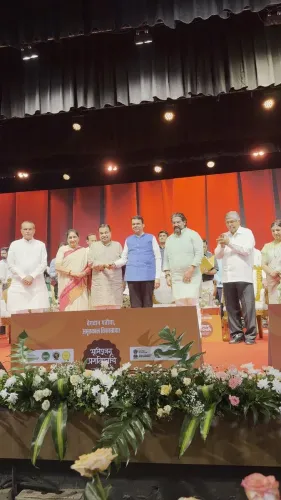
Present at the review were Deputy Chief Minister Sunetra Ajit Pawar, Minister Chandrakant Patil, Minister Shivendra Singh Raje Bhosale, Minister of State Madhuri Misal, Member of Parliament Shrirang Appa Barne, Pune Mayor Manjusha Nagpure, and several legislators and dignitaries, reflecting the broad political and civic interest in the projects.
Policy Backdrop
Maharashtra's drive to build elevated corridors around Pune is part of a wider national strategy under the Bharatmala Pariyojana, launched in 2015, which identified multiple expressway stretches across the state for development by the Ministry of Road Transport and Highways. The ministry, led by Gadkari since 2014, has championed grade-separated corridors as the primary tool for raising average travel speeds and reducing accident rates on high-density urban stretches. Maharashtra has consistently coordinated with the Union ministry for funding approvals and technical clearances on such projects.
The three Pune corridors specifically target congestion on alignments serving the city's IT parks, automobile manufacturing clusters around Chakan, and logistics hubs linking the city to Shirur and Yavat. Elevated designs are preferred over at-grade expansions because they minimise land acquisition footprints in already-dense suburban zones.
Stakeholders and Impact
Daily commuters on the Pune–Shirur and Hadapsar–Yavat routes stand to benefit most directly, as both corridors serve densely populated residential and commercial areas where peak-hour travel times have risen sharply in recent years. Industrial operators in the Chakan belt — home to major automobile and component manufacturers — have long flagged road connectivity as a bottleneck for freight movement and workforce commutes.
Regional logistics operators and small-and-medium enterprises dependent on last-mile connectivity to Pune's ring of industrial estates are also key stakeholders. Improved highway infrastructure on these corridors is expected to reduce per-kilometre freight costs and cut transit times to ports and rail heads in the broader Maharashtra hinterland.
What's Next
The review of mini models typically precedes the finalisation of Detailed Project Reports (DPRs), land acquisition notifications, and environmental clearance applications — the three procedural milestones that must be cleared before construction tenders can be floated. Progress updates on these corridors are expected to feature in upcoming state legislative sessions and central infrastructure review meetings. The joint presence of CM Fadnavis and Union Minister Gadkari signals that both the state government and the Centre are aligned on prioritising these corridors, which could accelerate approvals through the inter-ministerial pipeline.
Point of View
A signal that funding and clearance bottlenecks are being managed at the highest political level. For Fadnavis, advancing visible Pune-region projects carries electoral significance given the city's weight in Maharashtra's political arithmetic. The clustering of three corridors into a single review event also suggests the state is packaging them as a unified connectivity programme, which could strengthen the case for bundled central funding under Bharatmala. The presence of Deputy CM Sunetra Ajit Pawar alongside ruling coalition partners underlines that the Mahayuti alliance is projecting infrastructure delivery as a shared achievement ahead of future electoral cycles.
NationPress
17 Oct 2026
Frequently Asked Questions
What are the three Pune elevated highways reviewed by CM Fadnavis and Gadkari?
The three corridors are the Pune–Shirur Elevated Expressway, the Talegaon–Chakan–Shikrapur Elevated Highway, and the Hadapsar–Yavat Elevated Highway. All three are proposed grade-separated routes designed to ease congestion on existing national highway alignments around Pune.
Why is an elevated highway being planned between Pune and Shirur?
The Pune–Shirur corridor experiences heavy traffic from commuters, industrial freight, and logistics operators serving the Chakan automobile belt and surrounding industrial estates. An elevated design minimises land acquisition in dense suburban zones while significantly improving travel speeds.
What is the role of Nitin Gadkari in the Pune highway projects?
Nitin Gadkari, as Union Minister of Road Transport and Highways, oversees national highway expansion including these Maharashtra corridors. His ministry's technical approvals and central funding under schemes like Bharatmala Pariyojana are critical to advancing these projects.
What happens after a mini model review for a highway project in India?
A mini model review typically precedes the finalisation of Detailed Project Reports, land acquisition notifications, and environmental clearance applications — the key procedural steps before construction tenders can be issued.
Who attended the Pune elevated highway review on 18 July 2026?
The review was attended by CM Devendra Fadnavis, Union Minister Nitin Gadkari, Deputy CM Sunetra Ajit Pawar, Ministers Chandrakant Patil and Shivendra Singh Raje Bhosale, Minister of State Madhuri Misal, MP Shrirang Appa Barne, Pune Mayor Manjusha Nagpure, and several legislators.