Jal Shakti Minister Paatil Holds Review Meets in Navsari
Synopsis
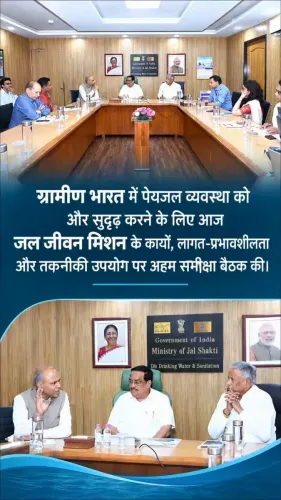
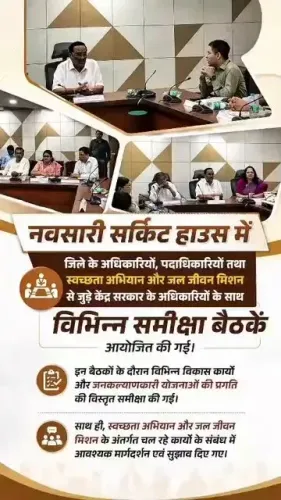
Union Jal Shakti Minister C. R. Paatil chaired multiple review meetings at Navsari Circuit House on 18 July 2026, evaluating district-level progress of the Jal Jeevan Mission and Swachhata Abhiyan and issuing guidance to district and central government officials.
Key Takeaways
Paatil , Union Jal Shakti Minister, held review meetings at Navsari Circuit House on 18 July 2026 .
Meetings covered progress under the Jal Jeevan Mission and the Swachhata Abhiyan in Navsari district, Gujarat .
Attendees included district officers, elected functionaries, and central government officials linked to both schemes.
Paatil issued guidance and directions on ongoing development and public welfare work in the district.
The Jal Jeevan Mission targets universal rural tap water connectivity; the Swachh Bharat Mission focuses on sanitation and open-defecation elimination.
Next milestones will be quarterly progress reports on tap water coverage and sanitation targets in Gujarat.
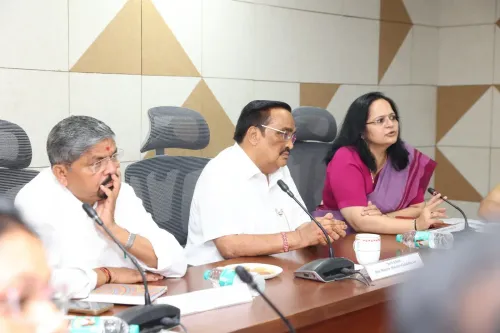
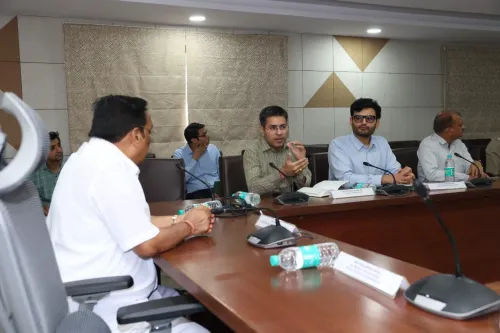
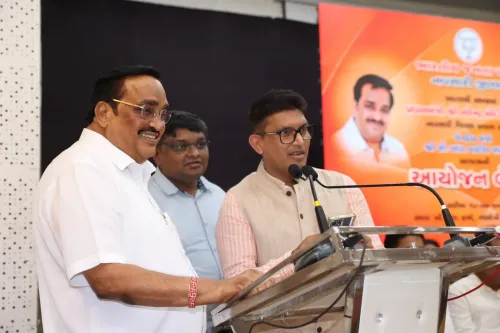
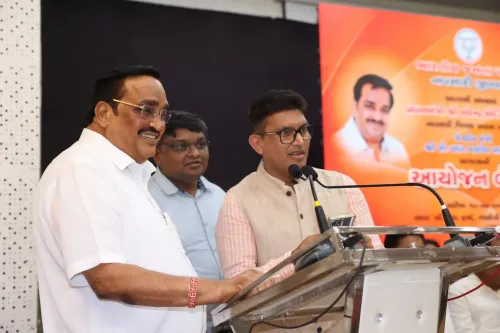
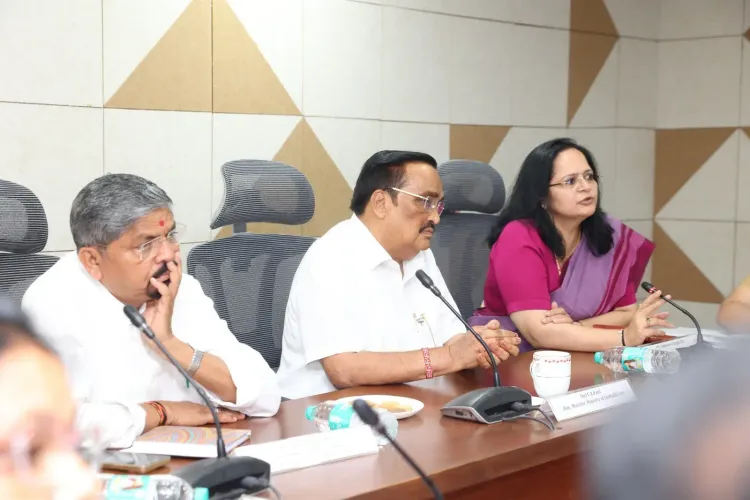
Union Jal Shakti Minister C. R. Paatil chaired a series of review meetings at the Navsari Circuit House on Saturday, 18 July 2026, assessing the on-ground progress of the Jal Jeevan Mission and the Swachhata Abhiyan in the district. The meetings brought together district-level officers, elected functionaries, and central government officials associated with the two flagship welfare programmes.
Context
Posting in Gujarati on X, Paatil said he held 'વિવિધ સમીક્ષા બેઠકો' ('various review meetings') at the Navsari Circuit House with district officials, office-bearers, and central government officers linked to the Swachhata Abhiyan and Jal Jeevan Mission. He added that the meetings involved a 'detailed review of the progress of various development and public welfare works' and that he provided 'necessary guidance and suggestions' on work being carried out under both schemes.
Navsari is a district in southern Gujarat — a state that has historically been a focal point for water supply and sanitation infrastructure under centrally sponsored schemes. The Circuit House meeting format is a standard mechanism through which Union ministers engage directly with district administrations during field visits.
Policy Backdrop
The Jal Jeevan Mission, announced in the 2019 Union Budget, aims to provide functional household tap water connections to every rural home in India. As Jal Shakti Minister, Paatil holds direct administrative responsibility for the mission's implementation across all states, making district-level reviews a core part of his ministerial mandate.
The Swachh Bharat Mission — of which the Swachhata Abhiyan is the active campaign arm — was launched in 2014 to eliminate open defecation and strengthen solid waste management nationwide. Union ministers periodically conduct such field reviews to track both physical targets and financial utilisation at the district level, ensuring that central funds and directives translate into measurable outcomes on the ground.
Stakeholders and Impact
The primary beneficiaries of both programmes are rural households in Navsari district and across Gujarat — particularly those awaiting functional tap water connections or improved sanitation infrastructure. District officials and elected functionaries who attended the meetings are directly responsible for executing scheme targets at the block and gram panchayat level.
Central government officers associated with the two missions were also present, indicating a coordinated review spanning both the administrative and technical arms of scheme delivery. Paatil's guidance and directives issued at such meetings typically feed into corrective action plans for lagging targets.
What's Next
Quarterly progress reports on tap water coverage under the Jal Jeevan Mission in Gujarat's districts will be the next measurable indicator of whether the directions issued at the Navsari meeting translate into accelerated implementation. Progress on the Swachhata Abhiyan's sanitation targets in the district will similarly be tracked in the coming months.
Such ministerial field visits often precede or follow national-level scheme reviews, and any fresh directives issued by Paatil in Navsari are likely to inform the broader monitoring cycle for Gujarat's rural water and sanitation infrastructure in the second half of 2026.
Point of View
As Paatil does for Jal Jeevan Mission. Gujarat's political salience for the BJP makes visible ministerial engagement with welfare infrastructure in the state doubly significant: it serves both an administrative monitoring function and a political signalling one. The dual focus on Jal Jeevan Mission and Swachhata Abhiyan suggests the Centre is treating water supply and sanitation as a bundled governance priority heading into the second half of 2026. Whether the review translates into measurable acceleration in Navsari's coverage numbers will be the real test of the exercise's administrative value.
NationPress
17 Oct 2026
Frequently Asked Questions
What did C. R. Paatil do in Navsari on 18 July 2026?
Union Jal Shakti Minister C. R. Paatil held multiple review meetings at Navsari Circuit House with district officials, elected functionaries, and central government officers to assess progress of the Jal Jeevan Mission and Swachhata Abhiyan.
What is the Jal Jeevan Mission?
The Jal Jeevan Mission is a central government scheme announced in 2019 to provide functional household tap water connections to every rural home in India. It is administered by the Ministry of Jal Shakti.
What is the Swachhata Abhiyan?
The Swachhata Abhiyan is the active campaign arm of the Swachh Bharat Mission, launched in 2014, focused on eliminating open defecation and improving solid waste management across India.
Why does the Jal Shakti Minister visit districts?
Union ministers conduct periodic district-level reviews to monitor the physical and financial progress of centrally sponsored schemes, issue corrective guidance, and ensure central directives are being implemented at the ground level.
Which district did C. R. Paatil visit in Gujarat?
C. R. Paatil visited Navsari district in southern Gujarat, holding his review meetings at the Navsari Circuit House.