US VP Claims Administration Actually Closed the Border

Synopsis
The White House quoted the US Vice President on October 17, 2026, claiming the administration delivered on border closure — not just rhetoric. The statement sharpens a decades-old political contrast and invites scrutiny of official enforcement data.
Key Takeaways
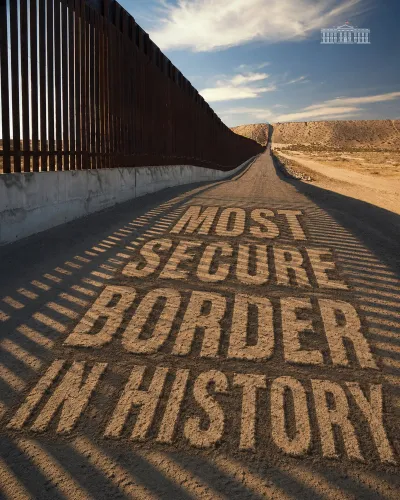
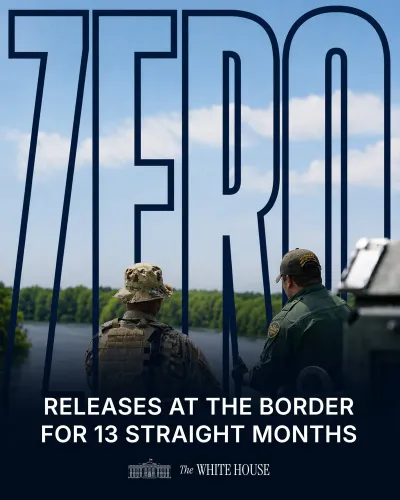
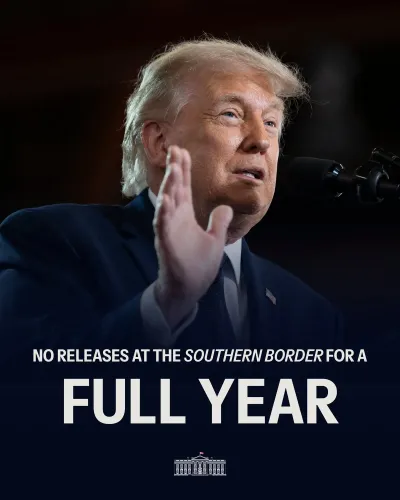
The White House posted a video on October 17, 2026 quoting the Vice President : 'We didn't just talk about closing the border — we actually did it.' The statement is a deliberate contrast with multiple past US administrations accused of promising but not delivering border closure.
The US-Mexico border stretches approximately 2,000 miles ; no single legal or operational definition of 'closed' exists.
Key verification will come from official Customs and Border Protection enforcement statistics and any new congressional proposals.
India ranks among the top source countries for US-bound migration, making US border and immigration policy directly relevant to Indian nationals.
The line between political promise and political proof has always been the sharpest divide in American immigration debates. On Saturday, October 17, 2026, The White House posted a pointed quote on X attributed to the Vice President of the United States — a declaration designed to draw exactly that distinction.
The post carried a single, dart-precise quote: 'We didn't just talk about closing the border — we actually did it.' Paired with a target emoji and a video, it is a deliberate contrast with decades of administrations that campaigned on border security and, critics have argued, delivered incomplete results.
A Claim Built for the Political Arena
Border security has functioned as a perennial flashpoint in American politics for at least three decades. Legislation such as the Secure Fence Act of 2006 authorised additional fencing along the roughly 2,000-mile US-Mexico border, yet enforcement outcomes remained contested across every subsequent administration. The rhetorical move the VP is making here — 'we said it, and we did it' — is textbook contrast messaging, positioning the current administration against a long line of predecessors accused of treating border closure as a campaign prop rather than an operational goal. US Border Patrol, the primary federal agency responsible for between-port-of-entry enforcement, along with a constellation of immigration courts, asylum adjudicators and congressional appropriators, all shape what 'closing the border' can actually mean in practice. Legal constraints, international asylum obligations, and resource availability have historically made any absolute closure claim subject to immediate scrutiny.What 'Closed' Actually Means — and Why It Matters
The VP's phrasing is politically loaded precisely because there is no single legal or operational definition of a 'closed' border. Administrations have measured success through metrics as varied as apprehension numbers, irregular-crossing encounters, asylum application rates, and physical infrastructure miles completed. Each metric tells a different story — and opponents and supporters routinely cite whichever version favours their argument. Watchers will now look to official enforcement statistics from Customs and Border Protection and any related legislative proposals moving through Congress to assess the factual underpinning of the claim. The video attached to the post is likely intended to supply visual evidence of that operational record — a format increasingly preferred by political communications teams to pre-empt fact-check counter-narratives.The Broader Stakes of the Statement
For an Indian audience tracking US immigration policy, the stakes are tangible. India consistently ranks among the top source countries for both legal and irregular migration to the United States. Any genuine tightening of the southern land border can redirect enforcement attention and policy energy toward visa backlogs, asylum processing and legal immigration pathways that directly affect hundreds of thousands of Indian nationals in the queue. The VP's quote may be short, but its political ambition is considerable — it is a marker planted in the record, daring opponents to dispute it before enforcement numbers are published.Point of View
Not rhetoric' contrast frame — a communications posture typically deployed when an administration believes its operational record can withstand comparison with predecessor promises. By attributing concrete finality to 'closing the border,' the statement front-runs future political attacks and forces opponents to engage on enforcement data rather than intent. For US immigration policy, this signals the administration intends to make border outcomes a centrepiece of its political identity heading into the next electoral cycle. Whether the claim survives contact with published enforcement statistics will determine whether it becomes a durable talking point or a liability.
NationPress
17 Oct 2026
Frequently Asked Questions
What did the US Vice President say about the border?
The Vice President, quoted by The White House on October 17, 2026, said: 'We didn't just talk about closing the border — we actually did it,' claiming the administration delivered concrete results rather than promises.
Is the US-Mexico border actually closed in 2026?
The White House has claimed the border is closed, but there is no single legal or operational definition of 'closed.' Official enforcement statistics from Customs and Border Protection will be the key measure to watch.
How does US border policy affect Indians?
India is consistently among the top source countries for US-bound migrants. Tightened border enforcement can shift policy attention and resources in ways that affect visa processing, asylum applications and legal immigration backlogs for Indian nationals.
What is the history of US border closure promises?
Multiple administrations, including the era of the Secure Fence Act of 2006, have pledged stronger border enforcement. Critics have long argued these promises outpaced operational results, which is the contrast the VP's statement is designed to exploit.
What should we watch for next on US border policy?
Release of official Customs and Border Protection enforcement statistics and any new legislative proposals in Congress will be the clearest indicators of whether the administration's 'closed border' claim is borne out by data.