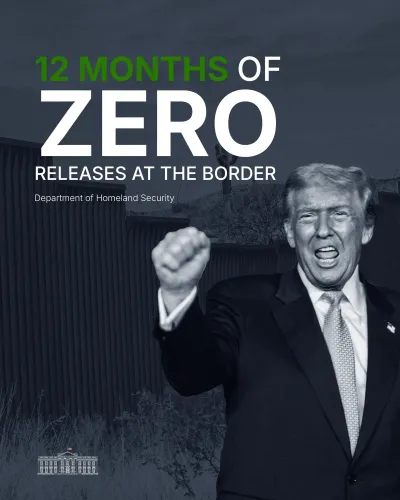
White House Claims Zero Border Releases for 13 Straight Months

Synopsis
The White House announced on July 9, 2026, that zero migrants have been released at the US-Mexico border for 13 straight months, framing the record as a direct result of the current presidential administration's enforcement-first immigration policy.
Key Takeaways
The White House posted on July 9, 2026 , claiming zero migrant releases at the US-Mexico border for 13 consecutive months .
The administration attributed the milestone entirely to a change in president, framing it as a defining immigration enforcement achievement.
Customs and Border Protection (CBP) is the federal agency that tracks border encounter and release metrics under the Department of Homeland Security.
The 'Remain in Mexico' or Migrant Protection Protocols policy, first launched in 2019 , established precedent for keeping asylum seekers outside US territory during case processing.
Key forward-looking factors include Congressional detention funding debates and potential legal challenges to the administration's parole and expedited removal authority.
The specific operational definition of 'release' used to calculate the 13-month figure has not been independently detailed in the post.
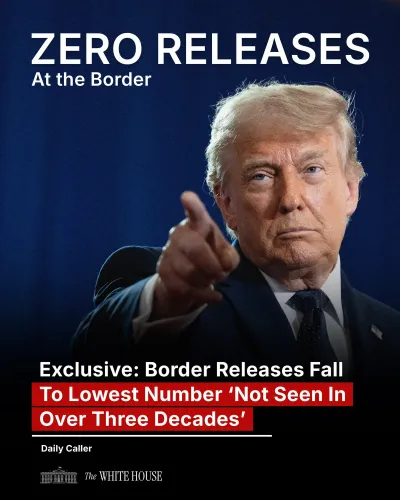
The White House, the official communications account of the Executive Office of the President of the United States, posted on X on Thursday, July 9, 2026, claiming that there have been zero migrant releases at the US-Mexico border for 13 consecutive months, attributing the shift entirely to a change in presidential administration.
Context
The post, written in emphatic capitals, states: 'ZERO RELEASES AT THE BORDER. 13 STRAIGHT MONTHS.' It adds, 'All we needed was a new president,' signalling that the current administration views this as a direct policy achievement tied to the change in White House occupancy. The claim positions border enforcement statistics as a defining metric of the administration's immigration agenda.
The US-Mexico border has long been the focal point of American immigration enforcement debates. Customs and Border Protection (CBP), the federal agency within the Department of Homeland Security responsible for processing and enforcing immigration law, tracks metrics including encounters, expulsions, returns, and releases into the interior of the country.
Policy Backdrop
The concept of 'releases' at the border refers to the practice of allowing migrants — particularly asylum seekers — to enter the United States while their immigration cases are processed, rather than detaining or immediately returning them. This practice became a central point of partisan contention over multiple administrations, with critics arguing it acted as a pull factor for irregular migration.
The Migrant Protection Protocols, commonly known as 'Remain in Mexico,' were first implemented in 2019 and required certain asylum seekers to await their hearings on the Mexican side of the border. Since then, successive administrations have used executive actions, parole authority adjustments, and expedited removal expansions to alter the processing pipeline. The current administration's claim of zero releases for 13 months suggests a near-total shift toward detention or immediate return for all border encounters.
US administrations have periodically publicised enforcement statistics — releases versus expulsions or returns — to demonstrate policy shifts after changes in presidential control. These metrics have been central to debates over asylum processing, parole authority, and detention capacity since at least the 2010s.
Stakeholders and Impact
The primary stakeholders in this policy shift are asylum seekers arriving at the southwest border, who under this framework are no longer being released into the United States pending case adjudication. Border agents and CBP personnel operate under the enforcement directives that have produced this outcome, and their workload and operational posture have shifted accordingly.
Advocacy groups representing migrants and asylum seekers have historically raised concerns about detention conditions, access to legal counsel, and the due-process implications of policies that curtail release. The administration's framing, however, presents the zero-release figure as an unambiguous enforcement success without reference to those dimensions.
What's Next
Congressional appropriations debates on border detention funding will be a key indicator of whether the current enforcement posture can be sustained at scale. Any new executive actions adjusting parole authority or expedited removal criteria could further entrench or alter the zero-release framework.
The 14th month and beyond will test whether the administration can maintain this metric amid potential legal challenges to detention authority, capacity constraints at detention facilities, and diplomatic dynamics with Mexico and other transit countries that underpin return agreements.
Point of View
All-caps post reads less as a policy briefing and more as a political victory lap — a deliberate contrast with the previous administration's record designed for maximum partisan resonance. By reducing a complex enforcement ecosystem to a single binary metric, the administration is betting that 'zero releases' is a message that travels cleanly across its base. The reference to 'a new president' as the sole causal variable is a rhetorical move that sidesteps structural factors — detention capacity, diplomatic agreements with Mexico, court orders — that shape border outcomes regardless of who occupies the Oval Office. Whether the metric holds under legal scrutiny and fiscal pressure will determine if this becomes a durable policy legacy or a talking point vulnerable to reversal.
NationPress
8 Oct 2026
Frequently Asked Questions
What does 'zero releases at the border' mean?
'Zero releases at the border' means that no migrants encountered at the US-Mexico border have been released into the United States while awaiting immigration case proceedings — instead they are detained or immediately returned. The White House used this metric on July 9, 2026, to claim a 13-month enforcement record.
How long has the US had zero border releases?
The White House claims 13 consecutive months of zero releases at the US-Mexico border as of July 2026, attributing the record to the current presidential administration.
What is the Migrant Protection Protocols or Remain in Mexico policy?
The Migrant Protection Protocols, known as 'Remain in Mexico,' were first implemented in 2019 and required certain asylum seekers to wait in Mexico while their US immigration cases were adjudicated, rather than being released into the United States.
Which agency enforces border releases and returns in the US?
Customs and Border Protection (CBP), a federal agency within the Department of Homeland Security, is responsible for processing migrants at the US-Mexico border and enforcing policies on releases, detentions, and returns.
What happens next with US border enforcement policy?
Key developments to watch include Congressional debates on detention facility funding, potential legal challenges to parole and expedited removal authority, and diplomatic agreements with Mexico that underpin return policies.