White House Claims Border Releases Hit 30-Year Low
Synopsis
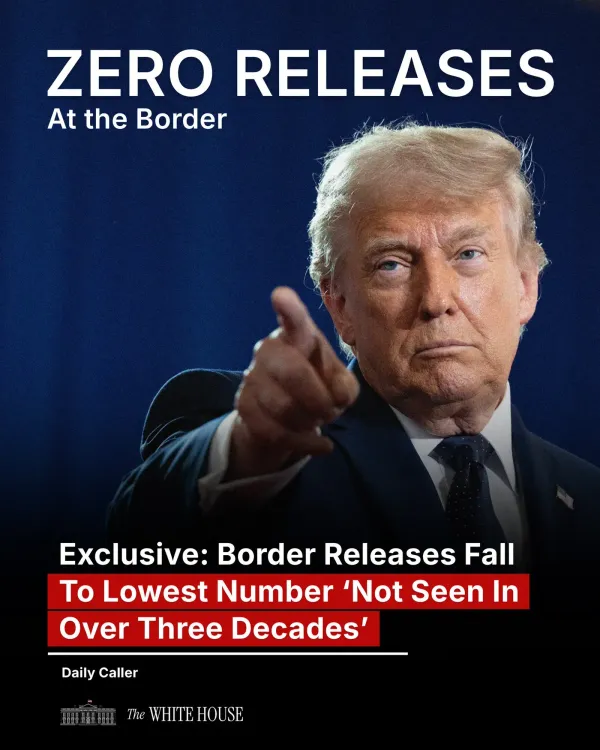
The White House announced on June 19, 2026, that migrant border releases have fallen to their lowest level in over three decades. The claim, framed as a fulfilled campaign promise, centres on CBP data from the southwest border and is expected to face scrutiny when official monthly figures are released.
Key Takeaways
The White House claimed on June 19, 2026 , that U.S. border releases are at their lowest in over 30 years .
The announcement was framed explicitly as a fulfilled campaign promise by the administration.
Customs and Border Protection (CBP) under the Department of Homeland Security is the agency that tracks and reports migrant release statistics.
Historical policy tools such as the Migrant Protection Protocols (2019) and Title 42 (2020–2023) previously drove release numbers down during earlier periods.
Specific 2026 statistics and the exact definition of 'releases' used in the claim are yet to be officially published by CBP.
Subsequent monthly CBP data releases will be key to verifying the administration's assertion.
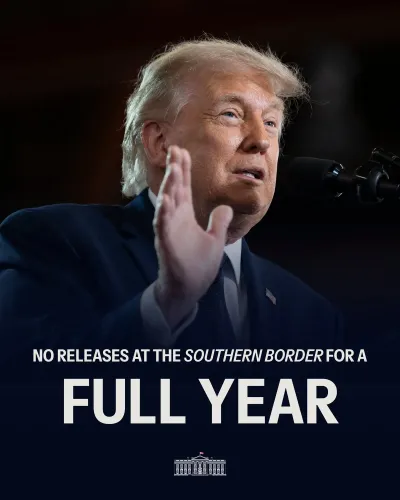
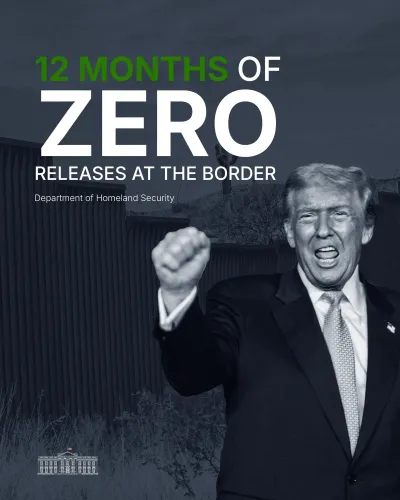
The White House declared on Friday, June 19, 2026, that migrant border releases have fallen to their lowest level in over three decades, framing the milestone as a fulfilment of a core campaign promise by the current administration.
Context
The post, shared from the official White House account on X, stated: 'Border Releases Fall to the LOWEST NUMBER NOT SEEN IN OVER THREE DECADES. PROMISES MADE, PROMISES KEPT.' The claim centres on the number of migrants released into the United States after being encountered at the southwest border — a metric tracked by U.S. Customs and Border Protection (CBP), the federal agency under the Department of Homeland Security responsible for processing migrant encounters.
'Releases' in border policy parlance refers to migrants who, after being encountered by CBP, are allowed to remain in the country while their immigration or asylum cases are processed, rather than being detained or expelled. A multi-decade low would imply numbers not seen since the 1990s, when modern border data collection was being standardised.
Policy Backdrop
The Trump administration's first term introduced the Migrant Protection Protocols (MPP) in 2019 — commonly known as 'Remain in Mexico' — which required certain asylum seekers to wait in Mexico for their U.S. immigration hearings, directly reducing the volume of migrants released into the interior. Separately, Title 42, a public health expulsion authority invoked in 2020, sharply curtailed releases until its termination in 2023.
U.S. administrations have historically used a combination of detention capacity, asylum rule changes, and bilateral agreements with Mexico to influence release rates. Encounter volumes at the southwest border, which surged to historic highs in the early 2020s, placed sustained pressure on CBP's processing and detention infrastructure, making releases a politically charged metric.
Stakeholders and Impact
Border communities in states such as Texas, Arizona, and California have long cited high release numbers as straining local resources, including shelters, healthcare, and schools. A sustained reduction, if verified by official CBP data, would represent a significant shift in the operational picture for those communities.
For asylum seekers, lower release numbers typically correspond to higher rates of detention or expedited removal, raising concerns among immigration advocacy groups about due process and humanitarian conditions. The administration's framing of the figure as a promise kept signals that further enforcement-oriented measures may follow.
What's Next
The specific statistics underlying the White House's claim are expected to be detailed in forthcoming monthly CBP encounter and release data publications. Analysts and lawmakers on both sides of the debate will scrutinise the exact definition of 'releases' used, the time period of comparison, and whether the trend holds in subsequent months.
Any new Department of Homeland Security guidance or Congressional funding requests tied to border operations will be closely watched as indicators of whether the administration intends to institutionalise the current enforcement posture.
Point of View
Positioning enforcement metrics as the primary yardstick of immigration success. Historically, administrations that anchor their credibility to single border statistics face significant political exposure when definitions shift or monthly data fluctuates. The claim of a three-decade low, if substantiated by CBP's official release, would mark a genuine enforcement milestone — but the absence of specific figures in the post leaves room for definitional debate. For Indian observers tracking U.S. immigration policy, this signals that the current administration is unlikely to ease enforcement postures that also affect skilled and undocumented Indian migrants in the interior.
NationPress
18 Sept 2026
Frequently Asked Questions
What does 'border releases' mean in US immigration policy?
'Border releases' refers to migrants encountered by U.S. Customs and Border Protection at the border who are allowed to enter and remain in the United States while their immigration or asylum cases are processed, rather than being detained or immediately expelled.
Why is the White House claiming a 30-year low in border releases?
The White House posted on June 19, 2026, that border releases have fallen to their lowest level in over three decades, framing it as a fulfilled campaign promise on immigration enforcement. Specific CBP data underpinning the claim is expected in forthcoming official monthly reports.
What policies have historically reduced US border releases?
Key policies include the Migrant Protection Protocols (Remain in Mexico) introduced in 2019, which required asylum seekers to wait in Mexico for hearings, and Title 42, a public health expulsion authority used from 2020 until 2023, both of which sharply reduced interior releases during their operation.
How does a drop in US border releases affect Indian migrants?
A lower release rate generally means higher detention or expedited removal for all migrant groups, including undocumented Indian nationals at the southwest border. It also signals a stricter overall enforcement environment that can affect visa and immigration processing timelines more broadly.
Where can I find official US border release statistics?
Official migrant encounter and release data is published monthly by U.S. Customs and Border Protection on the CBP website, broken down by nationality, sector, and encounter type.