White House Marks One Year of Zero Border Releases
Synopsis
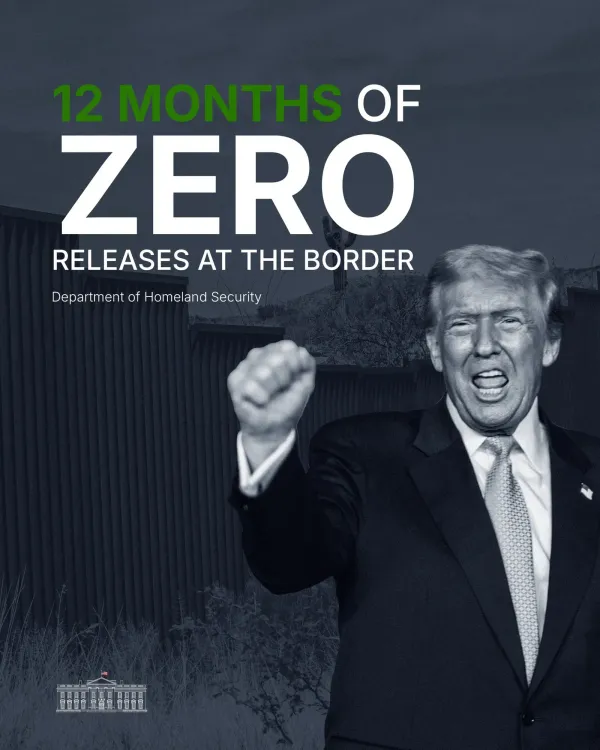
The White House has marked one full year of zero migrant releases at the U.S.-Mexico border, framing the milestone as a fulfilled campaign promise. The announcement underscores the Trump administration's deterrence-first immigration posture and sets up a key metric heading into congressional appropriations debates.
Key Takeaways
The White House posted on 25 May 2026 claiming a full year of zero migrant releases at the U.S.-Mexico border .
The 'zero releases' policy is a direct continuation of enforcement priorities that began in the first Trump term, including the Migrant Protection Protocols launched in 2019 .
Customs and Border Protection (CBP) has historically used release and parole authority when detention capacity was exceeded during high-encounter periods.
The administration frames the milestone as a fulfilled campaign promise, while critics raise humanitarian and due-process concerns for asylum seekers.
Monthly CBP statistics and congressional appropriations debates over detention funding will be the next key indicators to watch.
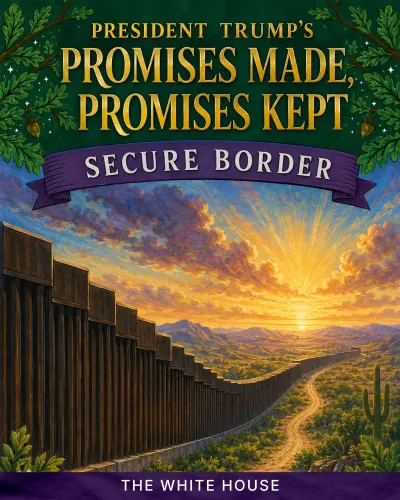
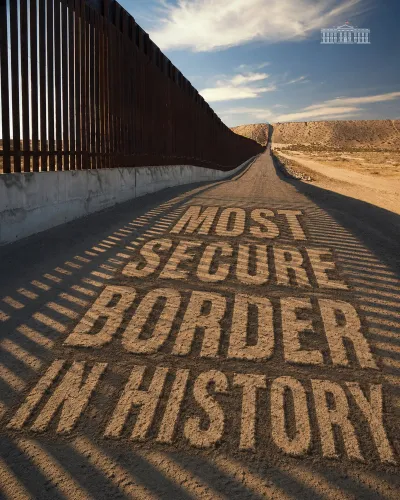
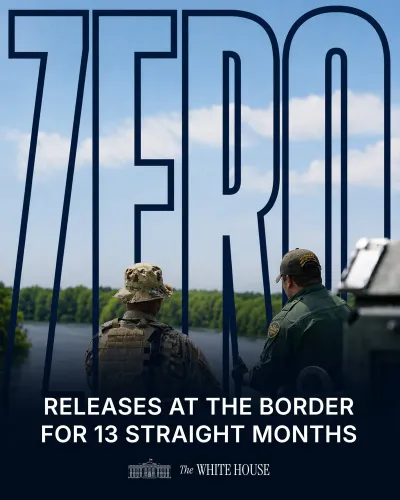
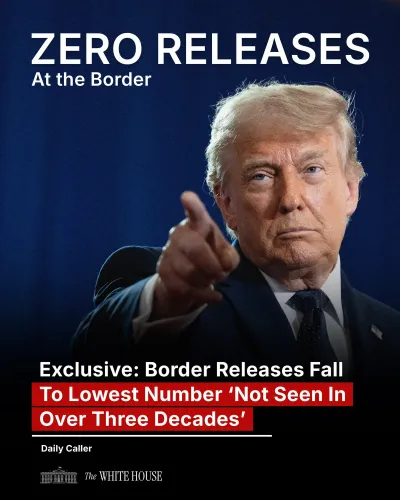
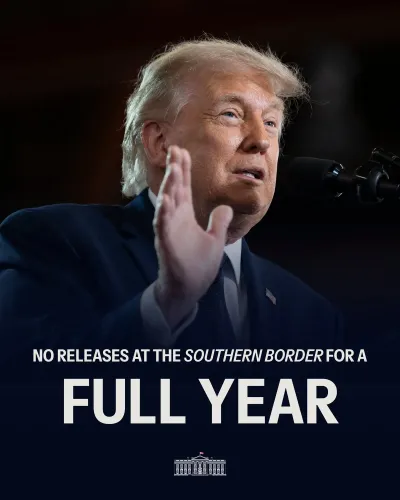
The White House on Sunday, 25 May 2026, marked what it described as a full year of zero migrant releases at the U.S.-Mexico border, posting on X that 'promises made, promises kept' under the current administration's immigration enforcement posture.
Context
The post, brief and emphatic, declared: 'A FULL year of ZERO releases at the border. PROMISES MADE, PROMISES KEPT.' The message is directed at a domestic audience that has closely tracked border enforcement as one of the defining political issues of the Trump administration's return to office. The claim positions the current period as a clean break from the practice of releasing migrants into the U.S. interior while their immigration cases are processed.
Releasing migrants pending hearings — sometimes called 'catch and release' by critics — became a flashpoint in U.S. immigration debates over the past decade. Customs and Border Protection (CBP), the federal agency under the Department of Homeland Security, has historically used releases and parole authority when detention capacity was strained during high-encounter periods.
Policy Backdrop
The roots of the current policy stretch back to January 2017, when executive orders from the first Trump term directed expanded border wall construction and stricter enforcement aimed specifically at reducing interior releases. The Migrant Protection Protocols (MPP), launched in 2019 and popularly known as 'Remain in Mexico,' required many asylum seekers to wait in Mexico for U.S. immigration hearings rather than being paroled inside the country.
The MPP was rescinded by the subsequent administration and then reinstated after Trump returned to office in January 2025. The current White House has consistently framed zero releases as both a security imperative and a fulfilment of a core campaign promise. The one-year milestone, if accurate, would represent the longest sustained period of no-release enforcement in recent U.S. border history.
Stakeholders and Impact
Border Patrol agents and enforcement advocates have long argued that the release pipeline undermined deterrence, drawing more migrants to attempt crossings. Ending releases, they contend, removes the incentive structure that sustained high encounter numbers in prior years.
For asylum seekers and immigration rights advocates, the policy represents a near-complete closure of a legal pathway that allowed claimants to live and work in the United States while their cases moved through an already overburdened immigration court system. Critics argue the policy raises humanitarian and due-process concerns, particularly for families and individuals fleeing persecution. The administration's position is that legal ports of entry remain open for orderly asylum processing.
What's Next
Monthly CBP encounter and enforcement statistics will be closely watched to substantiate or contextualise the White House's claim. Congressional debates over detention facility capacity and appropriations funding are expected to intensify as the administration seeks to sustain the no-release posture at scale.
The one-year marker is also likely to feature prominently in upcoming political messaging cycles. How the administration handles any surge in encounter numbers — which have historically tested detention infrastructure — will determine whether the 'zero releases' benchmark can be maintained into a second year.
Point of View
Promises kept' framing is a deliberate piece of political branding, tying a measurable operational metric directly to electoral credibility. By marking a one-year milestone, the administration signals that deterrence-based enforcement is not a temporary posture but an institutionalised policy. For India and other countries whose nationals form part of irregular migration flows into the United States, the sustained no-release stance has real consular and diaspora implications. The durability of this benchmark will ultimately depend on whether detention infrastructure can absorb any future surge — a fiscal and logistical test that congressional appropriators will soon have to answer.
NationPress
9 Oct 2026
Frequently Asked Questions
What does 'zero releases at the border' mean?
'Zero releases' refers to the U.S. government's policy of not releasing migrants apprehended at the border into the U.S. interior while their immigration cases are pending. Instead, migrants are either detained or returned, rather than being paroled or released on recognizance.
Why did the White House post about one year of zero border releases?
The White House posted to mark what it called a one-year milestone of its no-release immigration enforcement policy, framing it as a fulfilled campaign promise made by the Trump administration on border security.
What is the U.S.-Mexico border release policy?
Historically, U.S. authorities sometimes released migrants pending immigration hearings due to limited detention capacity, a practice critics called 'catch and release.' The current administration ended this practice and claims to have maintained zero releases for a full year.
How does this affect asylum seekers at the U.S. border?
Asylum seekers are no longer released into the United States while their cases are heard. They must either wait in detention or, under policies like Migrant Protection Protocols, remain in Mexico, significantly limiting access to legal support and employment during the process.
What is Customs and Border Protection's role in border releases?
Customs and Border Protection (CBP) is the federal agency that manages migrant encounters at the border. It has the authority to detain, release, or return migrants, and its monthly statistics are the primary official source for tracking enforcement trends.