Trump White House Declares Zero Tolerance at US Border
Synopsis
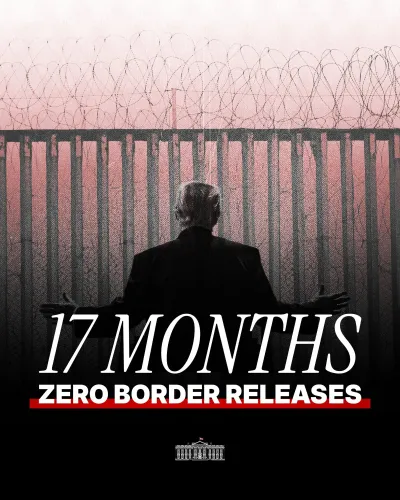
The White House on June 11, 2026 announced the Trump administration is reversing Biden-era border policies, invoking a zero-tolerance stance on unlawful activity and framing tighter enforcement as essential to protecting vulnerable children at the US southern border.
Key Takeaways
The White House posted on June 11, 2026 declaring zero tolerance for unlawful border activity under the Trump administration .
The statement frames current enforcement as a direct reversal of Biden-era open-border policies, including the 2021 pause on wall construction and termination of Migrant Protection Protocols.
Protection of children and vulnerable migrants is cited as the primary justification for the enforcement-first approach.
The Department of Homeland Security , overseeing CBP and ICE , is the central agency implementing these reversals.
US immigration policy has alternated sharply with partisan control of the White House, with no new legislation underpinning the current shift.
Follow-on executive orders on expedited removal and new child-protection protocols are expected to be the next concrete steps.
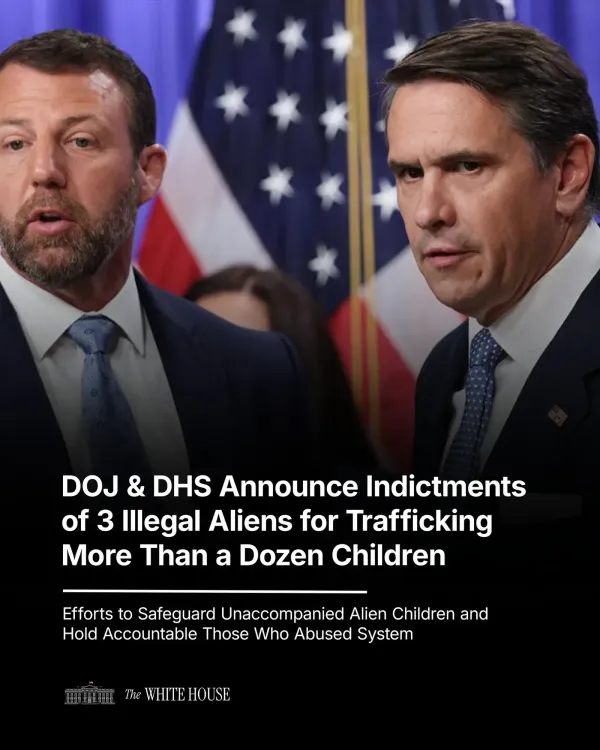
The White House on Thursday, June 11, 2026 declared that the Trump administration is actively reversing what it described as the damage caused by years of open-border policies under former President Joe Biden, citing a zero-tolerance stance on unlawful activity and a commitment to protecting children at the US southern border.
Context
The official White House post quoted a senior administration figure as stating: 'When government fails to protect our borders, it is the most vulnerable who suffer. This department and this administration has ZERO TOLERANCE for unlawful activity and is committed to protecting children.' The statement frames border enforcement explicitly as a child-protection imperative, a rhetorical posture that has been central to the Trump administration's immigration messaging since its return to office.
The post comes amid a broader White House communications push characterising the Biden-era border approach — which included pausing wall construction and terminating the Migrant Protection Protocols in January 2021 — as a policy failure that the current administration is now correcting.
Policy Backdrop
US immigration enforcement has swung sharply with each change in the White House. The first Trump administration launched a zero-tolerance prosecution policy for illegal border crossings in 2018, which led to family separations and drew widespread legal and humanitarian scrutiny. The Biden administration reversed several of those measures through executive action upon taking office in 2021, halting border-wall projects and altering asylum and deportation frameworks.
The Department of Homeland Security (DHS) — which oversees Customs and Border Protection (CBP) and Immigration and Customs Enforcement (ICE) — sits at the centre of these reversals. The current administration's messaging indicates DHS is once again the primary instrument for tightening border controls and pursuing enforcement-first immigration policy.
Stakeholders and Impact
Migrant children and unaccompanied minors are the stated focal point of the administration's child-protection framing. Both Republican and Democratic administrations have historically invoked the welfare of children to justify contrasting approaches — deterrence-based enforcement on one side, humanitarian processing and asylum access on the other.
Border communities along the 2,000-mile US-Mexico boundary and frontline immigration enforcement personnel are also directly affected by each policy shift. Advocacy groups working on migrant rights and anti-trafficking efforts are expected to scrutinise the specific protocols that follow from this public declaration.
What's Next
Analysts and policy watchers will look for concrete follow-on action, including executive orders expanding expedited removal, potential reinstatement of the Remain in Mexico programme, and formal DHS or Department of Health and Human Services (HHS) announcements detailing new child-protection or anti-trafficking operations. The White House post linked to additional content that was not independently verifiable at the time of publication.
With immigration remaining one of the most contested issues in US domestic politics, the administration's zero-tolerance posture signals that enforcement escalation — rather than legislative compromise — will define border policy for the foreseeable future.
Point of View
Centred on child protection. This mirrors a well-worn pattern in US immigration politics where both parties claim the moral high ground on vulnerable migrants while pursuing structurally opposite policies. By anchoring the zero-tolerance message to children rather than to illegal crossings per se, the Trump administration is attempting to insulate its enforcement posture from the humanitarian criticism that dogged the 2018 family-separation episode. The absence of new legislation means this entire policy arc rests on executive action alone, making it as reversible as the Biden-era orders it is now unwinding.
NationPress
26 Oct 2026
Frequently Asked Questions
What is the Trump administration's zero tolerance border policy in 2026?
The Trump administration has declared zero tolerance for unlawful activity at the US southern border, framing tighter enforcement as necessary to protect children and other vulnerable migrants, as announced by the White House on June 11, 2026.
How did Biden's border policies differ from Trump's?
The Biden administration in January 2021 paused border-wall construction and terminated the Migrant Protection Protocols (Remain in Mexico), shifting toward humanitarian processing and expanded asylum access — measures the Trump administration is now reversing.
Which department is responsible for US border enforcement?
The Department of Homeland Security (DHS), through its agencies Customs and Border Protection (CBP) and Immigration and Customs Enforcement (ICE), is the primary federal body overseeing US border security and immigration enforcement.
Why does the Trump administration mention children in its border policy statements?
The administration frames border enforcement as a child-protection measure, arguing that weak border security exposes the most vulnerable — including migrant children — to unlawful activity, trafficking, and exploitation.
What executive actions could follow the White House's zero tolerance announcement?
Analysts expect potential executive orders expanding expedited removal, possible reinstatement of the Remain in Mexico programme, and formal DHS or HHS announcements on anti-trafficking and child-protection protocols at the border.