CM Fadnavis Takes Darshan of Sant Padukas at Ashadhi Wari in Pune
Synopsis
Maharashtra CM Devendra Fadnavis joined the Ashadhi Wari in Pune on 11 July 2026, taking darshan of the sacred Padukas of Sant Tukaram Maharaj and Sant Dnyaneshwar Mauli and meeting Warkari pilgrims, calling the experience one of the most humbling of his life.
Key Takeaways
CM Devendra Fadnavis participated in the Ashadhi Wari in Pune on 11 July 2026 .
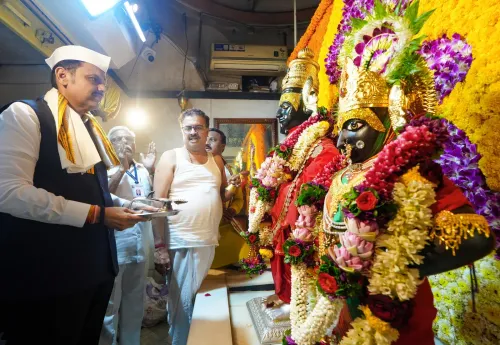
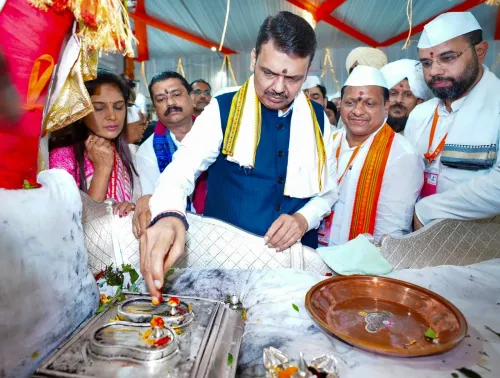
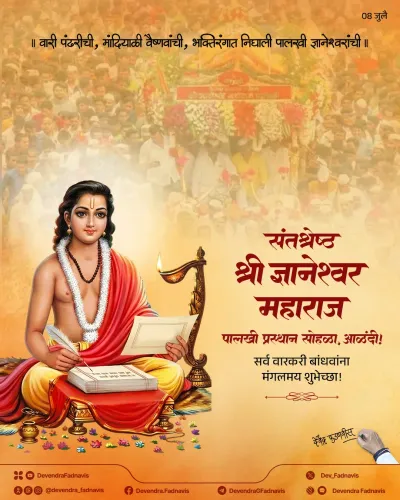
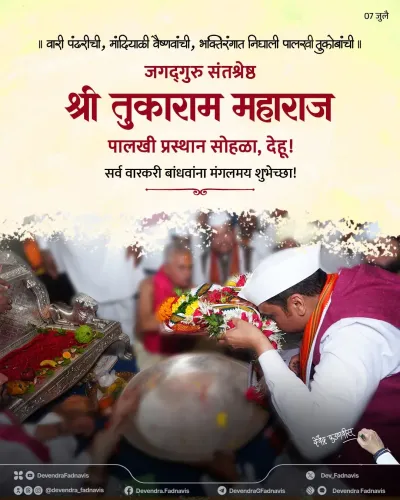
He took darshan of Sant Tukaram Maharaj's Padukas at Nivdunga Vithoba Mandir and Sant Dnyaneshwar Mauli's Padukas at Vitthal-Rukmini Temple, Bhavani Peth .
Union MoS Murlidhar Mohol , MLA Sunil Kamble and MLA Hemant Rasane were present alongside the CM.
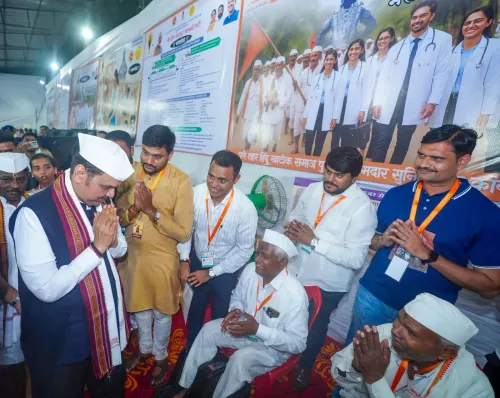
Fadnavis described meeting Warkari pilgrims and receiving Charan Seva as 'one of the most humbling experiences' of his life.
The Ashadhi Wari is an annual pilgrimage rooted in Maharashtra's 13th-to-17th-century bhakti movement , culminating at Pandharpur on Ashadhi Ekadashi .
The CM invoked the tradition's message of 'faith, equality and selfless service.'
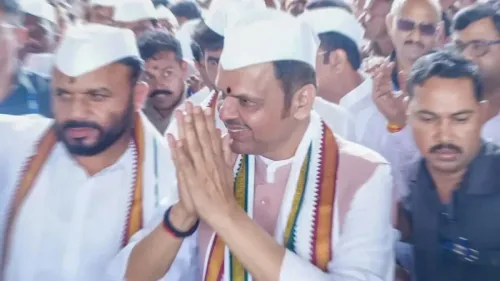
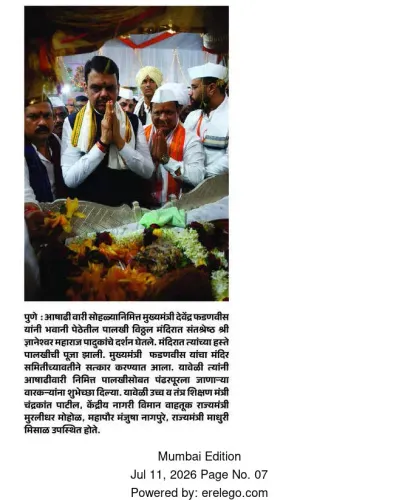
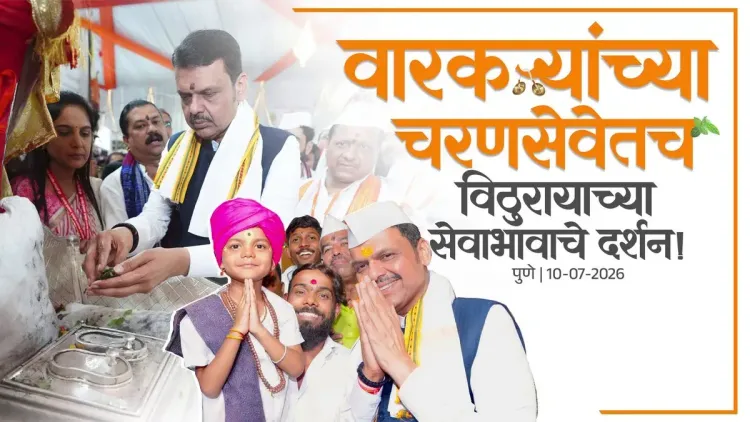
Maharashtra Chief Minister Devendra Fadnavis participated in the Ashadhi Wari pilgrimage in Pune on Saturday, 11 July 2026, taking darshan of the sacred Padukas of Jagadguru Sant Tukaram Maharaj at Nivdunga Vithoba Mandir and of SantShreshth Shri Dnyaneshwar Mauli at the Vitthal-Rukmini Temple, Bhavani Peth, and meeting Warkari pilgrims who had walked miles to reach the city.
Context
Posting in a mix of Hindi and English, Fadnavis opened with the traditional invocation 'Jai Jai Ramkrishna Hari' and described Pune as resonating with the chants of 'Gyanba-Tukaram' and 'Mauli, Mauli' to the rhythm of taal and mridang. He wrote that standing before the Padukas produced 'an overwhelming wave of devotion — a feeling that no words can truly capture.' The Chief Minister called his participation in the Wari 'one of the most humbling experiences of my life.'
Union Minister of State Murlidhar Mohol, MLA Sunil Kamble, MLA Hemant Rasane and other dignitaries accompanied Fadnavis during the visit.
Policy Backdrop
The Ashadhi Wari is an annual monsoon pilgrimage in which lakhs of Warkaris walk to Pandharpur, carrying the Padukas of Sant Tukaram Maharaj — the 17th-century poet-saint whose abhangas are the devotional heartbeat of the Warkari tradition — and of Sant Dnyaneshwar, the 13th-century saint-philosopher who authored the Dnyaneshwari, a foundational Marathi commentary on the Bhagavad Gita. The pilgrimage culminates on Ashadhi Ekadashi, the most sacred day in the Warkari calendar.
Successive Maharashtra governments have treated the Wari as a major state-supported cultural event, typically arranging logistics, medical camps and darshan facilities along the route. Fadnavis noted that meeting pilgrims who had walked miles and receiving 'Charan Seva' — the ritual care and comfort extended to Warkaris — was itself an act of devotion to Lord Vitthal.
Stakeholders and Impact
The Varkari tradition, rooted in the 13th-to-17th-century bhakti movement, has historically functioned as a vehicle for social egalitarianism in Maharashtra, drawing devotees across caste lines under the unifying banner of devotion to Vitthal — the form of Vishnu worshipped at Pandharpur. Fadnavis invoked this dimension directly, writing that the centuries-old tradition 'continues to inspire us all, towards faith, towards equality, towards selfless service.'
For the lakhs of Warkaris who undertake the gruelling walk each year, the presence of senior state leadership at key temple stops in Pune signals continued government attention to pilgrim welfare and the cultural significance of the Wari.
What's Next
The pilgrimage culminates at Pandharpur on Ashadhi Ekadashi, when the Padukas arrive at the Vitthal temple for the principal darshan. Observers will watch for any state announcements on pilgrim amenities, route infrastructure upgrades, or cultural-heritage schemes tied to the Wari season. Fadnavis's visible participation alongside a Union MoS and elected representatives also signals the BJP-led government's continued emphasis on Maharashtra's bhakti heritage as a point of cultural identity.
Point of View
Which commands deep reverence across caste and class lines in the state. The Wari's egalitarian ethos, emphasising devotion over social hierarchy, offers political leaders a rare platform to project humility and cultural rootedness simultaneously. Coming ahead of Ashadhi Ekadashi, the visit also keeps the government visible during one of Maharashtra's highest-footfall religious events. How the state follows up with concrete pilgrim-welfare measures will determine whether this engagement translates into lasting policy momentum.
NationPress
9 Oct 2026
Frequently Asked Questions
What is the Ashadhi Wari pilgrimage?
The Ashadhi Wari is an annual monsoon pilgrimage in which lakhs of Warkari devotees walk to Pandharpur, carrying the sacred Padukas of Sant Tukaram Maharaj and Sant Dnyaneshwar Mauli, culminating in darshan at the Vitthal temple on Ashadhi Ekadashi.
Why did CM Devendra Fadnavis visit Pune during the Wari?
CM Fadnavis visited Pune to take darshan of the Padukas of Sant Tukaram Maharaj at Nivdunga Vithoba Mandir and Sant Dnyaneshwar Mauli at Vitthal-Rukmini Temple in Bhavani Peth, and to meet Warkari pilgrims as part of the Ashadhi Wari on 11 July 2026.
Who is Sant Tukaram Maharaj?
Sant Tukaram Maharaj was a 17th-century Marathi poet-saint whose devotional compositions, known as abhangas, form the core of the Warkari tradition and are sung by pilgrims during the annual Wari to Pandharpur.
Who is Sant Dnyaneshwar?
Sant Dnyaneshwar was a 13th-century saint-philosopher who authored the Dnyaneshwari, a celebrated Marathi commentary on the Bhagavad Gita, and is one of the two principal saints whose Padukas lead the Ashadhi Wari procession.
Which dignitaries accompanied CM Fadnavis at the Wari in Pune?
Union Minister of State Murlidhar Mohol, MLA Sunil Kamble and MLA Hemant Rasane accompanied CM Devendra Fadnavis during his Ashadhi Wari visit in Pune on 11 July 2026.