CM Fadnavis, CMO Maharashtra Mark Wari Pilgrimage
Synopsis
The Chief Minister's Office of Maharashtra marked the annual Wari pilgrimage on 11 July 2026 with a post on X featuring CM Devendra Fadnavis, reflecting the state government's consistent engagement with the Varkari tradition that draws lakhs of devotees to Pandharpur each year.
Key Takeaways
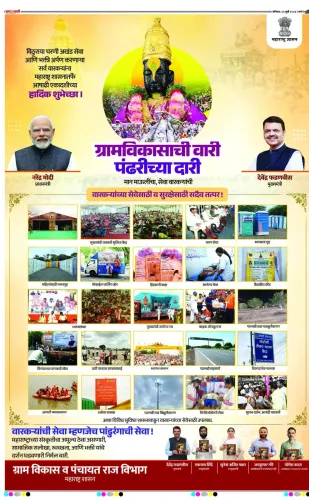
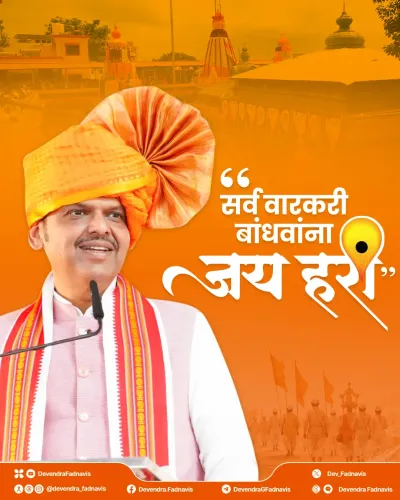
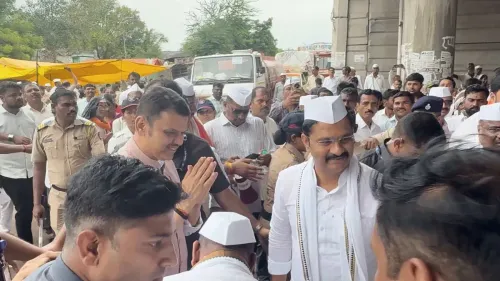
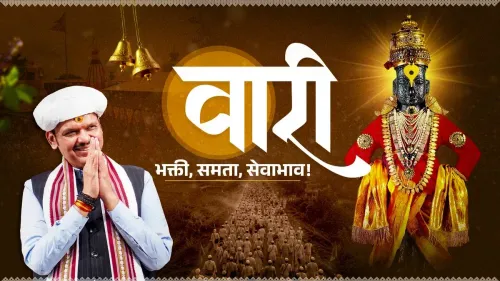
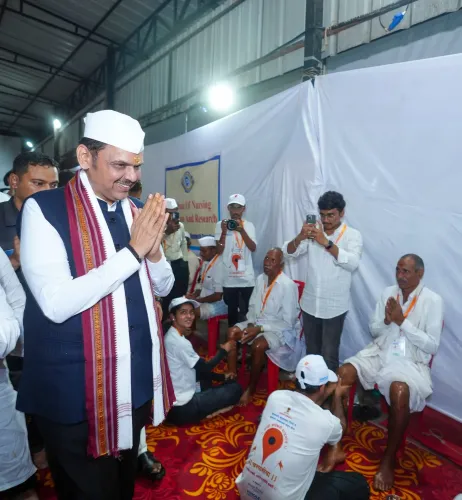
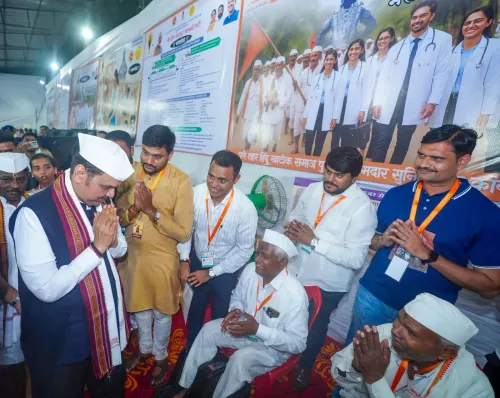
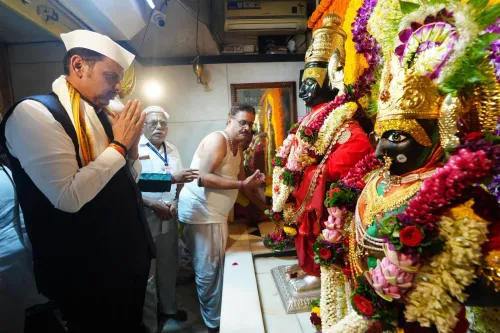
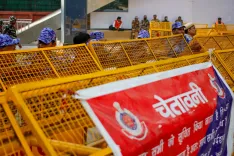
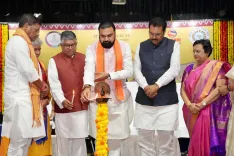
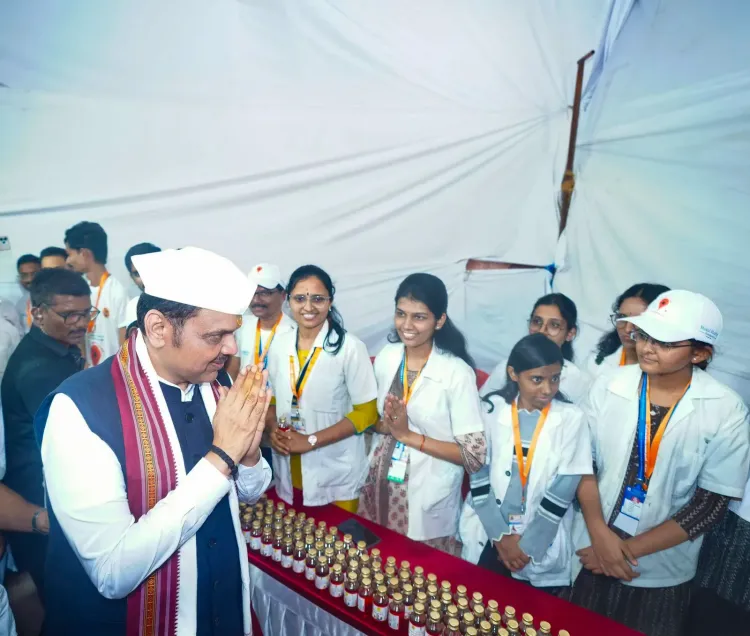
The CMO Maharashtra posted on X on 11 July 2026 with the hashtags #Wari and #DevendraFadnavis , accompanied by three images .
The Wari is an annual pilgrimage to Pandharpur, Solapur district , rooted in the Varkari spiritual tradition and attended by lakhs of devotees .
Maharashtra governments have provided medical, security, and sanitation support for the Wari for multiple decades .
CM Devendra Fadnavis has publicly engaged with the state's cultural and religious traditions during his tenure.
State agencies including police and health departments coordinate logistics along the pilgrimage route each year.
The Chief Minister's Office of Maharashtra posted on X (formerly Twitter) on Saturday, 11 July 2026, sharing content related to the annual Wari pilgrimage and Chief Minister Devendra Fadnavis, accompanied by three images.
Context
The Wari is one of Maharashtra's most revered annual pilgrimages, drawing lakhs of devotees who walk hundreds of kilometres to the temple town of Pandharpur in Solapur district. The pilgrimage, rooted in the Varkari spiritual tradition, converges on Ashadhi Ekadashi and Kartiki Ekadashi each year, with processions originating from Alandi, Dehu, and other sacred sites across the state.
The CMO's post, tagged with #Maharashtra, #DevendraFadnavis, and #Wari, signals the state government's active association with the pilgrimage season, consistent with its role in coordinating large-scale public gatherings of this nature.
Policy Backdrop
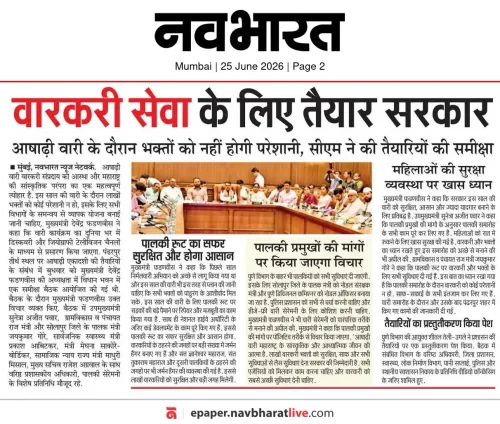
Maharashtra governments across administrations have for several decades provided dedicated logistical support for the Wari, including medical camps, sanitation facilities, police deployment, and route management along the pilgrimage corridors. This institutional support reflects a long-standing state policy of ensuring public safety and order during mass religious events.
Chief Minister Devendra Fadnavis has publicly engaged with the state's cultural and religious traditions during his tenure, and the CMO's acknowledgement of the Wari continues that pattern. Such gestures by elected leaders are a consistent feature of governance in Maharashtra, where the Varkari movement commands deep social and cultural resonance across communities.
Stakeholders and Impact
The pilgrimage directly involves lakhs of Varkari devotees who undertake the walk each year, as well as local communities along the route who host and support the processions. State agencies — including the police, health department, and civic bodies — are central stakeholders in ensuring the event proceeds safely.
The CMO's social media engagement with the Wari serves to reaffirm the government's commitment to the pilgrims' welfare and to acknowledge the cultural significance of the tradition to millions of Maharashtra residents.
What's Next
Attention will now turn to formal state government announcements on administrative arrangements for the current Wari cycle, including details of volunteer deployment, medical infrastructure along the route, and any new facilities being introduced this year. The scale and quality of these arrangements are typically scrutinised by pilgrims, local bodies, and civil society groups in the weeks surrounding the pilgrimage.
Point of View
Associating with the Varkari tradition — which cuts across caste and regional lines in Maharashtra — carries both cultural and political weight. Such gestures are rarely merely ceremonial; they signal administrative attentiveness to a constituency of millions who participate in or revere the pilgrimage. The broader arc here is one of state governments increasingly using digital platforms to communicate their engagement with cultural heritage alongside formal policy announcements.
NationPress
9 Oct 2026
Frequently Asked Questions
What is the Wari pilgrimage in Maharashtra?
The Wari is an annual Hindu pilgrimage in Maharashtra in which lakhs of Varkari devotees walk to the temple town of Pandharpur in Solapur district, converging on Ashadhi Ekadashi and Kartiki Ekadashi. The processions originate from sacred sites such as Alandi and Dehu.
What did the CMO Maharashtra post about Wari in 2026?
On 11 July 2026, the Chief Minister's Office of Maharashtra posted on X with the hashtags #Wari and #DevendraFadnavis, sharing three images in association with the annual pilgrimage.
What support does the Maharashtra government provide for the Wari?
The Maharashtra government has for several decades provided medical camps, sanitation facilities, police deployment, and route management along the Wari pilgrimage corridors to ensure public safety and order.
Who is Devendra Fadnavis?
Devendra Fadnavis is the Chief Minister of Maharashtra. He has publicly engaged with the state's cultural and religious traditions during his tenure, including the Wari pilgrimage season.
When does the Pandharpur Wari take place?
The Pandharpur Wari takes place twice a year, centred on Ashadhi Ekadashi and Kartiki Ekadashi in the Hindu calendar, typically falling in the months of June-July and October-November respectively.