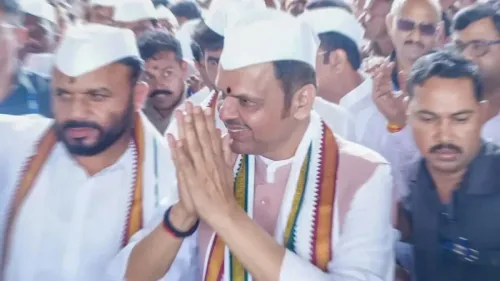
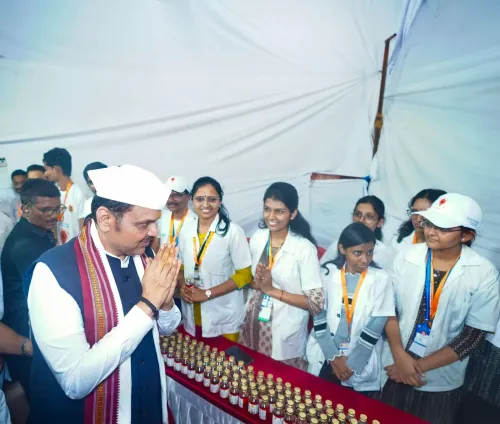
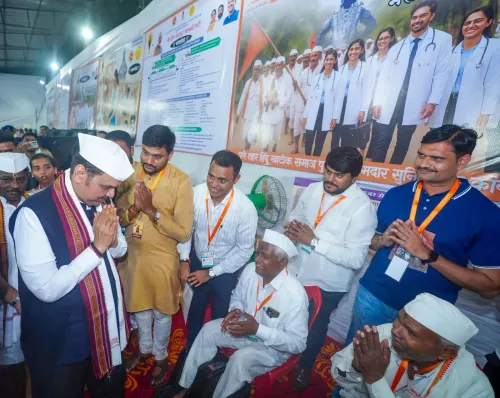
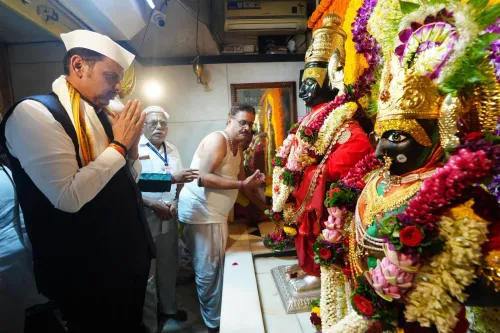
CM Fadnavis: Maharashtra Govt Ready to Serve Warkari Pilgrims
Synopsis
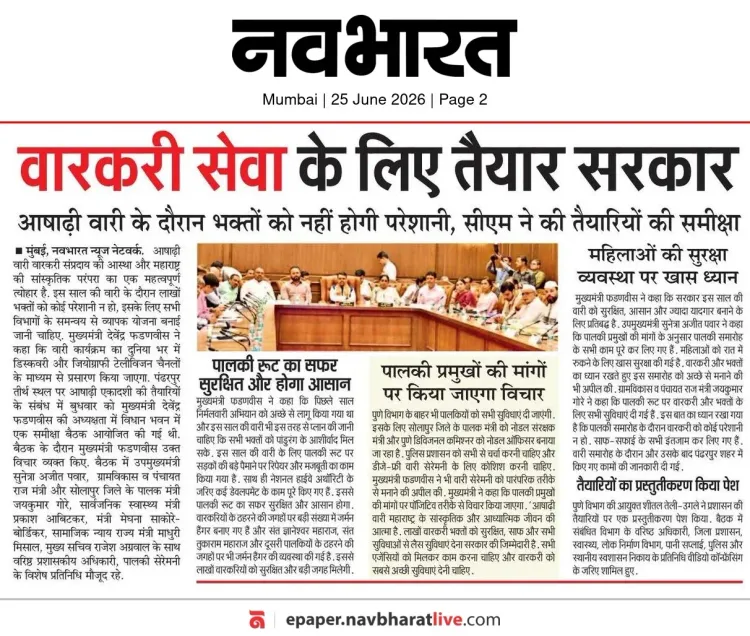
The Chief Minister's Office of Maharashtra on 25 June 2026 reposted CM Devendra Fadnavis's declaration that the state government is fully prepared to serve Warkari pilgrims for the annual Wari pilgrimage to Pandharpur, signalling administrative readiness ahead of Ashadhi Ekadashi.
Key Takeaways
The CMO Maharashtra on 25 June 2026 shared CM Devendra Fadnavis 's message confirming government readiness for the Wari pilgrimage.
The Hindi declaration 'Warkari seva ke liye taiyar sarkar' translates to 'Government ready for Warkari service.' The Wari is an annual pilgrimage to the Vitthal-Rukmini temple, Pandharpur , drawing hundreds of thousands of devotees on Ashadhi Ekadashi .
Maharashtra governments have historically deployed police, health, and transport resources to manage the pilgrimage.
District administrations across Pune, Solapur and adjoining districts are the primary operational units for ground-level coordination.
Detailed route-wise facility notifications and traffic advisories for 2026 are expected to follow.
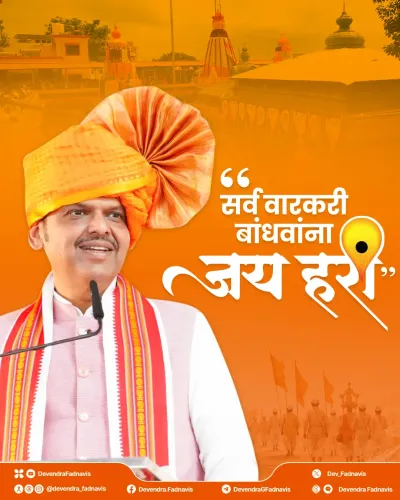
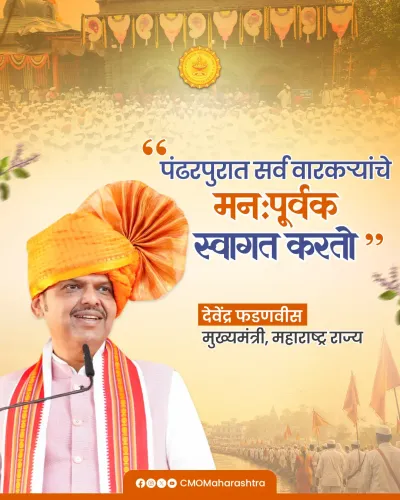
The Chief Minister's Office of Maharashtra on Thursday, 25 June 2026 reposted a message attributed to Chief Minister Devendra Fadnavis affirming that the state government stands ready to serve Warkari pilgrims for the annual Wari pilgrimage season.
Context
The post, shared via the official CMO Maharashtra handle, carried the Hindi message 'Warkari seva ke liye taiyar sarkar' — meaning 'Government ready for Warkari service' — alongside the hashtags #Maharashtra, #DevendraFadnavis, and #Wari. The declaration signals the state administration's public commitment ahead of the Ashadhi Ekadashi Wari, one of Maharashtra's largest and most sacred annual pilgrimages.
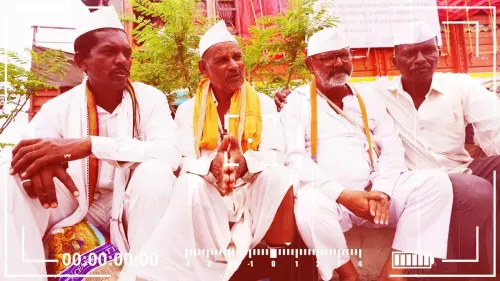
The Wari draws hundreds of thousands of devotees — known as Warkaris — who undertake a walking pilgrimage to the Vitthal-Rukmini temple in Pandharpur, culminating on Ashadhi Ekadashi. The procession, rooted in the Bhakti tradition of Maharashtra, passes through multiple districts and represents one of the most complex crowd-management exercises in the state's annual calendar.
Policy Backdrop
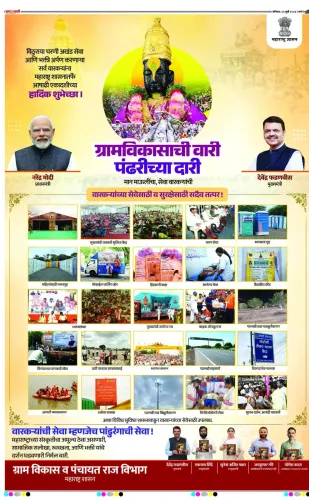
Maharashtra governments have for decades coordinated dedicated administrative machinery for the Wari, deploying inter-departmental resources across police, health, and transport agencies. Routine arrangements have historically included control rooms, medical camps along pilgrimage routes, drinking-water stations, and special transport facilities for elderly and differently-abled pilgrims.
Chief Minister Fadnavis, a senior Bharatiya Janata Party leader who has served multiple terms as Maharashtra's Chief Minister, has consistently positioned his administration as responsive to the state's religious and cultural traditions. The Wari, given its scale and cultural significance, commands political attention from every successive state government.
Stakeholders and Impact
The primary beneficiaries of government preparedness are the Warkari pilgrims themselves, whose safety, health, and comfort during the multi-day march depend heavily on state logistics. District administrations along the Wari route — particularly in Pune, Solapur, and adjoining districts — bear the operational burden of coordinating facilities at scale.
For local communities along the route, the Wari also carries economic significance, supporting small vendors and service providers. A well-managed Wari reflects on the state government's administrative credibility and its relationship with Maharashtra's large Warkari community, which cuts across caste and region.
What's Next
Official notifications detailing route-wise facilities, medical deployments, and traffic restrictions for the 2026 Ashadhi Wari are expected in the days ahead. District collectors and divisional commissioners along the pilgrimage corridor are typically tasked with ground-level coordination as the pilgrimage date approaches. The government's stated readiness will be measured against the on-ground experience of pilgrims during the procession.
Point of View
And no government can afford to be seen as unprepared. By front-loading the commitment publicly, the Fadnavis administration is staking its administrative credibility on the quality of on-ground delivery. The move also fits a broader BJP pattern of visibly aligning state machinery with culturally significant Hindu religious events, reinforcing outreach to the Warkari community whose influence spans rural Maharashtra. The real test will come in the logistics of the march itself.
NationPress
24 Sept 2026
Frequently Asked Questions
What is the Wari pilgrimage in Maharashtra?
The Wari is an annual religious pilgrimage in which Warkari devotees walk to the Vitthal-Rukmini temple in Pandharpur, Maharashtra, culminating on Ashadhi Ekadashi and Kartiki Ekadashi. It is one of the largest religious processions in India, rooted in Maharashtra's Bhakti tradition.
What did CM Devendra Fadnavis say about the Wari 2026?
Chief Minister Devendra Fadnavis declared that the Maharashtra government is ready to serve Warkari pilgrims, posting the Hindi message 'Warkari seva ke liye taiyar sarkar' — meaning 'Government ready for Warkari service' — on 25 June 2026.
What arrangements does the Maharashtra government make for Wari pilgrims?
Maharashtra governments have historically deployed police, health, and transport agencies to support the Wari, including dedicated control rooms, medical camps along pilgrimage routes, drinking-water stations, and special transport for elderly and differently-abled pilgrims.
When is Ashadhi Ekadashi 2026?
The exact date of Ashadhi Ekadashi in 2026 falls in the Hindu month of Ashadha, typically in June or July. Official government notifications for route-wise facilities and traffic restrictions are expected to confirm the schedule.