CM Fadnavis Honours Warkari Pilgrims, Cites Sant Tukaram
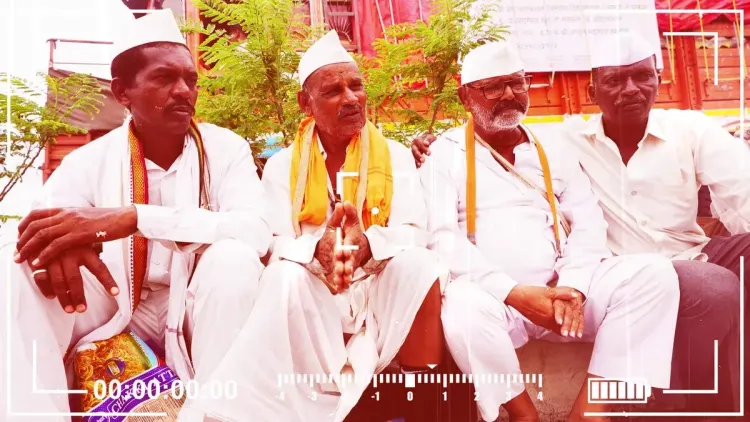
Synopsis
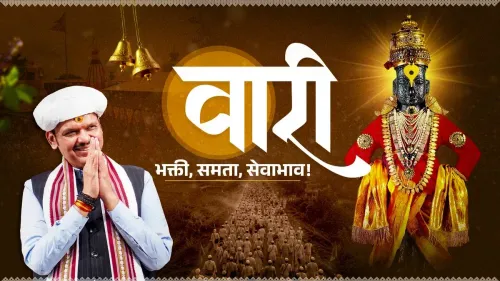
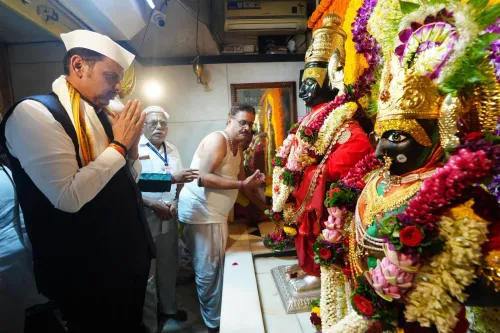
Maharashtra Chief Minister Devendra Fadnavis on 24 July 2026 cited a verse by Sant Tukaram and declared that serving Warkari pilgrims is tantamount to serving Lord Vitthal, aligning the state government with Maharashtra's deep-rooted bhakti pilgrimage tradition.
Key Takeaways
CM Devendra Fadnavis posted a devotional message on 24 July 2026 honouring Warkari pilgrims .
The post quoted a verse from Sant Tukaram , the 17th-century Marathi saint-poet central to the Warkari bhakti tradition.
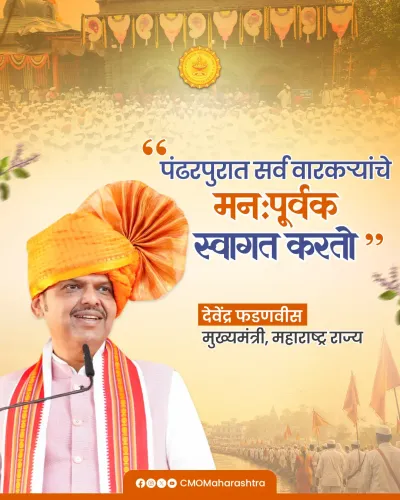
Fadnavis declared that 'serving the Warkaris is itself the service of Vitthal ,' closing with Jay Hari Vitthal .
The Warkari tradition involves biannual mass pilgrimages to the Vitthal temple in Pandharpur , drawing millions of devotees.
Maharashtra governments have long provided medical, sanitation, and security support along Wari pilgrimage routes.
Government announcements on facilities for the next Pandharpur Wari cycle are expected to follow.
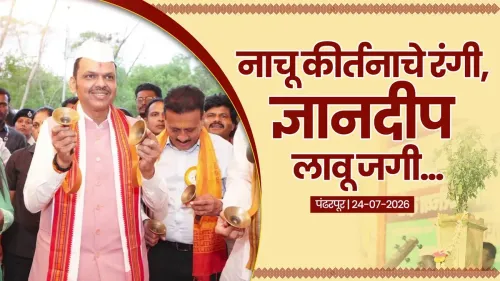
Maharashtra Chief Minister Devendra Fadnavis on Friday, 24 July 2026, invoked the words of 17th-century Marathi saint-poet Sant Tukaram to pay tribute to Warkari pilgrims, declaring that serving them is equivalent to serving Lord Vitthal himself.
Context
The Chief Minister's post opens with a verse from Sant Tukaram's celebrated abhangs: 'तुका म्हणे दयावंत । सदा चिंता दिनांची ॥' ('Tuka says: the compassionate one always thinks of the humble'). He followed this with the declaration, 'Serving the Warkaris is itself the service of Vitthal,' closing with the traditional salutation Jay Hari Vitthal.
Sant Tukaram, one of Maharashtra's most revered bhakti poets, composed thousands of abhangs centred on devotion to Vithoba — the presiding deity of the Pandharpur temple — and on compassion for ordinary people. His verses remain living texts for Warkari communities across the state.
Policy Backdrop
The Warkari tradition involves biannual mass pilgrimages — the Ashadhi Wari and the Kartiki Wari — in which millions of devotees walk to Pandharpur in Solapur district, carrying palanquins bearing the paduka (footwear) of revered saints. These processions draw participants from across Maharashtra and beyond.
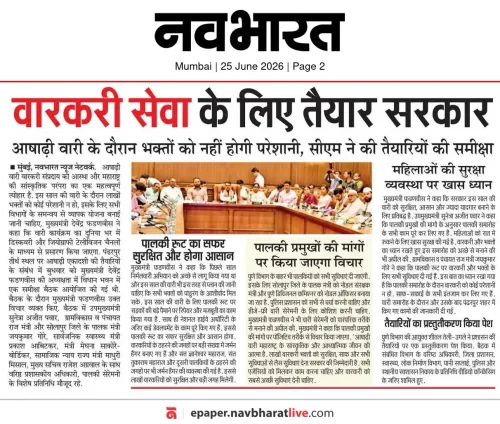
Successive Maharashtra governments have arranged dedicated medical camps, sanitation facilities, drinking water stations, and security deployments along Wari routes to support pilgrims. Public messaging by chief ministers aligning with Warkari heritage during pilgrimage seasons is an established feature of Maharashtra's political and cultural calendar.
Stakeholders and Impact
The Warkari community represents millions of devotees, cutting across caste and regional lines, who regard the pilgrimage as a core spiritual and social practice. Pandharpur functions as Maharashtra's most significant pilgrimage centre, with the Vitthal-Rukmini temple at its heart.
Chief Minister Fadnavis's message reinforces the state government's symbolic alignment with this tradition, signalling continued administrative attention to pilgrim welfare. For Warkaris, official recognition of their service as an act of devotion carries both spiritual and practical weight — affirming that the state views their pilgrimage as deserving active support.
What's Next
Attention will now turn to specific government announcements covering facilities, health services, and crowd management for the upcoming Pandharpur Wari cycle. The Chief Minister's post is likely to be followed by ground-level administrative preparations along pilgrimage routes across the state.
Maharashtra's tradition of state-level engagement with Warkari pilgrimages means that such cultural statements from senior leadership are typically accompanied by departmental coordination involving health, police, and public works agencies.
Point of View
Whose abhangs stress compassion for the humble, adds a social-welfare dimension to what is formally a devotional post. Chief ministers of Maharashtra have long used Wari season messaging to reinforce both cultural legitimacy and administrative commitment, and Fadnavis is following a well-worn template. The broader arc here is the BJP's sustained effort to deepen its roots in Maharashtra's saint-poet tradition, which has historically transcended caste and regional identities.
NationPress
22 Oct 2026
Frequently Asked Questions
What did CM Devendra Fadnavis say about Warkari pilgrims?
CM Fadnavis quoted a verse by Sant Tukaram and stated that serving Warkari pilgrims is equivalent to serving Lord Vitthal, posting the message on 24 July 2026 with the salutation Jay Hari Vitthal.
Who are Warkaris and what is the Wari pilgrimage?
Warkaris are devotees of Lord Vitthal who undertake biannual pilgrimages — the Ashadhi Wari and Kartiki Wari — to the Vitthal-Rukmini temple in Pandharpur, Maharashtra, carrying palanquins of revered saints.
Who was Sant Tukaram?
Sant Tukaram was a 17th-century Marathi saint-poet and a central figure of the Warkari bhakti tradition, known for his abhangs emphasising devotion to Vitthal and compassion for ordinary people.
Where is the Vitthal temple located?
The Vitthal-Rukmini temple is located in Pandharpur, in Solapur district of Maharashtra, and is the primary destination of the Warkari pilgrimage.
What support does the Maharashtra government provide for Wari pilgrims?
The Maharashtra government typically arranges medical camps, sanitation facilities, drinking water stations, and security deployments along Wari pilgrimage routes during the Ashadhi and Kartiki Wari seasons.