CM Sukhu: Kullu's Sinduri Pomegranates Hit Dubai
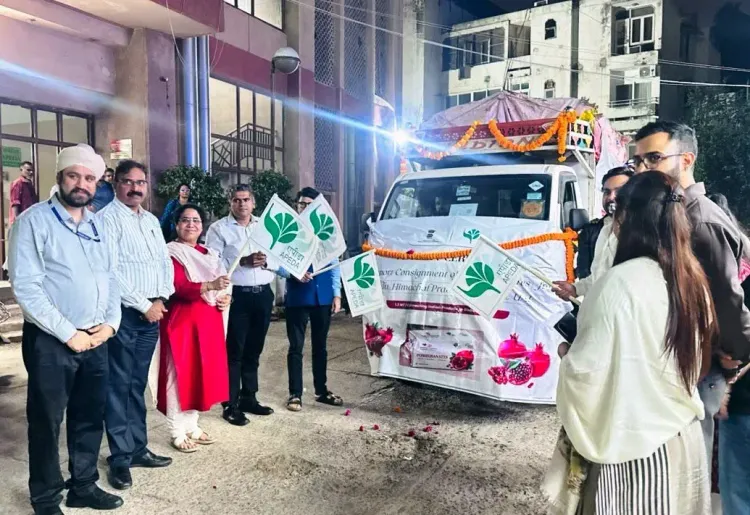
Synopsis
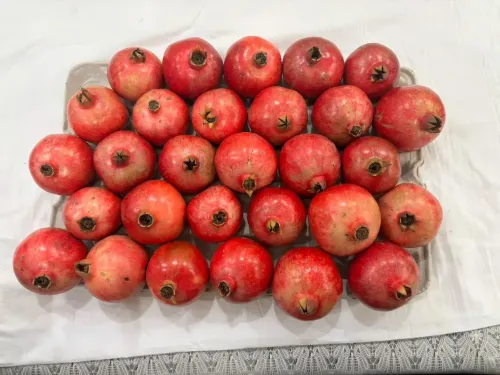
Himachal Pradesh CM Sukhvinder Singh Sukhu has announced the export of 1.3 metric tonnes of Sinduri variety pomegranates from Kullu district to Dubai, UAE, marking a fresh push to connect hill farmers to premium international markets.
Key Takeaways
1.3 metric tonnes of Sinduri variety pomegranates from Kullu district have been exported to Dubai, UAE .
CM Sukhvinder Singh Sukhu announced the shipment on 22 October 2026 , calling it part of a broader effort to strengthen farmers' and horticulturists' incomes.
The UAE is already a major destination for Indian fresh-fruit exports, making it a natural target for Himachal's premium hill-grown produce.
The move builds on India's Agricultural Export Policy 2018 and state horticulture missions aimed at post-harvest infrastructure and global market linkage via APEDA .
Kullu has previously focused on apples and cherries for export; the Sinduri pomegranate represents diversification into a new high-value crop.
Subsequent consignments and potential state-level MoUs with UAE importers are the key developments to watch.
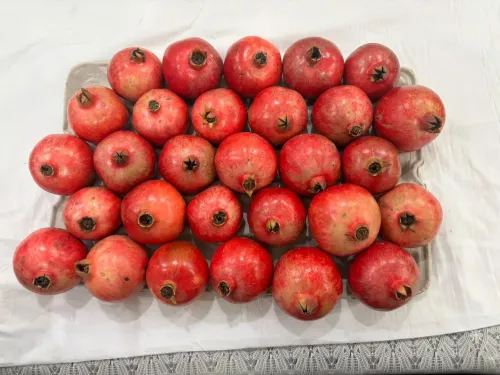
A Himalayan orchard's harvest has just landed in the Gulf. Himachal Pradesh Chief Minister Sukhvinder Singh Sukhu announced on Thursday, 22 October 2026 that 1.3 metric tonnes of the prized Sinduri variety pomegranates grown in Kullu district have been exported to Dubai, United Arab Emirates — a milestone his government is framing as a direct line from mountain orchards to international markets.
Posting in Hindi, CM Sukhu wrote: 'कुल्लू जिले में उत्पादित सिंदूरी किस्म के 1.3 मीट्रिक टन अनार का दुबई (संयुक्त अरब अमीरात) को निर्यात किया गया है' — 'The Sinduri variety pomegranates produced in Kullu district, weighing 1.3 metric tonnes, have been exported to Dubai (UAE).' The state government, he added, is committed to strengthening farmers' and horticulturists' economic base and to ensuring fair prices for their produce.Kullu's Sinduri Pomegranate Finds a Gulf Buyer
Kullu district has long been synonymous with apples, but orchardists there have been quietly diversifying. The Sinduri variety — known for its deep-red rind and sweet pulp — represents exactly the kind of premium, differentiated product that Gulf buyers pay top dollar for. The United Arab Emirates is already one of India's biggest fresh-fruit export destinations, with Indian pomegranates and mangoes flowing into its wholesale markets through well-established bilateral trade channels. For small and marginal hill farmers, access to that market changes the arithmetic entirely. A price realised in Dubai is structurally higher than what a domestic mandi offers — and the gap matters when your orchard sits at altitude and your logistics costs are steep.How India's Export Architecture Gets Farmers There
This shipment does not emerge from a vacuum. India's Agricultural Export Policy of 2018 set the ambition of doubling agri-exports and integrating farmers into global value chains, with APEDA — the Agricultural and Processed Food Products Export Development Authority — providing logistics subsidies, quality certification, and market linkage. Himachal Pradesh's own horticulture missions, running since the mid-2000s, have steadily built post-harvest infrastructure oriented toward export-grade output. The state has done this before with apples and cherries. Pomegranates are the next chapter. Each new variety successfully placed overseas strengthens the cold-chain and branding argument for the next one.What CM Sukhu's Push Signals for Himachal Horticulture
Sukhu, who took office in December 2022, has consistently positioned farmer welfare and horticulture modernisation as centrepieces of his administration. Announcing an export milestone on social media — with images of the consignment — is also deliberate political messaging: this government delivers tangible results, not just schemes. The watch is now on whether subsequent consignments follow, whether Kullu orchardists receive direct price-discovery benefits, and whether the state formalises any MoU with UAE importers or expands APEDA-linked cold-chain subsidies for pomegranates. One consignment of 1.3 metric tonnes is a small number by global trade standards. But every export corridor starts with a first shipment — and Kullu's Sinduri just cleared customs in Dubai.Point of View
But sustained cold-chain investment and stable buyer relationships would mark a structural shift. This also fits a national pattern of state governments leveraging APEDA frameworks to claim credit for agri-diplomacy, blurring the lines between central-scheme delivery and state-level political capital.
NationPress
23 Oct 2026
Frequently Asked Questions
What are Sinduri pomegranates from Kullu?
The Sinduri variety is a pomegranate cultivar grown in Kullu district, Himachal Pradesh, known for its deep-red skin and sweet flavour. It is part of the state's push to diversify beyond apple cultivation toward other high-value fruits suited to Gulf export markets.
How much Sinduri pomegranate was exported to Dubai?
Himachal Pradesh Chief Minister Sukhvinder Singh Sukhu announced the export of 1.3 metric tonnes of Sinduri pomegranates from Kullu district to Dubai, UAE, on 22 October 2026.
What is APEDA and how does it help Himachal farmers?
APEDA (Agricultural and Processed Food Products Export Development Authority) is a central government body that supports Indian agricultural exports through logistics subsidies, quality certification, and international market linkage. It is a key enabler for states like Himachal Pradesh looking to place fresh fruits in Gulf markets.
Why is the UAE a key market for Indian fruit exports?
The UAE is one of India's largest fresh-fruit export destinations due to strong bilateral trade ties, a large South Asian diaspora, and the Gulf's high purchasing power. It serves as both a direct consumer market and a re-export hub for the wider Middle East.
What is CM Sukhu's horticulture policy for Himachal Pradesh?
Since taking office in December 2022, CM Sukhvinder Singh Sukhu has prioritised farmer and horticulturist welfare, focusing on crop diversification, fair price realisation, post-harvest infrastructure, and expanding access to international markets for Himachal's fruit growers.