CM Fadnavis Takes Blessings of Wari Padukas in Pune

Synopsis
Maharashtra Chief Minister Devendra Fadnavis visited Pune on 11 July 2026 to venerate the sacred padukas of Sant Dnyaneshwar Mauli and Sant Tukaram Maharaj as the annual Ashadhi Wari pilgrimage makes its way to Pandharpur, praising the devotion and discipline of Vithoba's devotees.
Key Takeaways
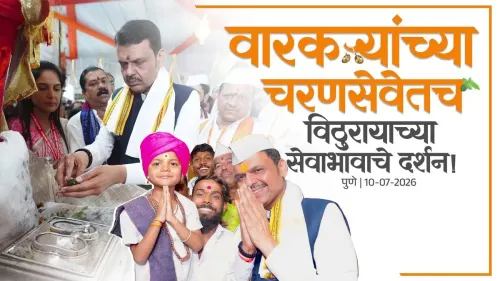
CM Devendra Fadnavis visited Pune on 11 July 2026 to seek blessings of the Wari padukas.
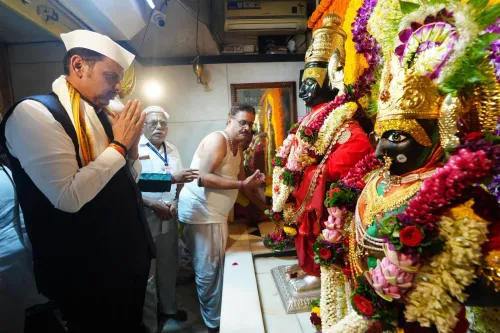
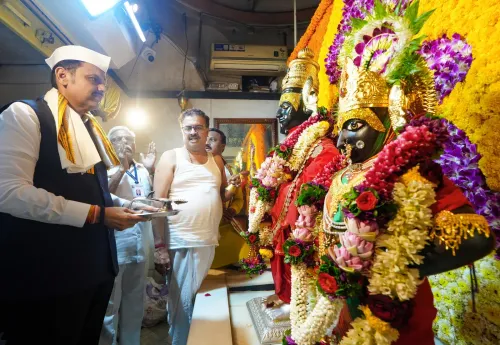
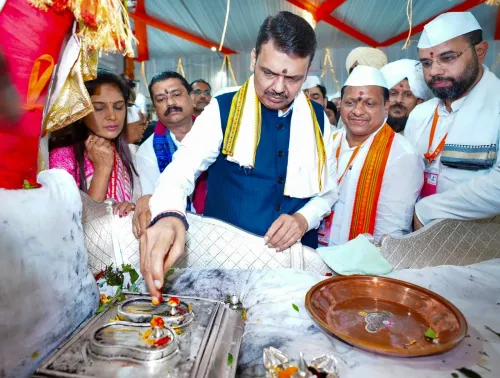
He venerated the padukas of Sant Dnyaneshwar Maharaj and Sant Tukaram Maharaj during the visit.
Fadnavis described Ashadhi Wari as 'a living symbol of faith, culture, and collective devotion.' The Chief Minister praised the 'exemplary discipline' of lakhs of Vithoba devotees gathered in Pune.
The padukas are en route to Pandharpur for the culminating Ashadhi Ekadashi congregation.
Maharashtra governments have long provided logistical and security support for the annual pilgrimage.
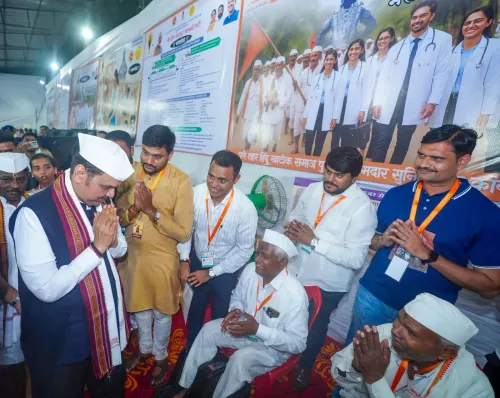
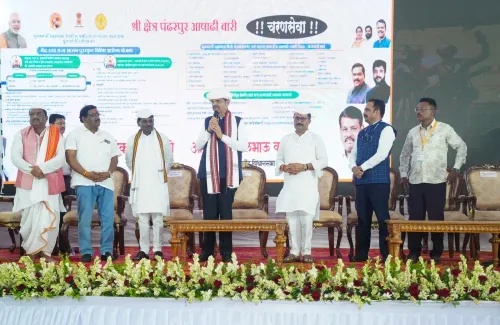
Maharashtra Chief Minister Devendra Fadnavis on Saturday, 11 July 2026, visited Pune to seek the blessings of the sacred padukas (holy footwear) of Santshreshtha Shri Dnyaneshwar Mauli Maharaj and Jagadguru Sant Shri Tukaram Maharaj ahead of the annual Ashadhi Wari pilgrimage. The Chief Minister expressed deep reverence for the devotion and discipline he witnessed among lakhs of Vithoba devotees assembled in the city.
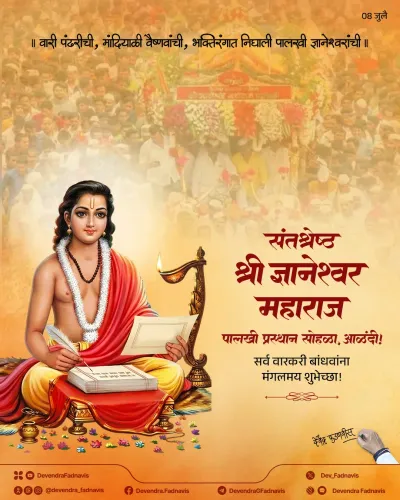
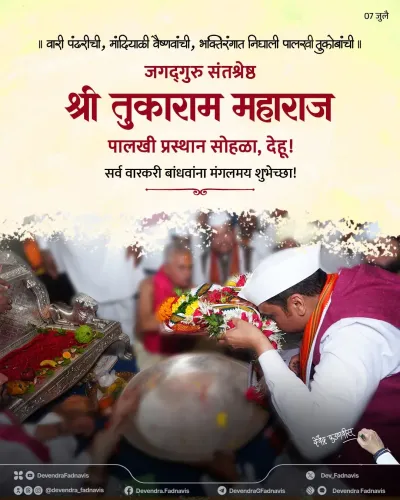
In his post, Fadnavis wrote: 'आषाढी वारी ही श्रद्धा, संस्कृती आणि सामूहिक भक्तीचे जिवंत प्रतीक आहे' — 'Ashadhi Wari is a living symbol of faith, culture, and collective devotion.' He added that witnessing the overflowing enthusiasm of Vitthal's devotees, paired with their exemplary discipline, filled his heart with joy.
Context
The Ashadhi Wari is Maharashtra's most expansive annual pilgrimage, drawing millions of Varkari devotees who walk hundreds of kilometres to reach the temple town of Pandharpur on Ashadhi Ekadashi. The procession carrying the padukas of the two revered saints — Sant Dnyaneshwar Maharaj and Sant Tukaram Maharaj — from their respective shrines is the spiritual centrepiece of the Wari tradition. Pune serves as a key congregation point where devotees venerate the padukas before the final march southward to Pandharpur.
Policy Backdrop
Maharashtra governments have for decades provided logistical, security, and administrative support to facilitate the Wari's smooth conduct. The state's engagement with the pilgrimage spans crowd management, medical facilities, and route maintenance — measures that have been systematically expanded given the sheer scale of participation. Fadnavis's emphasis on 'exemplary discipline' among pilgrims aligns with longstanding state messaging around orderly conduct at large religious gatherings, which authorities treat as a civic as well as spiritual achievement.
Stakeholders and Impact
The Varkari community represents one of Maharashtra's most enduring devotional traditions, tracing its roots to the 13th-century saint-poet Sant Dnyaneshwar Maharaj, whose Dnyaneshwari commentary on the Bhagavad Gita remains a foundational Marathi text, and to the 17th-century poet-saint Sant Tukaram Maharaj, whose abhangas (devotional verses) to Vithoba are sung across the pilgrimage route. For millions of Maharashtrian families, participation in the Wari is both a religious obligation and a cultural identity marker. Political leaders across party lines have consistently attended Wari-related events, recognising the pilgrimage's deep social reach.
What's Next
The padukas will continue their procession toward Pandharpur, where the principal congregation of Varkari devotees is expected on Ashadhi Ekadashi. State authorities are likely to announce or reinforce crowd-management protocols and pilgrim facilities in the days leading up to the Ekadashi. The Chief Minister's public participation at this stage signals the government's intent to remain visibly engaged with the pilgrimage's safe and celebratory conduct through its culmination.
Point of View
Making it a politically neutral yet symbolically potent occasion for a Chief Minister to be seen at. By specifically highlighting both the devotional fervour and the civic discipline of pilgrims, Fadnavis subtly underscores the state government's administrative competence alongside its cultural credentials. The post is less a policy statement than a signal of alignment with Maharashtra's deepest devotional identity — one that no government can afford to be absent from.
NationPress
11 Jul 2026
Frequently Asked Questions
What is Ashadhi Wari?
Ashadhi Wari is Maharashtra's annual monsoon pilgrimage in which millions of Varkari devotees walk to the temple town of Pandharpur to worship Vithoba on Ashadhi Ekadashi. The procession carrying the sacred padukas of Sant Dnyaneshwar and Sant Tukaram is the spiritual heart of the tradition.
Why did CM Fadnavis visit Pune for Ashadhi Wari 2026?
Chief Minister Devendra Fadnavis visited Pune on 11 July 2026 to venerate the sacred padukas of Sant Dnyaneshwar Maharaj and Sant Tukaram Maharaj as the Wari procession passed through the city on its way to Pandharpur.
Who are Sant Dnyaneshwar and Sant Tukaram?
Sant Dnyaneshwar Maharaj was a 13th-century Marathi saint-poet whose 'Dnyaneshwari' commentary on the Bhagavad Gita is foundational to the Varkari tradition. Sant Tukaram Maharaj was a 17th-century poet-saint whose devotional 'abhangas' to Vithoba are sung throughout the Wari pilgrimage.
When is Ashadhi Ekadashi in 2026?
The exact date of Ashadhi Ekadashi in 2026 falls in July, and it marks the culmination of the Wari pilgrimage at Pandharpur. The padukas venerated in Pune on 11 July are en route to arrive at Pandharpur for this occasion.
What does the Maharashtra government do to support Ashadhi Wari?
Maharashtra governments have for decades provided logistical, security, medical, and crowd-management support along the Wari pilgrimage route to ensure the safety and smooth conduct of the millions of devotees who participate each year.