White House Marks One Year of Trump's Southern Border Lockdown
Synopsis
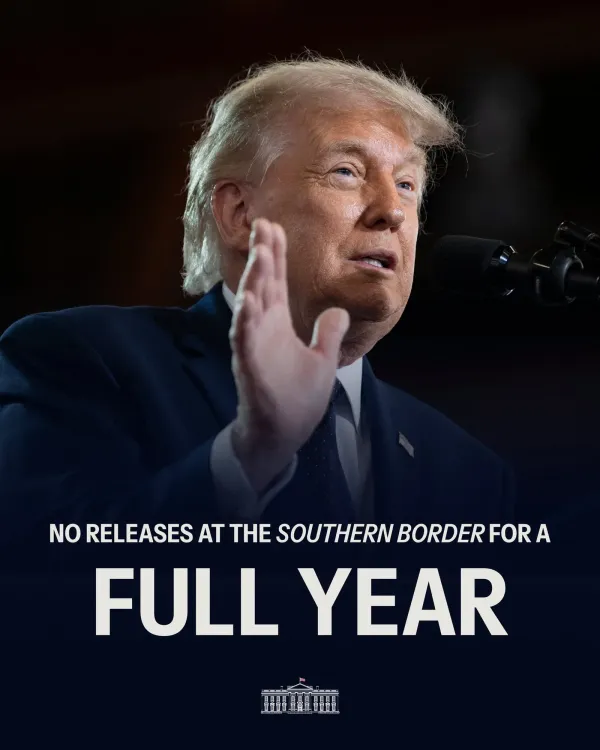
The White House marked one year of what it calls a continuous southern border lockdown under President Trump, framing the milestone as a direct reversal of the Biden administration's immigration policies. The post underscores border security as a defining pillar of Trump's second-term governance record.
Key Takeaways
The White House posted on 27 May 2026 claiming the US southern border has been 'locked down for a whole year straight.' President Trump is credited with initiating border enforcement measures on the first day of his administration.
The post explicitly attributes the prior 'immigration crisis' to Biden's failed policies .
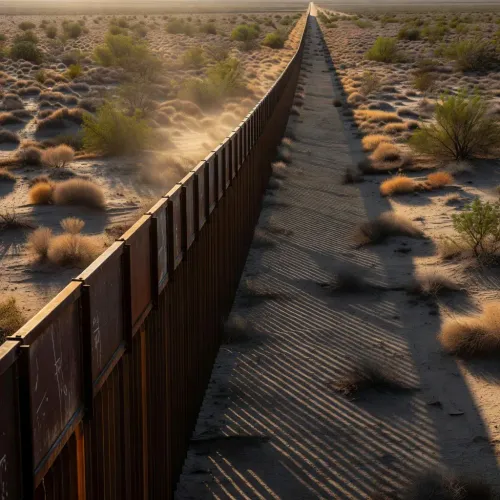
The US-Mexico border spans approximately 2,000 miles and is monitored by Customs and Border Protection (CBP) .
The Biden administration had paused deportations and halted border wall construction in January 2021 , reversing Trump's first-term measures.
Monthly CBP encounter data remains the key public metric to watch for independent verification of border conditions.
The White House declared on Wednesday, 27 May 2026 that the United States southern border has been 'locked down for a whole year straight,' crediting the achievement to immigration enforcement actions taken by President Donald Trump on the first day of his administration.
Context
The White House post states that President Trump 'set out to secure the southern border and address the immigration crisis set forward by Biden's failed policies' from day one of his administration. The message frames the current border situation as a direct reversal of conditions inherited from the Biden administration, which had, early in 2021, paused deportations and halted border wall construction. The post marks what the White House describes as a full year of sustained border enforcement.
The United States-Mexico border stretches approximately 2,000 miles and has been the central theatre of US immigration policy debates for decades. Monthly encounter data published by Customs and Border Protection (CBP), the federal agency within the Department of Homeland Security responsible for securing ports of entry, has historically served as the primary public metric for gauging border conditions.
Policy Backdrop
The Trump administration's approach to border enforcement follows a well-established Republican policy lineage. During his first term, President Trump issued executive orders in January 2017 directing construction of a border wall and expanded interior enforcement. By 2019, the administration had also implemented the Migrant Protection Protocols — commonly known as the 'Remain in Mexico' policy — requiring asylum seekers to await US immigration proceedings on Mexican soil.
When the Biden administration took office in January 2021, it reversed several of these measures, issuing a 100-day pause on deportations and suspending border wall construction. That period coincided with a significant rise in monthly southwest border encounters, a trend that became a sustained political liability for the Biden White House. The current White House messaging directly invokes that record as the baseline against which its own performance is being measured.
Stakeholders and Impact
The primary stakeholders in US southern border policy include CBP personnel, border communities on both sides of the boundary, asylum seekers and migrants, and the governments of Mexico and Central American nations. Tighter enforcement at the southwest border has historically produced measurable drops in CBP encounter figures, but has also drawn scrutiny from immigration advocates regarding conditions at detention facilities and the processing of humanitarian claims.
For India, the policy carries particular relevance: Indian nationals have consistently ranked among the top non-Latin American nationalities encountered at the US southwest border in recent years, making shifts in US immigration enforcement directly consequential for Indian migrants and visa applicants.
What's Next
Analysts and policy watchers will look to upcoming monthly CBP southwest border encounter releases for data that either substantiates or complicates the White House's characterisation of a year-long lockdown. Any new executive actions, congressional appropriations bills addressing asylum processing reform, or developments in wall maintenance funding will further shape the trajectory of US border policy in the months ahead. The White House's anniversary framing also signals that border security will remain a central theme in the administration's political communications going into the next electoral cycle.
Point of View
Using a milestone frame to reinforce the administration's core identity around immigration enforcement. By anchoring the message to Biden-era policy failures, the communication continues a pattern of defining Trump's record in contrast to his predecessor rather than on absolute metrics alone. The absence of specific CBP data figures in the post is notable — it invites the administration's supporters to accept the characterisation without subjecting it to numerical scrutiny. For Indian observers, the post is a reminder that US immigration policy swings have tangible downstream effects on Indian nationals navigating the US border and visa system.
NationPress
11 Oct 2026
Frequently Asked Questions
What did the White House say about the southern border in May 2026?
The White House announced on 27 May 2026 that the US southern border has been 'locked down for a whole year straight,' attributing this to enforcement actions taken by President Trump on the first day of his administration.
What is the US southern border lockdown under Trump?
The term refers to a suite of immigration enforcement measures the Trump administration says it implemented from day one, aimed at reducing unlawful crossings at the approximately 2,000-mile US-Mexico border.
How did Biden's immigration policies differ from Trump's?
The Biden administration, upon taking office in January 2021, issued a 100-day pause on deportations and halted border wall construction, reversing key Trump-era measures including the Migrant Protection Protocols that required asylum seekers to remain in Mexico.
How does US border policy affect Indians?
Indian nationals have consistently been among the top non-Latin American nationalities encountered at the US southwest border, meaning stricter enforcement directly affects Indian migrants and has broader implications for Indian visa applicants.
What agency oversees the US southern border?
Customs and Border Protection (CBP), a federal agency within the Department of Homeland Security, is responsible for securing ports of entry and monitoring unlawful crossings along the US-Mexico border.