Delhi waterlogging 2025: BJP chief Harsh Malhotra credits CM Rekha Gupta's desilting drive

Synopsis
For the first time in a decade, Delhi's first major monsoon spell — over 100 mm in a single morning — did not bring the city to its knees. BJP chief Harsh Malhotra says a pre-monsoon desilting blitz across 169 flood-prone points and 754 mobile pumps made the difference. The political subtext is unmistakable: this is the BJP's opening argument that it can govern Delhi better than AAP did.
Key Takeaways
Delhi BJP President Harsh Malhotra on 9 July credited CM Rekha Gupta for minimal waterlogging during the capital's first major monsoon rains.
More than 100 mm of rain fell on Thursday morning alone, part of a three-day rainfall event.
Authorities pre-identified 169 waterlogging points and 445 vulnerable locations , deploying 167 pump houses and 754 mobile pumps before 28 June .
The Delhi Jal Board , PWD , and MCD jointly carried out desilting over the preceding one-and-a-half months .
Waterlogging in Old Delhi and East Delhi was attributed by Malhotra to AAP MLAs and councillors.
Delhi Bharatiya Janata Party (BJP) President Harsh Malhotra on Thursday, 9 July credited Chief Minister Rekha Gupta and civic agencies for keeping waterlogging to a minimum during the capital's first major monsoon spell, calling it a decisive break from a decade of monsoon mismanagement. Despite more than 100 mm of rain falling on Thursday morning alone — part of a three-day rainfall streak — arterial roads and flyovers across New Delhi remained largely passable, according to Malhotra.
Scale of Pre-Monsoon Preparation
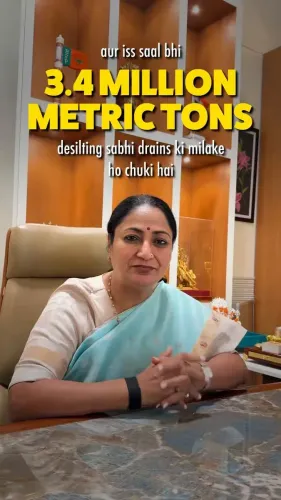
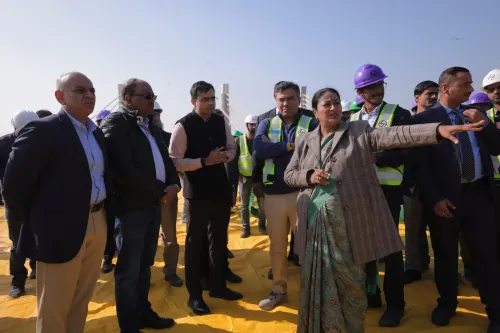
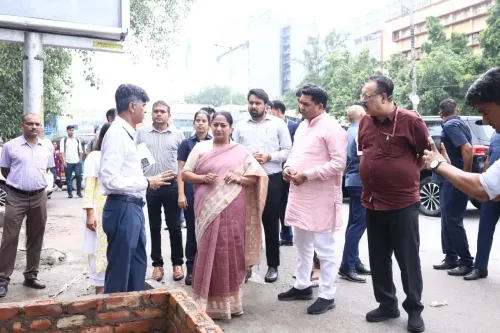
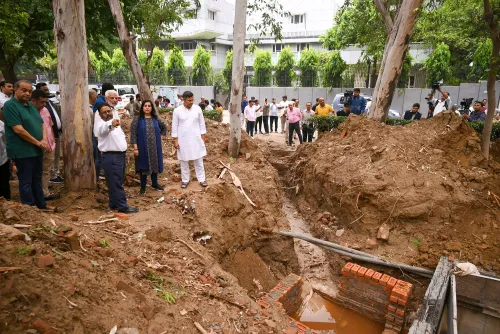
Malhotra said that under the leadership of Chief Minister Rekha Gupta, the Delhi Jal Board, the Public Works Department (PWD), and the Municipal Corporation of Delhi (MCD) jointly executed an extensive desilting drive over the preceding one-and-a-half months. Drains and sewer lines across the city were cleaned as part of the coordinated effort.
Authorities identified 169 waterlogging-prone points and 445 vulnerable locations citywide. Before 28 June, 167 pump houses and 754 mobile pumps were installed to ensure the drainage network could absorb heavy downpours from the season's onset.
How the City Fared During the Rains
Malhotra said that despite continuous rainfall over three days, there were no widespread reports of normal life or routine work being disrupted due to waterlogging. Ring Road, arterial roads, and flyover loops — historically among the worst-hit stretches — recorded minimal inundation, allowing commuters to move largely unhindered.
'As a result, Delhi's drainage system was well-prepared to withstand heavy rainfall, enabling residents to enjoy the first monsoon showers after many years,' Malhotra said. He described the outcome as the Delhi government's 'first major success' of the monsoon season.
Blame Directed at AAP Representatives
Malhotra acknowledged that some waterlogging was reported in parts of Old Delhi and East Delhi, but attributed those incidents to what he called the negligence of local Aam Aadmi Party (AAP) MLAs and councillors. He said the Delhi government would pay special attention to those areas going forward.
The remarks carry a pointed political edge: AAP governed Delhi for a decade before the BJP's return to power, and Malhotra framed the contrast explicitly, saying Delhiites had endured monsoon hardship every year under successive previous administrations that dismissed early flooding as a seasonal inevitability.
The Broader Context
Waterlogging has been a perennial flashpoint in Delhi's politics, with each monsoon season triggering blame between the state government, the MCD, and the Centre over jurisdictional responsibility for drainage. The BJP's structured pre-monsoon audit — identifying specific vulnerable points and deploying pumps ahead of the rains — represents a more granular approach than the reactive measures that typically followed past flooding episodes.
Whether the city sustains this performance through heavier mid-monsoon spells in July and August will be the real test of the desilting drive's durability.
Point of View
Not just optics. The harder question is whether the infrastructure holds through August's peak rainfall, when drainage systems are typically overwhelmed. Blaming AAP MLAs for pockets of Old Delhi and East Delhi flooding is a convenient deflection that sidesteps the shared jurisdictional complexity Delhi's civic bodies have never fully resolved.
NationPress
10 Jul 2026
Frequently Asked Questions
Why was Delhi waterlogging minimal during the July 2025 monsoon?
According to Delhi BJP President Harsh Malhotra, a coordinated pre-monsoon desilting drive by the Delhi Jal Board, PWD, and MCD — covering 169 waterlogging-prone points and deploying 754 mobile pumps before 28 June — kept inundation minimal despite over 100 mm of rain on 9 July.
What steps did the Rekha Gupta government take before the monsoon?
The Delhi government, under Chief Minister Rekha Gupta, carried out drain and sewer-line cleaning over one-and-a-half months, identified 445 vulnerable locations, and installed 167 pump houses and 754 mobile pumps ahead of the monsoon season.
Were there any waterlogging incidents in Delhi on 9 July 2025?
Some waterlogging was reported in parts of Old Delhi and East Delhi. BJP President Harsh Malhotra attributed these incidents to the negligence of local AAP MLAs and councillors, and said the government would focus on those areas going forward.
How does this monsoon compare to previous years in Delhi?
Malhotra said Delhi had experienced waterlogging during the first two major monsoon spells every year for the past decade, with successive governments dismissing it as a seasonal inevitability. He described the 2025 outcome as a break from that pattern.
What is the significance of the 754 mobile pumps deployed in Delhi?
The 754 mobile pumps, along with 167 pump houses installed before 28 June, were part of a pre-emptive flood-management strategy targeting 169 identified waterlogging points. This represents a shift from the reactive pump deployment that characterised past monsoon responses.