White House Highlights Working Families Tax Cuts Relief

Synopsis
The White House on 9 July 2026 spotlighted the Working Families Tax Cuts, a package eliminating federal income tax on tips, overtime, and Social Security benefits while expanding deductions — framing it as tangible, everyday relief for American workers and retirees.
Key Takeaways
The White House promoted the Working Families Tax Cuts on 9 July 2026 , describing them as delivering 'real relief' to American households.
The package eliminates federal income tax on tips , overtime pay , and Social Security benefits , and expands deductions for working families.
Key beneficiaries include tipped workers in hospitality and food service, overtime earners in manufacturing and healthcare, and Social Security recipients on fixed incomes.
The measures build on the Tax Cuts and Jobs Act of 2017 and fulfil commitments made during the 2024 presidential campaign .
Treasury Department guidance on how the new exclusions interact with existing withholding rules is anticipated.
The administration is using real-world testimonials, including a linked video, to sustain public awareness of the relief package.
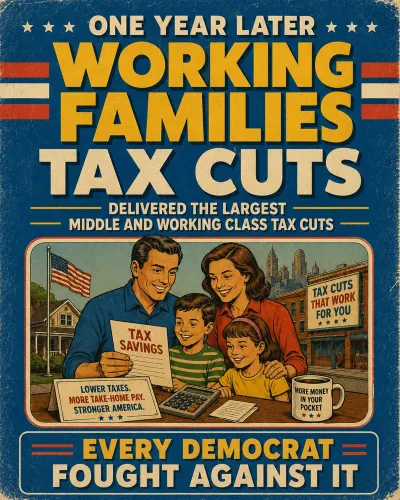
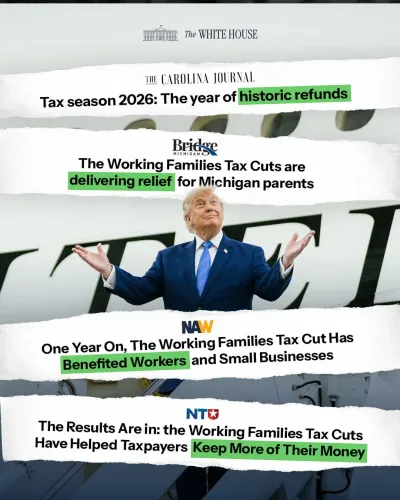
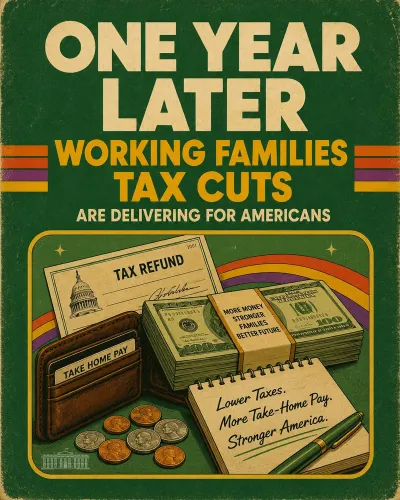
The White House on Thursday, 9 July 2026 highlighted what it described as 'real relief' reaching American households through a package of measures called the Working Families Tax Cuts, pointing to the elimination of federal income tax on tips, overtime pay, and Social Security benefits, alongside enhanced deductions for working families.
Context
The post, shared on the official White House account, lists four pillars of the relief package: no tax on tips, no tax on overtime, no tax on Social Security, and enhanced tax deductions. The administration said 'every day, more stories and more wins' are emerging as the provisions take effect, and pointed to a video of Americans describing the impact on their lives.
The measures are aimed squarely at service workers, overtime earners, and Social Security recipients — constituencies that have historically been sensitive to changes in take-home pay and retirement income. By framing the relief around specific exclusions rather than broad rate cuts, the administration seeks to make the benefit tangible and visible to middle-income households.
Policy Backdrop
The Working Families Tax Cuts build on a legislative tradition that traces back to the Tax Cuts and Jobs Act (TCJA) of 2017, the last major overhaul of the United States tax code. The TCJA permanently reduced the corporate tax rate and temporarily lowered individual rates while doubling the standard deduction, establishing the template for subsequent Republican tax relief efforts.
Proposals to exempt tips, overtime, and Social Security income from federal tax emerged prominently during the 2024 presidential campaign, and those campaign commitments appear to have directly informed the provisions now being promoted. The approach follows a pattern seen across multiple Republican administrations of using targeted exclusions — rather than across-the-board rate reductions — to deliver relief that workers can see in each paycheck.
Congressional attention is now focused on how these new exclusions interact with existing withholding rules, as the Treasury Department is expected to issue guidance on implementation details. Separately, several individual provisions from the 2017 TCJA are due to expire, and lawmakers are weighing whether to extend or modify them alongside the newer measures.
Stakeholders and Impact
For tipped workers in hospitality, food service, and personal care industries, the exemption means a portion of income that was previously subject to federal tax is now retained in full. Overtime earners in manufacturing, logistics, and healthcare stand to benefit similarly, as premium pay hours will no longer face the same federal income tax burden.
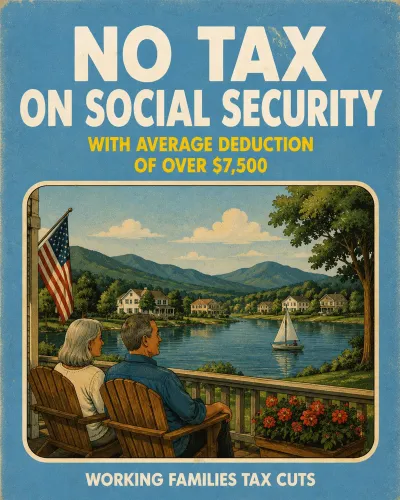
Social Security recipients — many of them retirees on fixed incomes — represent one of the largest groups affected. Federal taxation of Social Security benefits has long been a point of contention, and the exclusion addresses a concern that has persisted across decades of tax policy debate. The enhanced deductions provision is designed to extend relief to a broader set of working households beyond those in the three exempt categories.
What's Next
The administration's communications strategy appears focused on building a steady stream of real-world testimonials to sustain public awareness of the relief package. The video linked in the post is part of that effort, with the White House signalling that more such stories will follow.
Longer term, the durability of these provisions will depend on congressional action, particularly as debates over the expiring TCJA individual rate cuts intensify. How the Treasury ultimately structures withholding guidance will determine how quickly and clearly workers see the benefit reflected in their paychecks — and how politically durable the relief proves to be heading into future election cycles.
Point of View
The administration is anchoring its economic message in three highly relatable exemptions — tips, overtime, and Social Security — that resonate across income levels. This mirrors the rollout playbook used for the 2017 TCJA, where early communications leaned heavily on worker testimonials before broader fiscal arguments were made. The steady-drip video campaign signals that the administration intends to keep this issue alive in the news cycle through the summer of 2026. How quickly Treasury guidance clarifies implementation will be the real test of whether the relief translates from messaging into measurable take-home pay gains.
NationPress
10 Jul 2026
Frequently Asked Questions
What is the Working Families Tax Cuts plan in the US?
The Working Families Tax Cuts is a package of federal tax relief measures that eliminates income tax on tips, overtime pay, and Social Security benefits, and expands deductions for working households. The White House highlighted the package on 9 July 2026 as delivering tangible relief to American workers and retirees.
Will Americans pay no tax on tips and overtime in 2026?
According to the White House, the Working Families Tax Cuts include provisions that exempt tip income and overtime pay from federal income tax. Implementation details and Treasury Department withholding guidance are still being worked out.
How does the no-tax-on-Social-Security rule work?
Under the Working Families Tax Cuts as promoted by the White House, Social Security benefits would be excluded from federal income taxation. This addresses a long-standing concern for retirees and fixed-income recipients who previously paid federal tax on a portion of their benefits.
How do the Working Families Tax Cuts relate to the 2017 Tax Cuts and Jobs Act?
The 2017 Tax Cuts and Jobs Act lowered individual and corporate tax rates and doubled the standard deduction, serving as the legislative foundation for subsequent Republican tax relief efforts. The Working Families Tax Cuts extend that framework by adding specific exemptions for tips, overtime, and Social Security income.
Who benefits most from the Working Families Tax Cuts?
Service workers who earn tips, employees who regularly work overtime in sectors like manufacturing and healthcare, and Social Security recipients on fixed retirement incomes are the primary beneficiaries. Enhanced deductions are also available for a broader set of working households.