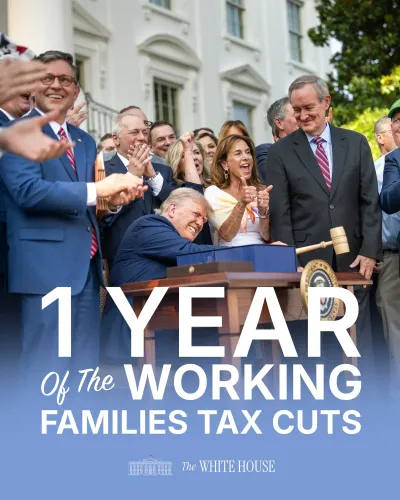
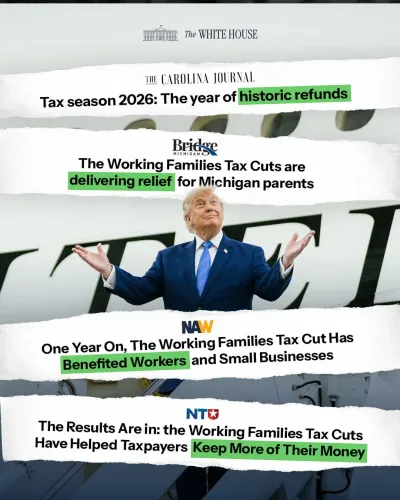
Trump's Working Families Tax Cuts Mark One Year, No Tax on Social Security
Synopsis
The White House celebrated the one-year mark of President Trump's Working Families Tax Cuts on July 7, 2026, spotlighting the removal of federal tax on Social Security benefits as a landmark win for American seniors and retirees.
Key Takeaways
The White House announced the one-year anniversary of President Trump's Working Families Tax Cuts on July 7, 2026 .
The legislation includes a provision eliminating federal income tax on Social Security benefits for recipients.
The policy builds on the Tax Cuts and Jobs Act of 2017 , many provisions of which were set to expire after 2025 .
American seniors and retirees are the primary stated beneficiaries, with direct impact on monthly net income.
Congressional negotiations over remaining expiring 2017 tax provisions are expected to continue, with this legislation as a reference point.
Fiscal observers have flagged concerns about long-term effects on federal revenue and Social Security solvency.
The White House marked the one-year anniversary of President Donald Trump's Working Families Tax Cuts on Tuesday, July 7, 2026, highlighting the elimination of federal tax on Social Security benefits as a flagship gain for American seniors.
Context
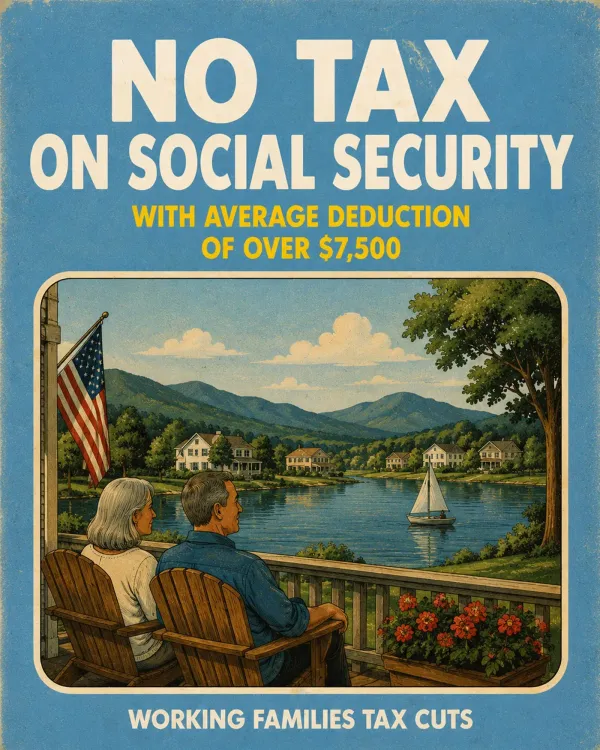
The White House posted on X that 'President Trump's Working Families Tax Cuts are delivering real results for America's seniors, including no tax on Social Security, and ushering in a true golden age for their golden years.' The statement marks one full year since the legislation came into effect, framing the anniversary as a milestone for retirees across the country.
Historically, Social Security benefits have been partially taxable for higher-income recipients under the federal income tax code. The removal of that tax liability, if fully enacted, represents a meaningful income boost for millions of retirees who depend on the programme as a primary source of income.
Policy Backdrop
The Working Families Tax Cuts build on the lineage of the Tax Cuts and Jobs Act of 2017, which Trump signed during his first term and which lowered individual income tax rates while altering the taxation of Social Security benefits for some retirees. Many of those individual provisions were scheduled to expire after 2025, making their extension or replacement a central legislative priority heading into 2026.
The Republican Party has long emphasised reducing the tax burden on older Americans, and the Working Families Tax Cuts represent the latest iteration of that political commitment. The legislation emerged amid broader congressional negotiations over entitlement spending and deficit reduction, making its passage a significant legislative achievement for the administration.
Stakeholders and Impact
American seniors and retirees are the primary beneficiaries cited by the White House. For those who previously owed federal income tax on a portion of their Social Security payments, the elimination of that obligation translates directly into higher net monthly income without any change in benefit levels.
The policy also carries political weight: older Americans represent one of the most reliably active voting blocs in the United States, and measures that directly improve their financial position tend to generate durable electoral goodwill. Critics and fiscal watchdogs, however, have raised questions about the long-term impact of reduced federal revenue on the solvency of Social Security itself and on the broader federal deficit.
What's Next
Congressional attention is now expected to turn to whether the remaining expiring provisions of the 2017 tax law will be extended through budget or reconciliation packages. The Social Security tax exemption is likely to serve as a template argument in those debates, with the administration pointing to its first-year implementation as evidence of tangible benefit to ordinary Americans.
The White House's anniversary communication signals that the administration intends to keep the Working Families Tax Cuts at the centre of its economic messaging through the remainder of 2026, framing senior financial security as a defining achievement of the second Trump term.
Point of View
Tying the administration's economic identity to a benefit that resonates viscerally with older Americans. Framing the removal of Social Security taxation as a 'golden age' achievement is consistent with a broader Republican strategy of positioning tax relief as the primary vehicle for middle-class and senior welfare. The timing — one year in — suggests the administration is laying groundwork to defend these provisions in upcoming budget battles, where deficit concerns could put them under pressure. The absence of any fiscal cost acknowledgement in the messaging reflects a calculated choice to lead with beneficiary impact rather than macro-economic trade-offs.
NationPress
6 Oct 2026
Frequently Asked Questions
What are Trump's Working Families Tax Cuts?
The Working Families Tax Cuts are a legislative package signed under President Trump that, among other provisions, eliminates federal income tax on Social Security benefits for recipients and extends elements of the 2017 Tax Cuts and Jobs Act that were set to expire after 2025.
Does Trump's tax plan really eliminate tax on Social Security?
According to the White House, the Working Families Tax Cuts include a provision removing federal income tax on Social Security benefits, which have historically been partially taxable for higher-income retirees.
How does the Social Security tax exemption affect American seniors?
Seniors who previously owed federal income tax on a portion of their Social Security payments would see a direct increase in their net monthly income, as they would no longer owe tax on those benefits.
What was the Tax Cuts and Jobs Act of 2017 and how does it relate?
The Tax Cuts and Jobs Act of 2017, signed by Trump in his first term, lowered individual income tax rates and altered Social Security benefit taxation for some retirees. Many of its provisions were due to expire after 2025, making the Working Families Tax Cuts their legislative successor.
Will the Working Families Tax Cuts affect the Social Security fund itself?
Fiscal observers have raised questions about whether reducing federal revenue through Social Security tax exemptions could affect the long-term solvency of the Social Security programme, though the White House has not addressed this concern in its anniversary statement.