Akhilesh Yadav questions road quality under 'Vishwaguru' India
Synopsis
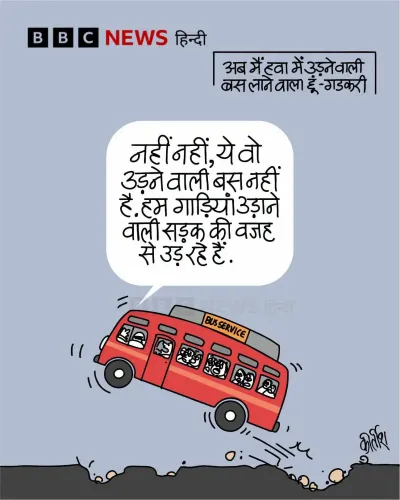
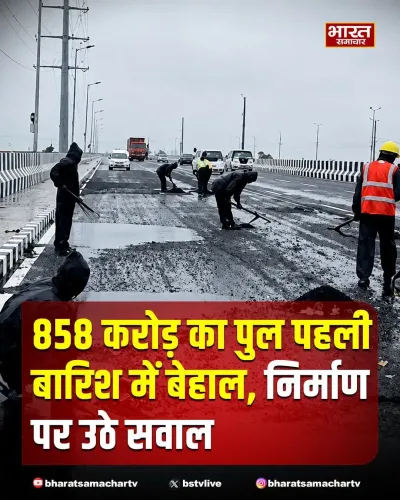
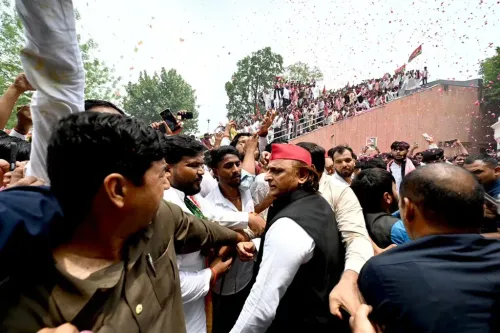
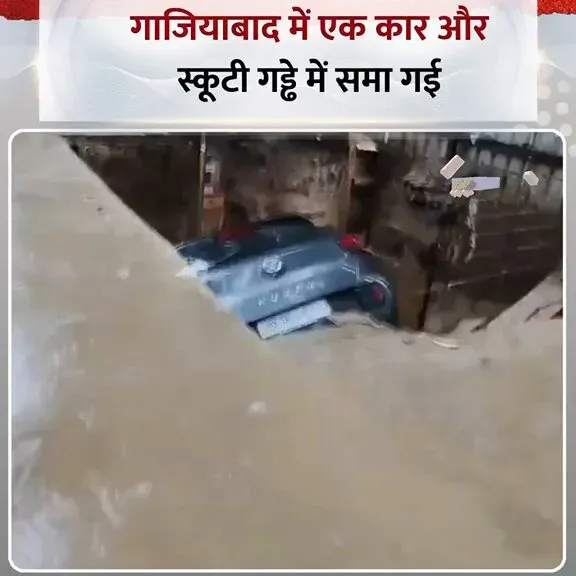
Samajwadi Party president Akhilesh Yadav on 9 July 2026 posted a pointed Hindi question on X — 'Does this road lead to the Vishwaguru's destination?' — using a video to challenge the gap between India's global-leadership rhetoric and on-ground road conditions in Uttar Pradesh.
Key Takeaways
Akhilesh Yadav posted a Hindi rhetorical question on 9 July 2026 challenging India's 'Vishwaguru' claim through road-condition imagery.
The term Vishwaguru has been central to Prime Minister Modi 's global-leadership messaging since 2014 .
Bharatmala Pariyojana , launched in 2015 , targets over 34,000 km of new national highways, with Uttar Pradesh as a priority state.
Road quality has been a recurring political flashpoint in Uttar Pradesh assembly elections in 2017 and 2022 .
The post continues a broader opposition pattern of contrasting India's foreign-policy ambitions with domestic infrastructure shortfalls.
Updated Bharatmala progress data and highway maintenance budget discussions in Parliament are the next key markers to watch.
Samajwadi Party president Akhilesh Yadav on Thursday, 9 July 2026, posted a sharp rhetorical challenge on X, questioning whether the state of India's roads is consistent with the ruling establishment's claim of the country being a Vishwaguru — a world teacher or global leader.
Context
The post, written in Hindi, reads: 'Kya yahi sadak Vishwaguru ke gantavya tak jaati hai?' — translated as 'Does this road lead to the destination of the Vishwaguru?' The question, posed alongside a video, is a pointed jab at the gap between India's self-projected global stature and the on-ground condition of its roads. Akhilesh Yadav, who leads the principal opposition party in Uttar Pradesh, has consistently used social media to contrast government rhetoric with everyday infrastructure realities.
The term Vishwaguru was invoked publicly by Prime Minister Narendra Modi from 2014 onward to articulate India's aspiration for global moral and civilisational leadership. It has since become a recurring motif in ruling-party messaging, making it a frequent target for opposition critique.
Policy Backdrop
The central government launched Bharatmala Pariyojana in 2015 with an ambition to construct over 34,000 km of national highways, including economic corridors and expressways, with Uttar Pradesh among the priority states. The scheme was positioned as a transformational push to modernise India's road network and support economic growth.
Despite the scale of the programme, road quality and maintenance — particularly on rural and semi-urban stretches — have remained a persistent voter concern in Uttar Pradesh. Both the 2017 and 2022 state assembly elections saw competing claims between the Bharatiya Janata Party and the Samajwadi Party over road-building records, underscoring how infrastructure has become a proxy battlefield for political credibility in the state.
Stakeholders and Impact
The post resonates most directly with Uttar Pradesh commuters and rural residents who rely on state and national highways for daily transport, agricultural logistics, and access to health and education services. Poor road conditions translate into higher vehicle maintenance costs, longer travel times, and, in extreme cases, road accidents — concerns that cut across caste and class lines in the state.
For the Samajwadi Party, infrastructure critique serves a dual political purpose: it challenges the BJP's development narrative at the national level while also reinforcing the SP's positioning as the voice of ordinary Uttar Pradesh residents. Opposition parties across India have increasingly adopted this strategy of juxtaposing foreign-policy ambition with domestic service-delivery gaps.
What's Next
Attention will now turn to the release of updated Bharatmala Pariyojana progress data for Uttar Pradesh and any debate over highway maintenance allocations in the coming parliamentary session. If the government responds to the criticism — either through data or a counter-narrative — it could sharpen the infrastructure debate ahead of future electoral cycles in the state. The post signals that road quality will remain a live political issue well into the current parliamentary term.
Point of View
Requiring no statistics and no lengthy argument. The tactic is effective because it forces audiences to complete the logic themselves, making the implied criticism stickier than a data-heavy rebuttal would be. It also fits a well-established SP playbook of contesting BJP's development narrative on the terrain most visible to ordinary voters: the road outside their door. If Bharatmala progress data for Uttar Pradesh continues to lag announced targets, such posts will find an increasingly receptive audience ahead of the next state electoral cycle.
NationPress
8 Oct 2026
Frequently Asked Questions
What did Akhilesh Yadav post about roads on 9 July 2026?
Akhilesh Yadav posted a Hindi question on X — 'Does this road lead to the destination of the Vishwaguru?' — alongside a video, questioning whether India's road infrastructure matches its claim to global leadership.
What does 'Vishwaguru' mean and who uses the term?
'Vishwaguru' means 'world teacher' or global guide and has been used by Prime Minister Narendra Modi since 2014 to describe India's aspirational role as a moral and civilisational leader on the world stage.
What is Bharatmala Pariyojana and how does it relate to UP roads?
Bharatmala Pariyojana is a central government scheme launched in 2015 to build over 34,000 km of national highways across India, with Uttar Pradesh among the priority states, aimed at improving economic connectivity.
Why does the Samajwadi Party focus on road quality as a political issue?
Road quality is a visible, everyday concern for Uttar Pradesh voters and has been a contested issue in both the 2017 and 2022 state elections; the SP uses it to challenge the BJP's development narrative at both state and national levels.
What should we watch for next on India's highway programme in Uttar Pradesh?
Key things to watch include updated Bharatmala Pariyojana completion data for Uttar Pradesh and any parliamentary debate on highway maintenance budget allocations in the coming session.