Akhilesh Yadav targets UP govt with sharp Hindi proverb
Synopsis
Samajwadi Party president Akhilesh Yadav posted a six-word Hindi proverb on 3 July 2026, implying the Uttar Pradesh government applies harsh punishment to the powerless while pardoning the influential — a sharp, metaphor-driven critique of the ruling administration's accountability record.
Key Takeaways
Akhilesh Yadav posted on X on 3 July 2026 using the Hindi proverb 'फुनगी को फाँसी, शाख को माफ़ी' ('Hang the twig, pardon the branch').
The phrase implies selective enforcement — harsh treatment of the powerless, leniency for the influential.
No specific incident or individual was named in the post, keeping the critique broadly applicable.
The Samajwadi Party is the principal opposition to the BJP in Uttar Pradesh , India's most populous state.
Follow-up statements from SP leaders may identify the precise target of the remark.
The post reflects a wider opposition pattern of using culturally resonant Hindi idioms for political messaging on social media.
Samajwadi Party president Akhilesh Yadav on Friday, 3 July 2026, took a pointed swipe at the Uttar Pradesh government with a terse Hindi proverb posted on X, accusing the ruling dispensation of selective accountability in the state.
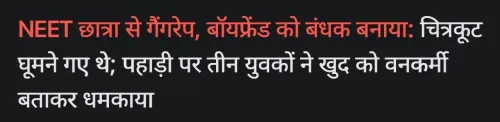
The post reads: 'फुनगी को फाँसी, शाख को माफ़ी' — loosely translated as 'Hang the twig, pardon the branch.' The phrase is a well-known Hindi idiom implying that small or powerless actors are punished harshly while those with greater power or political connections are let off the hook.
Context
Yadav, who leads the principal opposition party in Uttar Pradesh, has consistently used metaphorical and proverbial language on social media to highlight what he characterises as double standards in law enforcement and governance under the current state administration. The brevity of the post — just six words — is characteristic of his social-media style, designed to generate maximum resonance with Hindi-speaking audiences without specifying names or incidents, leaving interpretation open.
The Samajwadi Party, founded on a socialist platform, has been the primary opposition force in Uttar Pradesh and frequently contests the Bharatiya Janata Party's governance record in India's most populous state.
Policy Backdrop
Opposition leaders across India have increasingly turned to social-media platforms to frame governance critiques in culturally resonant idioms, particularly in Uttar Pradesh, where political messaging in Hindi carries wide reach. The use of proverbs allows politicians to insinuate criticism of specific incidents or individuals without making direct, verifiable claims — a tactic that is both legally cautious and rhetorically effective.
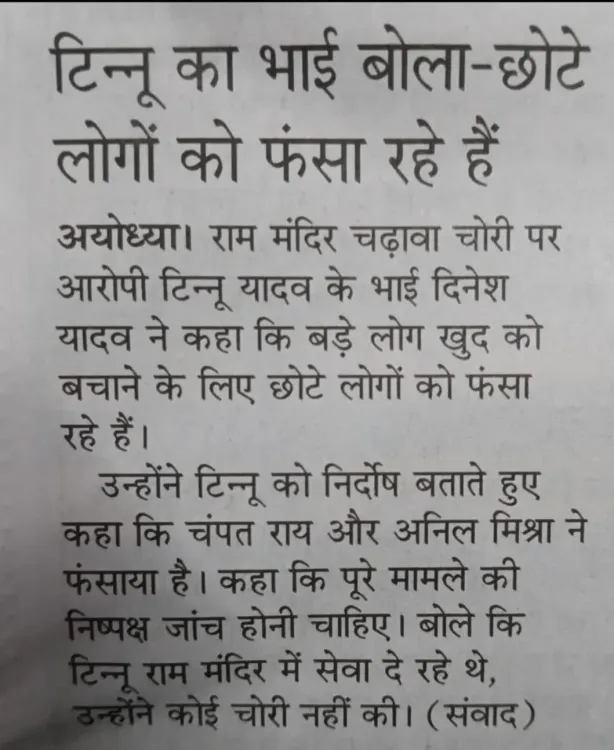
The idiom 'hang the twig, pardon the branch' speaks directly to a recurring charge levelled by opposition parties: that enforcement agencies target low-level operatives or politically inconvenient individuals while shielding those with powerful affiliations. This critique has surfaced repeatedly in debates over police action, anti-corruption drives, and administrative accountability in the state.
Stakeholders and Impact
Uttar Pradesh voters — particularly those in communities that feel marginalised by the current administration — are the primary audience for this kind of messaging. The Samajwadi Party's core support base, which includes OBC communities and minorities, is especially attuned to narratives around selective justice.
The post is also a signal to other opposition parties and civil society observers who track accountability in the state. Any subsequent press conference or elaboration by SP leaders could clarify the specific incident or individuals the proverb is intended to reference.
What's Next
Political observers will watch for follow-up statements from Samajwadi Party spokespersons that may identify the precise episode behind Yadav's remark. A response from the Uttar Pradesh state government or the ruling party would indicate how seriously they regard the provocation. With assembly politics in the state perpetually in motion, such exchanges on social media often serve as the opening salvo in a broader political confrontation.
Point of View
Making it impossible to rebut without the ruling party appearing to identify itself as the 'branch' being pardoned. This fits a broader pattern in which the Samajwadi Party uses cultural idioms to sustain a narrative of two-tiered justice in Uttar Pradesh, particularly ahead of electoral cycles. The tactic keeps the party's accountability critique alive in the public discourse without requiring documentary evidence. Whether the state government responds will itself become part of the political story.
NationPress
1 Oct 2026
Frequently Asked Questions
What does Akhilesh Yadav's Hindi proverb 'फुनगी को फाँसी, शाख को माफ़ी' mean?
It translates to 'Hang the twig, pardon the branch,' an idiom implying that the weak or small are punished harshly while the powerful are let off — Yadav used it to allege double standards in governance.
Who is Akhilesh Yadav and why does his post matter?
Akhilesh Yadav is the president of the Samajwadi Party and a Lok Sabha MP, and former Chief Minister of Uttar Pradesh. His posts are closely watched as signals of the opposition's political strategy in the state.
What is Akhilesh Yadav criticising with this post?
He appears to be criticising selective accountability by the Uttar Pradesh government, suggesting that those with power or political connections escape punishment while lesser actors face strict action.
Did Akhilesh Yadav name any specific person or incident in his post?
No. The post contained only the proverb without naming any individual, party, scheme, or specific event, leaving the target open to interpretation.
How does the Samajwadi Party typically challenge the UP government on social media?
The Samajwadi Party frequently uses metaphorical language, Hindi proverbs, and culturally resonant idioms on social media to frame governance critiques in ways that resonate with Hindi-speaking voters across Uttar Pradesh.