Bangladesh: 1,667 women faced violence in 7 months, rights body warns of 'safe haven' for rape
Synopsis
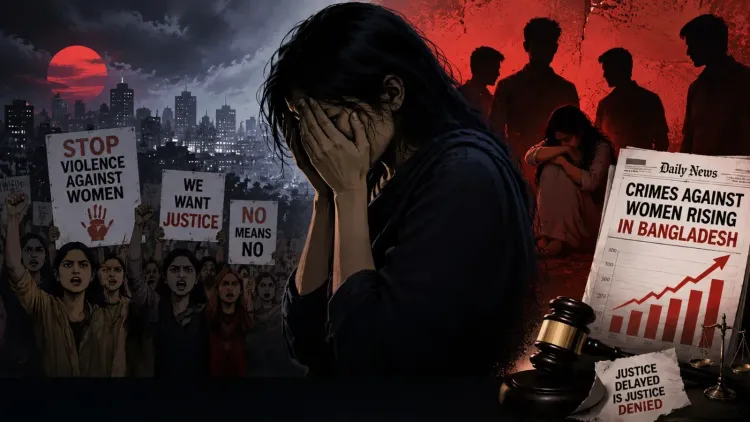
Bangladesh Mohila Parishad's seven-month data — drawn from just 14 newspapers — recorded 1,667 women and girls as victims of violence, including 292 rapes and 341 killings. Rights leaders warn the real numbers are far worse, and that Bangladesh is becoming a 'safe haven' for rape and abuse. The data gap itself is the alarm: if 14 papers show this, the full picture may be devastating.
Key Takeaways
Bangladesh Mohila Parishad recorded 1,667 cases of violence against women and girls between January and July 2025 .
292 women and girls were raped, with 31 incidents involving rape followed by murder.
83 girls and 258 women were killed during the seven-month period.
The data was compiled from only 14 newspapers ; rights groups warn the actual figures are likely far higher.
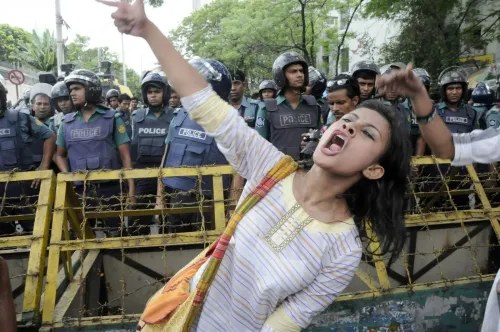
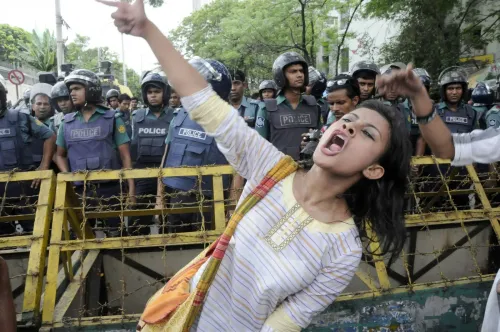
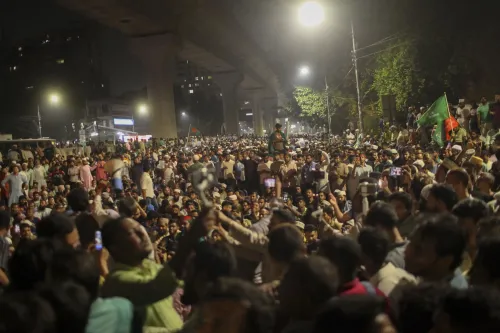
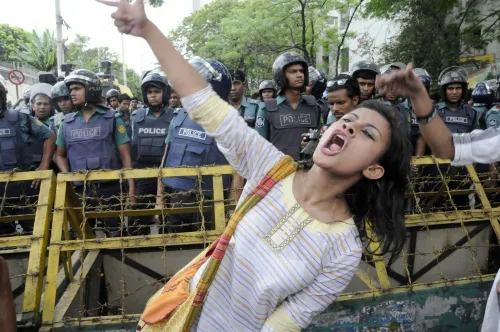
A human chain protest was held outside the Jatiya Press Club in Dhaka on 17 August to demand government action.
Speakers called for stronger law enforcement, institutional oversight, and a broader social movement against gender-based violence.
At least 1,667 women and girls in Bangladesh were subjected to various forms of violence between January and July 2025, according to figures released by Bangladesh Mohila Parishad, a prominent women's rights organisation. The data, presented during a public demonstration in Dhaka on Sunday, 17 August, points to a deepening crisis of gender-based violence that rights groups say is going largely unchecked.
Key Figures from the Data
According to Mohila Parishad General Secretary Maleka Banu, the seven-month tally includes the killing of 83 girls and 258 women, the rape of 292 women and girls, and at least 31 incidents involving rape followed by murder. Banu cautioned that the numbers represent only a partial picture, as the data was compiled from reports in just 14 newspapers out of the many media outlets operating across the country.
'These incidents make it clear that women and children in Bangladesh are not fully safe anywhere today. It is not just rape or sexual violence; women and children are also falling victim to murder, torture and various other forms of violence. The most worrying part is that we are failing to bring down this trend of violence. Even children who have not yet reached physical and mental maturity, who have not yet reached an age where they identify themselves as women, are becoming victims of sexual violence,' Banu said.
Rights Groups Warn of Underreporting
Mohila Parishad president Fauzia Moslem warned that the actual scale of violence could be far greater than the reported figures suggest. She noted that the organisation's data is drawn from a limited selection of press reports, and that a comprehensive count — drawing from all available media — would likely yield 'a far more alarming' picture. The group staged a human chain outside the Jatiya Press Club in Dhaka to draw attention to the persistent violence, rape, murder, and killing of children across the country.
Speakers Cite Patriarchal Norms and Weak Enforcement
Addressing the gathering, speakers argued that deeply entrenched patriarchal attitudes and discriminatory social norms have prevented women from being treated with basic dignity in Bangladesh. They called for a broader social movement, stronger law enforcement, and effective institutional oversight to curb ongoing violence. Participants also urged Bangladeshi authorities to govern with 'patriotism, humanity and responsibility' to restore the human rights of women and children.
What Happens Next
Rights organisations have demanded concrete legislative and administrative action from the government. With the data covering only the first seven months of the year and drawn from a fraction of available media sources, advocates warn the final annual tally could be significantly higher. The pressure on Bangladeshi authorities to demonstrate accountability is expected to intensify in the months ahead.
Point of View
667 is not a count of violence in Bangladesh — it is a floor. Compiled from just 14 newspapers in a country with dozens of media outlets, it almost certainly undercounts the true scale. The more troubling signal is structural: rights groups are resorting to media monitoring because official data pipelines are either absent or unreliable. Bangladesh cannot address a crisis it refuses to measure properly. Until the government establishes a credible, centralised reporting mechanism for gender-based violence, every statistic released at a protest outside a press club is both an indictment and an underestimate.
NationPress
1 Oct 2026
Frequently Asked Questions
How many women faced violence in Bangladesh between January and July 2025?
According to Bangladesh Mohila Parishad, at least 1,667 women and girls were subjected to various forms of violence in that period. The figure includes 292 rapes, 31 rape-and-murder cases, and the killing of 83 girls and 258 women.
Who released the violence data and where?
The data was released by Bangladesh Mohila Parishad, a women's rights organisation, during a human chain protest outside the Jatiya Press Club in Dhaka on 17 August 2025.
Why do rights groups say the real figures could be much higher?
Mohila Parishad president Fauzia Moslem noted that the data was compiled from reports in only 14 newspapers. She said that if all media outlets in Bangladesh were included, the actual picture of violence against women could be far more alarming.
What are rights groups demanding from the Bangladeshi government?
Speakers at the protest called for stronger enforcement of laws, effective institutional oversight, and a broader social movement to counter entrenched patriarchal attitudes. They also urged the government to govern with responsibility and restore the human rights of women and children.
What is Bangladesh Mohila Parishad?
Bangladesh Mohila Parishad is a prominent women's rights organisation in Bangladesh that monitors and advocates against gender-based violence. It compiles data on crimes against women primarily through media reports and uses public demonstrations to pressure authorities for accountability.