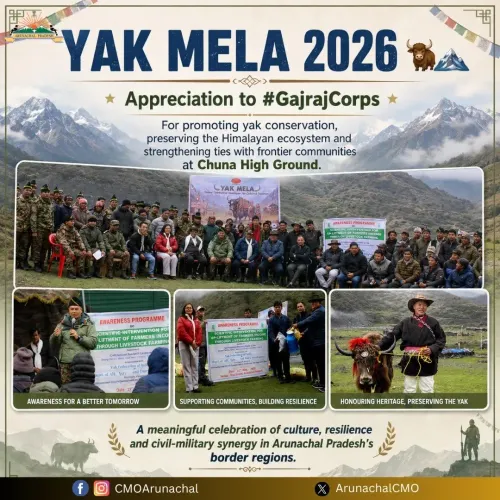
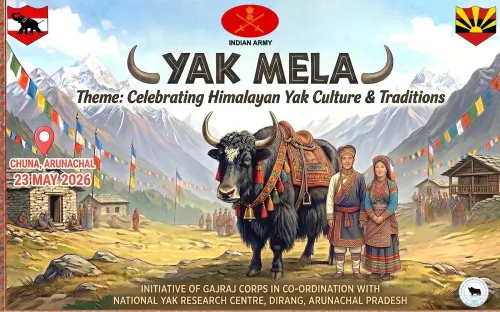
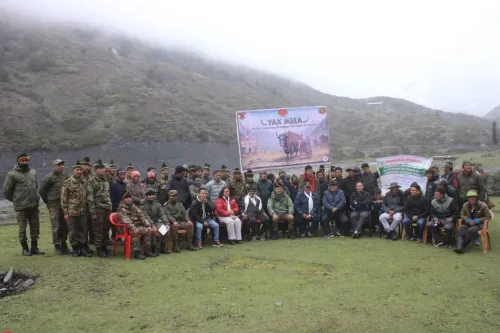
CM Pema Khandu launches Yak Mela 2026 in Tawang's highlands
Synopsis
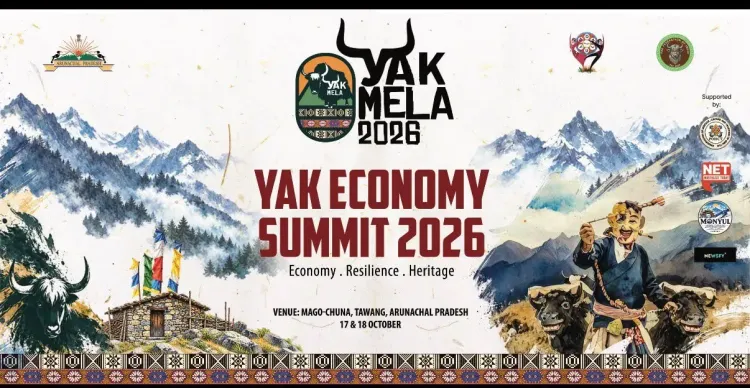
CM Pema Khandu inaugurated the Yak Mela & Yak Economy Summit 2026 at Mago-Chuna, Tawang on 17–18 October, aiming to link highland yak-herding traditions with sustainable livelihoods, value chains, and entrepreneurship in Arunachal Pradesh's border districts.
Key Takeaways
Yak Mela & Yak Economy Summit 2026 is a two-day state-supported event held on 17–18 October 2026 at Mago-Chuna, Tawang .
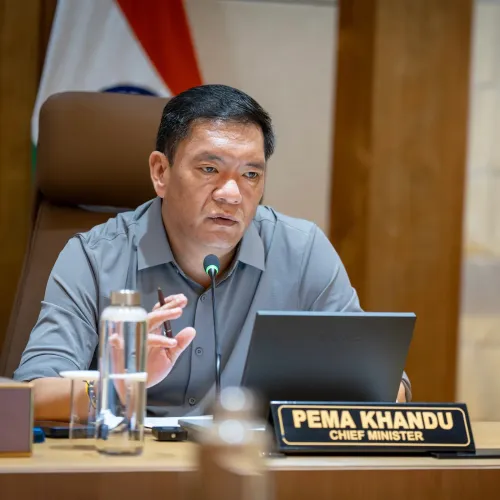
CM Pema Khandu announced and attended the summit, positioning it as a convergence of Himalayan heritage and highland entrepreneurship.
The event targets yak herders and highland tribal communities in Tawang district, whose livelihoods depend on the animal for meat, milk, wool, and transport.
The summit fits a broader BJP-led Arunachal Pradesh strategy of heritage-linked economic development in ecologically sensitive border zones active since the early 2010s.
Mago-Chuna sits close to the Line of Actual Control , making active, economically engaged border villages a strategic as well as developmental priority.
Follow-up announcements on yak-product value chains, herder support schemes, and tourism linkages are expected to emerge from the summit.
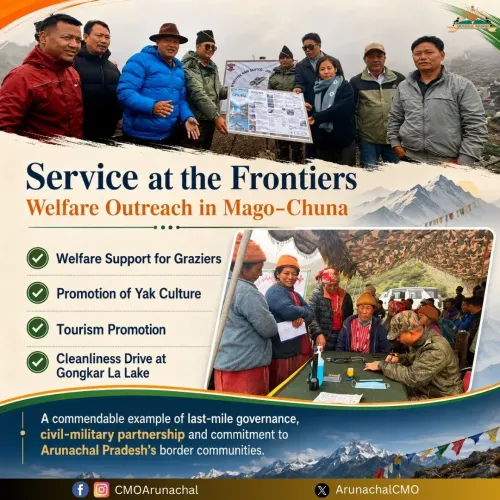
High in the cold-altitude pastures of Mago-Chuna, Tawang, a centuries-old herding tradition is being handed a new economic engine. Arunachal Pradesh Chief Minister Pema Khandu on Saturday, 17 October 2026, inaugurated the Yak Mela & Yak Economy Summit 2026 — a two-day state-supported gathering designed to turn the yak, an icon of Himalayan resilience, into a driver of sustainable highland livelihoods.
Where tradition meets the marketplace in Mago-Chuna
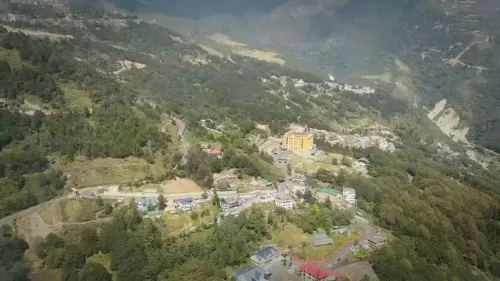
Posting from the venue, CM Khandu framed the summit as a convergence of heritage and entrepreneurship: 'Celebrating our Himalayan heritage while creating new opportunities for sustainable livelihoods and economic growth,' he wrote, adding that the event 'brings together tradition, resilience and entrepreneurship in the highlands of Arunachal Pradesh.' The choice of Mago-Chuna — a remote high-altitude site in Tawang district — is itself a statement. Few venues in India sit closer to the Line of Actual Control while simultaneously carrying such deep Buddhist and pastoral significance.
The yak is not just a cultural symbol. For tribal highland communities in Tawang and adjoining areas, the animal underpins a fragile but vital economy — providing meat, milk, wool, hide, and the labour that keeps highland trade routes alive. Climate pressures, shrinking pastures, and outward migration have put that economy under stress. A summit that links herders to value chains and tourism networks directly addresses those pressures.
BJP's highland development playbook in the Northeast
Arunachal Pradesh governments have invested in livestock-based livelihoods and eco-tourism in border districts through state development plans since the early 2010s. Under the BJP-led administration, that push has sharpened into a deliberate brand — heritage-linked entrepreneurship as a complement to infrastructure drives. The logic is straightforward: connect remote communities to markets before outmigration hollows them out.
The Yak Mela fits neatly into a broader Northeast India pattern, where cultural festivals double as economic-policy interventions. When a state this ecologically sensitive and this strategically positioned promotes yak-product value chains — wool textiles, organic dairy, eco-tourism experiences — it is simultaneously making a livelihood argument and a geopolitical one: that populated, economically active border villages are India's most durable frontier.
What the summit could unlock for yak herders
The two-day format — running 17–18 October 2026 — is expected to bring together herder communities, policymakers, and entrepreneurs. Whether specific schemes, procurement guarantees, or tourism-linkage agreements emerge from the summit will determine whether Mago-Chuna becomes a milestone or a moment. The event's framing around 'entrepreneurship' signals an intent to go beyond ceremonial celebration toward concrete market access.
The highlands of Tawang have long carried the tag of Shangri-La — an almost mythic remoteness. CM Khandu's use of the hashtag #ShangriLaCalling is a pointed reframe: Shangri-La is no longer just a destination to admire from afar — it is open, investible, and ready to do business on its own terms.
The yaks are in the pasture. The entrepreneurs are in the tent. Now watch what gets built.
Point of View
The BJP-led state government is effectively turning highland herders into agents of demographic stability along the Line of Actual Control. The summit's emphasis on 'entrepreneurship' and value chains signals a shift from subsidy-based welfare toward market integration — a harder but more durable model. If the event yields concrete procurement or tourism-linkage commitments, it could become a replicable template for other high-altitude border districts across the Himalayan arc.
NationPress
17 Oct 2026
Frequently Asked Questions
What is the Yak Mela & Yak Economy Summit 2026?
It is a two-day state-supported event held on 17–18 October 2026 at Mago-Chuna in Tawang district, Arunachal Pradesh, designed to connect yak-herding traditions with sustainable livelihoods, entrepreneurship, and market opportunities for highland communities.
Where is Mago-Chuna and why was it chosen as the venue?
Mago-Chuna is a remote high-altitude site in Tawang district, Arunachal Pradesh, close to the Line of Actual Control. It was chosen for its direct relevance to yak-herding communities and its symbolic significance as a highland Himalayan landscape.
What is the importance of yaks to Arunachal Pradesh's economy?
Yaks provide meat, milk, wool, hide, and transport labour for highland tribal communities in Arunachal Pradesh, forming the backbone of a fragile but vital border-district economy that faces pressure from climate change and outward migration.
What is Pema Khandu's development focus in Arunachal Pradesh?
Chief Minister Pema Khandu has emphasised heritage-linked entrepreneurship, eco-tourism, and livestock-based livelihoods in remote border districts, complementing infrastructure investment to keep border communities economically active.
What outcomes are expected from the Yak Economy Summit 2026?
Observers are watching for follow-up announcements on yak-product value chains such as wool textiles and organic dairy, herder support schemes, and tourism linkage agreements that could emerge from the two-day summit at Tawang.