US House bill H.R. 10819 revives India-US Interparliamentary Group push
Synopsis
A bipartisan US House bill is making a third attempt to create a formal legislative bridge between the US Congress and Indian Parliament — a channel that has twice died in committee. With the sponsors having just met Indian Foreign Secretary Vikram Misri in New Delhi, H.R. 10819 arrives at a moment of deepening India-US engagement, but faces the same institutional inertia that killed its 2007 and 2009 predecessors.
Key Takeaways
10819 , introduced on 17 October 2026 , seeks to establish a United States-India Interparliamentary Group .
Bill introduced by Republican Congressman James Gallagher of California; co-sponsored by Bill Huizenga and Indian American Democrat Shri Thanedar , both of Michigan.
Similar proposals were introduced in 2007 and 2009 by Congressman Jim McDermott — neither received a floor vote.
Earlier versions proposed up to 12 Members of Congress meeting annually with Indian Parliament representatives, with a budget cap of $100,000 per fiscal year .
The bill has been referred to the House Committee on Foreign Affairs .
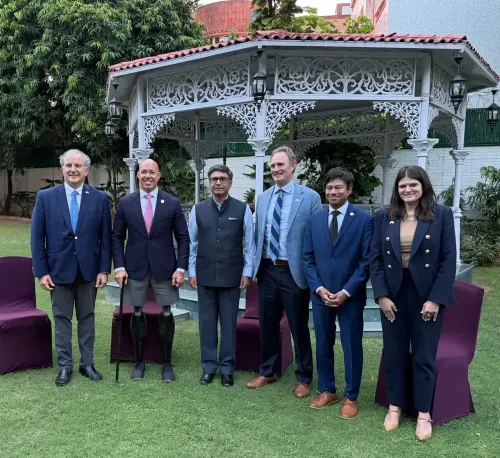
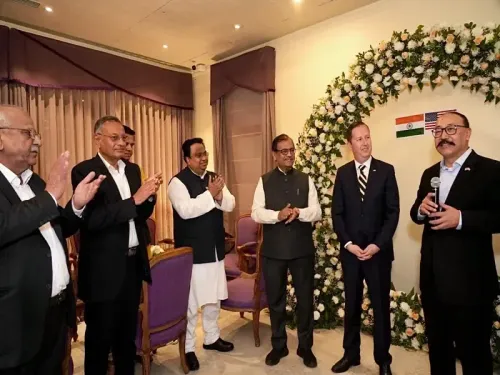
Gallagher and Thanedar met Indian Foreign Secretary Vikram Misri in New Delhi on 27 September as part of a congressional delegation.
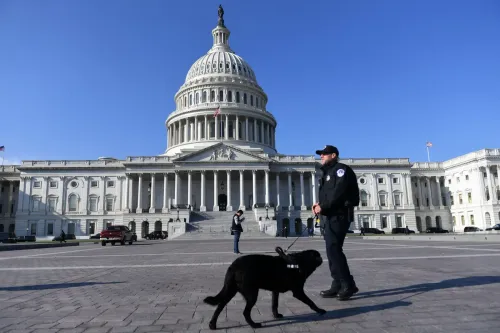
A bipartisan bill in the US House of Representatives is seeking to establish a formal United States-India Interparliamentary Group, reviving a long-stalled proposal for a structured legislative channel between the US Congress and the Indian Parliament. The bill, H.R. 10819, was introduced on Thursday, 17 October 2026, and has been referred to the House Committee on Foreign Affairs.
The Bill and Its Sponsors
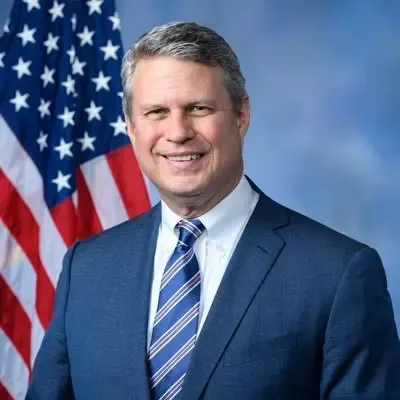
Republican Congressman James Gallagher of California introduced the legislation, titled 'To establish a United States-India Interparliamentary Group.' The bill has two original co-sponsors: Republican Congressman Bill Huizenga of Michigan and Indian American Democratic Congressman Shri Thanedar, also of Michigan. The bipartisan support signals cross-aisle interest in deepening India-US legislative ties.
Gallagher cited the constitutional basis for the bill, stating: 'The Constitutional authority on which this bill rests is the Necessary and Proper Clause under Article I, Section 8, Clause 18 of the U.S. Constitution.'
A Proposal That Has Stalled Twice Before
This is not the first time such a measure has been floated. Two earlier versions — titled the United States-India Interparliamentary Exchange Act — were introduced by Democratic Congressman Jim McDermott of Washington in 2007 and again in 2009. Neither bill received a floor vote, leaving the proposal dormant for over a decade.
Those earlier bills had proposed that 'not to exceed 12 Members of Congress shall be appointed to meet annually' with 'representatives of the Lok Sabha and Rajya Sabha of the Parliament of India for discussion of common issues in the interest of relations between the United States and India.' Half the members were to be appointed by the House Speaker — including both co-chairs of the Congressional Caucus on India and Indian-Americans — and the remaining half by the Senate President pro tempore. Those bills also authorised 'no more than $100,000 for each fiscal year' for group expenses and required an annual spending report to Congress.
How It Fits into Existing US Practice
The US Congress already maintains similar interparliamentary groups with a number of countries. Notably, Congressman Huizenga himself leads the US-Canada Interparliamentary Group, according to his House biography — bringing direct institutional experience to this initiative.
Congressional Delegation's Recent India Outreach
The bill's introduction comes weeks after Gallagher and Thanedar were part of a congressional delegation that met Indian Foreign Secretary Vikram Misri in New Delhi on 27 September. That meeting underscores the broader legislative-level engagement that backers of H.R. 10819 say this bill would formalise.
This comes amid an overall strengthening of India-US strategic ties, with both governments deepening cooperation on defence, trade, and technology. A formal interparliamentary channel, if eventually established, would give legislators on both sides a structured forum to discuss shared concerns — a mechanism that diplomats and think tanks have long argued is missing from the bilateral relationship.
Whether H.R. 10819 will advance further than its predecessors remains to be seen, with the bill now awaiting action in the House Committee on Foreign Affairs.
Point of View
Particularly with Congressman Huizenga bringing direct experience running the US-Canada interparliamentary group. But enthusiasm in the House has not historically translated into committee action on India-related legislation. The real question is whether this bill can break the pattern — or whether it will serve, once again, as a statement of intent rather than a legislative outcome. With the India-US relationship at a strategic high, the political window may finally exist, but institutional momentum in Congress remains the missing ingredient.
NationPress
17 Oct 2026
Frequently Asked Questions
What is the US House bill H.R. 10819 about?
H.R. 10819 is a bipartisan bill introduced in the US House of Representatives on 17 October 2026, seeking to establish a formal United States-India Interparliamentary Group — a structured channel for dialogue between the US Congress and the Indian Parliament. It has been referred to the House Committee on Foreign Affairs.
Who introduced and co-sponsored H.R. 10819?
Republican Congressman James Gallagher of California introduced the bill. It has two original co-sponsors: Republican Congressman Bill Huizenga of Michigan and Indian American Democratic Congressman Shri Thanedar of Michigan, making it a bipartisan effort.
Has a similar bill been introduced before?
Yes. Democratic Congressman Jim McDermott of Washington introduced near-identical legislation in 2007 and 2009 under the title 'United States-India Interparliamentary Exchange Act.' Neither bill received a floor vote, making this the third such attempt.
What would the interparliamentary group actually do?
Based on earlier versions of the bill, the group would have up to 12 Members of Congress meet annually with representatives of India's Lok Sabha and Rajya Sabha to discuss issues of mutual interest. A budget of no more than $100,000 per fiscal year was proposed for group expenses, with an annual spending report required to Congress.
How does this bill connect to broader India-US relations?
The bill's sponsors, Gallagher and Thanedar, were part of a congressional delegation that met Indian Foreign Secretary Vikram Misri in New Delhi on 27 September, reflecting active legislative-level engagement with India. Analysts see a formal interparliamentary group as a missing structural element in an otherwise deepening bilateral relationship.