US lawmakers meet USIRC to deepen India ties on trade, defence, China
Synopsis
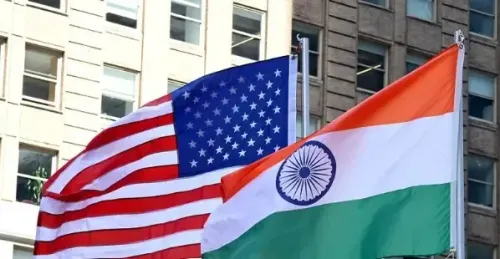
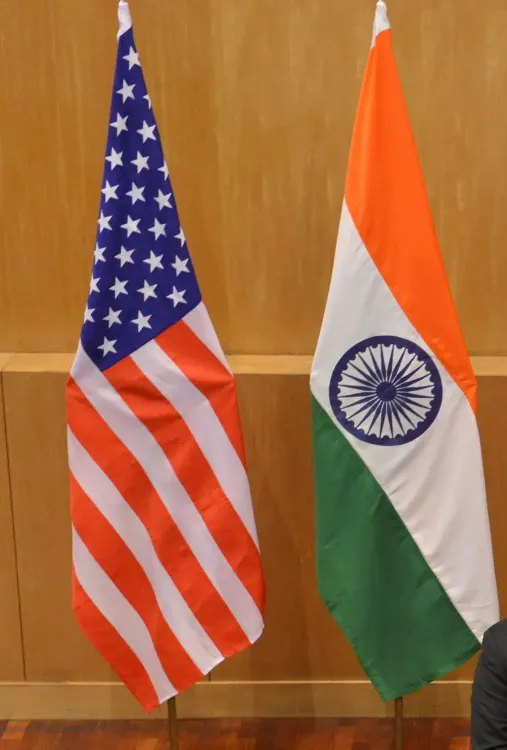
Nine US lawmakers from both parties sat down with the United States India Relationship Council on Capitol Hill to map out a deeper Washington–New Delhi alliance — with China named explicitly as a collective threat. Rep. Rich McCormick's call for the two nations to be 'not just friends, but allies' captures a growing bipartisan conviction that the US-India partnership is no longer optional — it is strategic.
Key Takeaways
Nine US Congress members met the United States India Relationship Council (USIRC) on 31 August and 1 September at Capitol Hill .
Discussions covered trade, defence, the Quad, Indo-Pacific security, maritime cooperation, space, and supply-chain resilience .
Rich McCormick called the US-India relationship the 'top most priority' and urged the two nations to become formal allies.
Lawmakers reached consensus that threats from the Chinese Communist Party must be addressed 'collectively and cohesively.' USIRC is focusing its advocacy on lawmakers serving on congressional committees dealing with foreign affairs.
Sydney Kamlager-Dove , ranking Democrat on the House Foreign Affairs South and Central Asia subcommittee, emphasised diaspora engagement in strengthening bilateral ties.
Nine US Congress members held a series of high-level meetings with the United States India Relationship Council (USIRC) on 31 August and 1 September on Capitol Hill, covering trade, defence, Indo-Pacific security, and the growing strategic challenge posed by China. The bipartisan sessions signal fresh momentum in efforts to cement a deeper Washington–New Delhi partnership ahead of what many analysts see as a decisive decade for the Indo-Pacific order.
Key Developments
The USIRC — a registered political action committee focused on strengthening US-India bilateral relations — said its delegation engaged both Democratic and Republican lawmakers across two days of structured discussions. Topics ranged from supply-chain resilience and maritime security to cooperation in space and the Quad framework. The group said the meetings produced broad agreement on the strategic importance of the Indo-Pacific and the need for deeper bilateral cooperation.
What the Lawmakers Said
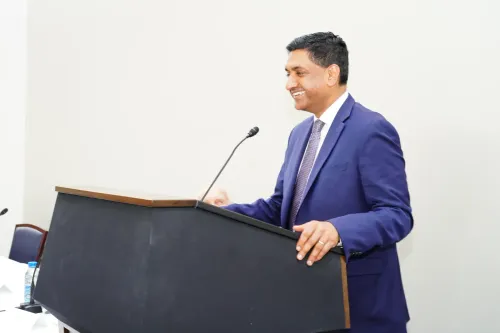
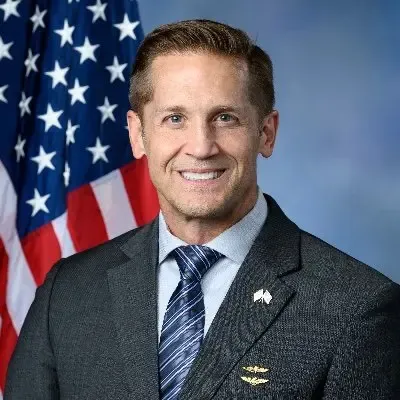
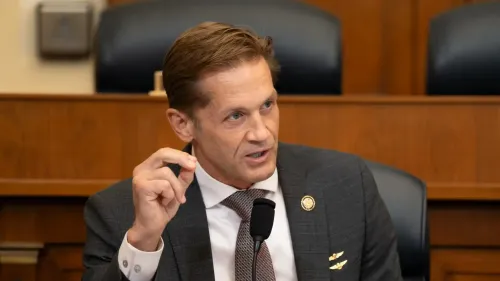
Representative Rich McCormick, a Georgia Republican, offered some of the most emphatic remarks, describing the prospect of the world's largest economy working alongside a country expected to become the world's third-largest economy as 'very exciting and full of potential.' McCormick said the US-India relationship was the 'top most priority' when assessed in the context of the world's future, and called for the two nations to be 'not just friends, but allies into the future.'
Representative Raja Krishnamoorthi, an Illinois Democrat, was described by USIRC as 'very forthright about his commitment to the US India relationship.' Representative Young Kim of California was characterised as a longstanding supporter of stronger ties with India. Representative Sydney Kamlager-Dove, who serves as the ranking Democrat on the House Foreign Affairs subcommittee covering South and Central Asia, stressed the importance of engaging the diaspora in reinforcing bilateral relations.
Representative Suhas Subramanyam, an Indian American Democrat from Virginia, urged greater political participation with the message: 'Get involved, Stay involved.' Representatives Derek Tran, Scott Peters, and Jimmy Panetta of California each expressed support for expanding bilateral cooperation, with Panetta highlighting opportunities for mutual growth across multiple sectors.
The China Factor and Points of Consensus
USIRC listed among its stated 'points of consensus' that threats from the Chinese Communist Party should be addressed 'collectively and cohesively,' and that the United States and India are 'natural allies.' The group also noted agreement that differences between the two countries should be resolved through dialogue and diplomacy, even as strategic cooperation expands.
This comes amid a broader recalibration of US foreign policy in Asia, with Washington increasingly viewing New Delhi as a counterweight to Beijing's influence across the Indo-Pacific. Notably, the Quad — comprising the US, India, Japan, and Australia — was specifically cited as a framework of shared interest.
About USIRC and Its Strategy
The USIRC said it is concentrating its advocacy on lawmakers who serve, or are expected to serve, on congressional committees dealing with foreign affairs — a targeted approach designed to build durable institutional support for the bilateral relationship rather than relying on individual champions. The full roster of lawmakers who participated included Representatives Jonathan Jackson of Illinois; McCormick of Georgia; Young Kim, Derek Tran, Scott Peters, Jimmy Panetta, and Sydney Kamlager-Dove of California; and Suhas Subramanyam of Virginia.
With congressional committee assignments set to shift in the coming session, USIRC's outreach is likely to intensify as both parties position themselves on Indo-Pacific policy.
Point of View
Not merely rhetorical, commitment. Yet advocacy-group readouts have an inherent framing bias: the 'points of consensus' listed are USIRC's characterisation, not a congressional resolution. The harder question is whether this goodwill translates into legislative action — on trade market access, visa reciprocity, or defence co-production — areas where US-India friction has historically outlasted the photo-ops. With China explicitly named as a collective threat, the strategic rationale for the partnership has never been clearer; the execution gap, however, remains wide.
NationPress
19 Oct 2026
Frequently Asked Questions
Who are the US lawmakers who met the USIRC on Capitol Hill?
Nine members of Congress participated: Representatives Jonathan Jackson and Raja Krishnamoorthi of Illinois; Rich McCormick of Georgia; Young Kim, Derek Tran, Scott Peters, Jimmy Panetta, and Sydney Kamlager-Dove of California; and Suhas Subramanyam of Virginia. The group included both Democrats and Republicans.
What is the United States India Relationship Council (USIRC)?
The USIRC is a registered political action committee that advocates for stronger US-India bilateral relations and supports candidates it considers committed to the partnership. It focuses its outreach on lawmakers who serve, or are expected to serve, on congressional committees dealing with foreign affairs.
What topics were discussed at the Capitol Hill meetings?
The meetings on 31 August and 1 September covered trade, defence, the Quad, Indo-Pacific security, supply-chain resilience, maritime security, and space cooperation. Threats posed by the Chinese Communist Party were also a central theme.
What was the key point of consensus from the meetings?
Participants broadly agreed that threats from the Chinese Communist Party should be addressed collectively and cohesively, and that the United States and India are natural allies. The group also agreed that bilateral differences should be resolved through dialogue while strategic cooperation expands.
Why does the US-India relationship matter in the context of China and the Indo-Pacific?
Washington increasingly views New Delhi as a critical counterweight to Beijing's influence across the Indo-Pacific. The Quad framework — comprising the US, India, Japan, and Australia — was specifically cited as a vehicle for shared strategic interests, reflecting a broader US foreign policy shift toward deeper engagement with India.