India-US ties growing stronger despite differences, says Indian envoy at Capitol Hill

Synopsis
India's top diplomat in Washington told a Capitol Hill audience that the India-US partnership is built on strategic logic — not perfect alignment — and that trade, technology, energy, and a new 10-year defence framework are turning it into one of the defining relationships of the century. With over five million Indian Americans acting as a societal bridge, the partnership has depth that government-to-government ties alone cannot account for.
Key Takeaways
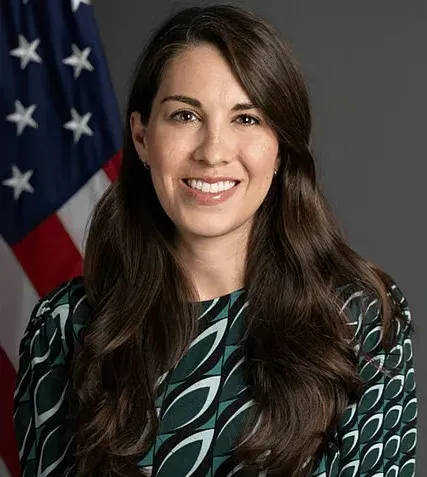
Khampa , India's Deputy Chief of Mission to the US, addressed a Capitol Hill event on 24 June , calling India-US ties one of the most defining partnerships of the 21st century .
Negotiators on both sides are working toward a bilateral trade agreement ; an interim framework reached earlier this year has maintained momentum.
India and the US signed a 10-year defence framework agreement last year covering military engagement, maritime security, and counterterrorism.
Technology priorities include artificial intelligence , semiconductors , quantum communications , and supply-chain diversification.
Energy — particularly crude oil, LNG, and civil nuclear cooperation — has emerged as one of the fastest-growing bilateral engagement areas.
More than five million Indian Americans were credited as key drivers of the broader societal partnership between the two nations.
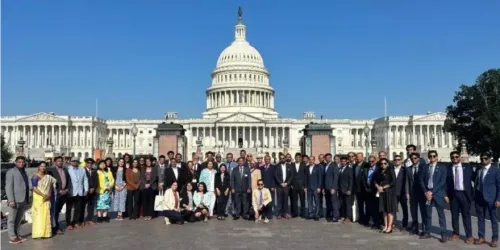
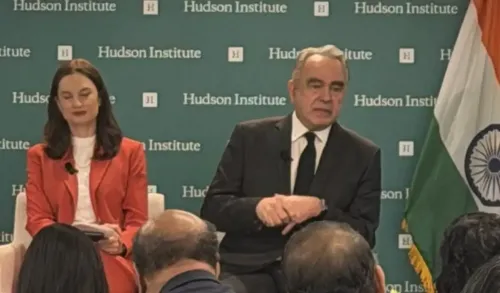
India's Deputy Chief of Mission to the United States, Namgya C. Khampa, on 24 June declared that the India-US strategic partnership continues to deepen despite occasional disagreements, calling it one of the most consequential bilateral relationships of the 21st century. Khampa made the remarks at a Capitol Hill event organised by the Foundation for India and Indian Diaspora Studies (FIIDS), Washington DC.
Strategic Logic Underpinning the Partnership
Khampa was unequivocal that divergence on specific issues does not undermine the broader relationship. 'The India-US Partnership has been described as one of the most seminal and defining partnerships of the 21st century,' she said, adding that 'the strategic logic underpinning the relationship has become stronger with each past year.'
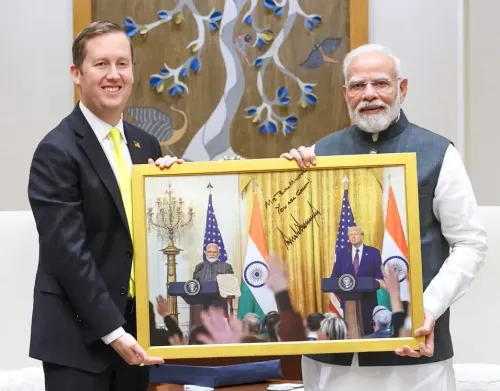
Her remarks come as New Delhi and Washington are actively engaged in negotiations to expand trade, deepen technology cooperation, and strengthen security coordination across the Indo-Pacific. She pointed to the recent meeting between Prime Minister Narendra Modi and President Donald Trump as evidence of leadership-level commitment, noting that both leaders 'enjoy a warm friendship and a bond and a shared commitment to advancing the relationship.'
Trade, Energy, and Technology at the Centre
Trade remains a central pillar of the bilateral agenda, with negotiators on both sides working toward a bilateral trade agreement. Khampa said an interim trade framework reached earlier this year has kept momentum alive. 'We remain optimistic we'll get there soon,' she said, stressing that the objective goes beyond tariff reduction to building 'a stronger, more deeper, and more mutually beneficial and ambitious economic partnership.'
Energy has emerged as one of the fastest-growing areas of engagement, according to Khampa. India's expanding energy demand and America's abundant resources create what she described as a natural partnership, particularly in crude oil, liquefied natural gas (LNG), and civil nuclear cooperation.
On technology, she was emphatic: 'Technology really is an area that the future of this partnership lies.' Priorities include cooperation in artificial intelligence, semiconductors, advanced computing, quantum communications, and other critical technologies, alongside efforts to diversify supply chains away from concentrated technology hubs.
Defence Cooperation and the Quad
Khampa highlighted that defence cooperation now spans military engagement, maritime security, intelligence exchanges, critical technologies, and counterterrorism. She noted that the two countries signed a 10-year defence framework agreement last year, which she described as providing 'a basis to further deep cooperation and engagement and interoperability across the entire spectrum of defence and security engagement.'
She also underscored the importance of the Quad — comprising India, the United States, Japan, and Australia — in maintaining a stable and prosperous Indo-Pacific. Secretary of State Marco Rubio's recent visit to India, which included bilateral meetings and participation in a Quad foreign ministers' gathering, was cited as a further signal of deepening engagement.
Indian Diaspora as a Strategic Bridge
Khampa repeatedly returned to the role of the Indian-American community — numbering more than five million — in transforming official ties into a broader societal partnership. 'Ultimately I think the strength of this partnership rests not just on governments and what the two governments are doing, but on our people,' she said.
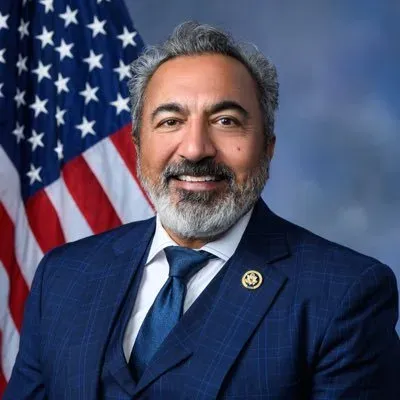
She credited Indian Americans with contributions across business, medicine, technology, entrepreneurship, academia, and public service, calling them 'the ultimate custodians of this partnership.' She also thanked members of Congress from both parties for their continued bipartisan support of closer ties with India, saying: 'We continue to count on congressional leadership and support as we take this relationship to newer heights.'
With trade talks ongoing, a defence framework in place, and technology cooperation accelerating, the India-US partnership appears set to expand further in the months ahead.
Point of View
Delivered at a moment when India and the US are navigating real friction on trade tariffs and technology export controls. The 10-year defence framework and Quad engagement give the relationship structural depth, but the bilateral trade agreement remains unsigned, and that gap matters. Indian Americans are a genuine asset, but framing a diplomatic relationship around diaspora goodwill risks overstating societal ties as a substitute for resolved policy differences. The real test will come when trade talks hit the harder chapters — agriculture, digital services, data localisation — where New Delhi and Washington have historically diverged most sharply.
NationPress
22 Sept 2026
Frequently Asked Questions
What did India's envoy say about the India-US partnership at Capitol Hill?
India's Deputy Chief of Mission Namgya C. Khampa said the India-US relationship is one of the most defining strategic partnerships of the 21st century, deepening despite occasional differences. She cited trade negotiations, a 10-year defence framework, and technology cooperation as the key pillars driving the relationship forward.
What is the status of the India-US bilateral trade agreement?
Negotiations are ongoing, with negotiators on both sides working toward a final agreement. An interim trade framework was reached earlier in 2025, and Khampa expressed optimism that a fuller deal would be concluded soon, aiming for a broader economic partnership beyond tariff reductions.
What does the 10-year India-US defence framework agreement cover?
Signed last year, the 10-year defence framework provides a roadmap for cooperation across military engagement, maritime security, intelligence exchanges, critical technologies, and counterterrorism. Khampa described it as a foundation for deeper interoperability across the full spectrum of defence and security.
What role does the Indian diaspora play in India-US relations?
Khampa credited more than five million Indian Americans with transforming official ties into a broader societal partnership. She described the community as 'the ultimate custodians of this partnership,' highlighting their contributions in business, medicine, technology, and public service as a key bridge between the two nations.
What are the technology priorities in the India-US partnership?
Both governments are prioritising cooperation in artificial intelligence, semiconductors, advanced computing, quantum communications, and critical technologies. They are also working to diversify supply chains and reduce dependence on concentrated technology hubs, which Khampa identified as a defining area for the partnership's future.