India-US ties strong, bipartisan: Ambassador Kwatra at Capitol Hill
Synopsis
At a moment of active debate over trade disputes and visa friction, India's Ambassador Vinay Mohan Kwatra told Capitol Hill that the India-US relationship is not just intact — it is structurally expanding. With a $500 billion trade target by 2030, Micron-scale semiconductor investments, and India emerging as the largest overseas user of select US defence platforms, the ambassador's case was built on numbers, not just diplomatic optimism.
Key Takeaways
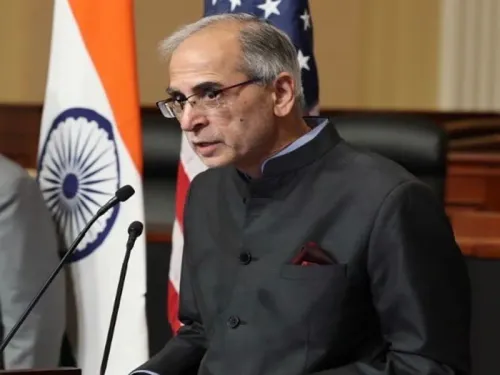
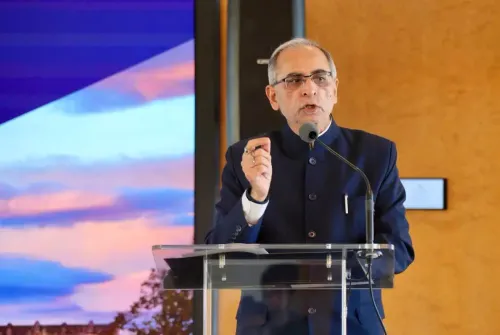
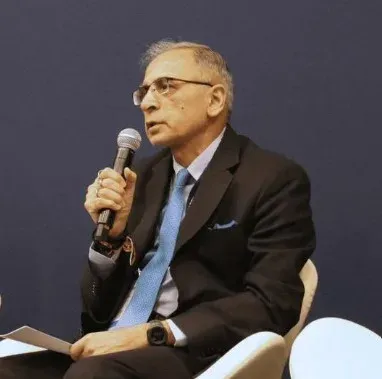
Ambassador Vinay Mohan Kwatra addressed the Capitol Hill Summit 2026 in Washington on 19 May 2026 , defending the strength of India-US ties.
India and the US have set a bilateral trade target of $500 billion by 2030 , up from approximately $220 billion annually.
India is reportedly the largest overseas user of select US defence platforms , with defence cooperation described as one of the fastest-growing pillars of the partnership.
Approximately 2,000 global capability centres operate in India, with roughly half belonging to US companies — cited by Kwatra as evidence of strong IP protection.
India's recently passed civil nuclear legislation has, according to Kwatra, 'unlocked' opportunities for private-sector collaboration with US firms.
The Indian diaspora in the US was described as a 'foundational anchor' of the bilateral relationship.
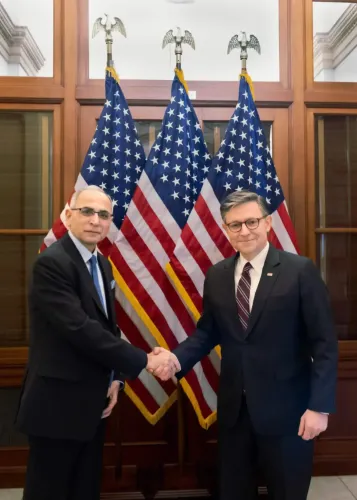
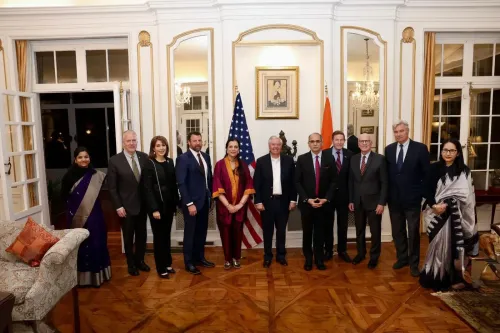
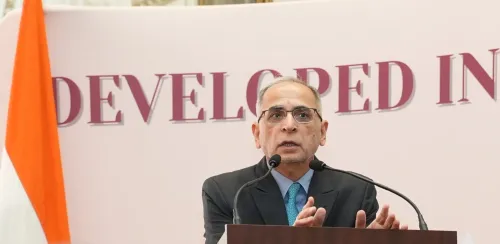
India's Ambassador to the United States Vinay Mohan Kwatra on 19 May 2026 firmly countered narratives of strain in the bilateral relationship, telling an audience at the Capitol Hill Summit 2026 that India-US ties enjoy robust bipartisan backing and are deepening across trade, technology, defence, and critical minerals. The summit, organised by the US-India Friendship Council in Washington, brought together lawmakers, diplomats, policy experts, and business leaders at a moment of renewed scrutiny over the partnership's direction.
Pushing Back on Strain Narratives
Kwatra was direct in dismissing concerns about tensions, saying many prevailing perceptions were 'not informed by the actual facts on the ground.' He grounded his argument in the relationship's institutional durability, noting that every US administration over the past two decades had built on the achievements of its predecessor. 'Each administration has tried, sought and successfully built on the achievements of the previous administration,' he said. This continuity argument is notable given that the summit convened amid active debate over trade disputes, visa restrictions, and shifting geopolitical alignments.
Trade, Defence and Technology Pillars
On the economic front, Kwatra highlighted the bilateral trade target of scaling from approximately $220 billion annually to $500 billion by 2030. He described defence and security cooperation as one of the fastest-growing pillars of the partnership, referencing operational coordination and renewed long-term defence frameworks. 'Today, India is the largest user of a couple of American platforms outside the US,' he said. In technology, Kwatra pointed to major US investments in India's semiconductor and electronics sectors, specifically citing projects involving Micron and other American companies. He also noted that India's recently passed civil nuclear legislation had 'unlocked' opportunities for private-sector collaboration in that space.
Intellectual Property and the Diaspora
Responding to audience questions on patent and trademark protection — a perennial friction point in bilateral trade talks — Kwatra cited the presence of roughly 2,000 global capability centres in India, of which approximately half belong to US companies. 'That gives you a sense of patent, trademark protection and the IP protection which is there in India,' he said. He also described the Indian diaspora in the United States as a 'foundational anchor' of the bilateral partnership, crediting Indian Americans with deepening political, economic, and cultural ties between the two democracies.
India's Transformation as a Driver
Kwatra pointed to India's economic transformation since 2014 as a key catalyst for expanding engagement with Washington, calling it part of 'transformational journeys that are currently taking place in India.' He also flagged India's ambition to build institutions of 'global excellence' in education capable of attracting international students and scholars — an area he identified as an emerging dimension of cooperation. He recalled Prime Minister Narendra Modi's address to the US Congress as emblematic of the shared values underpinning the partnership, describing the two nations as 'natural partners' not by geography alone, but by democratic conviction.
Context and What Comes Next
The Capitol Hill Summit took place against a backdrop of ongoing negotiations over a bilateral trade framework, with both sides working toward the $500 billion trade target. Progress on semiconductors, critical minerals, and civil nuclear cooperation is expected to feature prominently in upcoming diplomatic engagements. How quickly the two sides resolve outstanding trade and visa friction will be a key indicator of whether the relationship's stated momentum translates into measurable outcomes.
Point of View
But the underlying tensions — trade barriers, visa bottlenecks, IP disputes — did not disappear because of a summit speech. The $500 billion trade target by 2030 is ambitious given that the baseline sits at $220 billion and structural frictions remain unresolved. The IP defence, anchored in the 2,000-GCC argument, sidesteps the pharmaceutical patent disputes that have long irritated US trade negotiators. The relationship's bipartisan durability is real, but durability and momentum are not the same thing — and the gap between the two is where the actual diplomatic work lies.
NationPress
2 Oct 2026
Frequently Asked Questions
What did India's Ambassador Kwatra say about India-US relations at Capitol Hill?
Ambassador Vinay Mohan Kwatra said India-US ties remain strong, enjoy bipartisan support, and are expanding across trade, technology, defence, and critical minerals. He argued that perceptions of strain were 'not informed by the actual facts on the ground' and pointed to continuity across successive US administrations as evidence of the relationship's durability.
What is the India-US bilateral trade target mentioned by Kwatra?
Kwatra said India and the United States have set a target of increasing bilateral trade from approximately $220 billion annually to $500 billion by 2030. He cited this alongside semiconductor investments and defence cooperation as pillars of the expanding partnership.
How did Kwatra address concerns about India's intellectual property protections?
Kwatra pointed to approximately 2,000 global capability centres operating in India, roughly half of which belong to US companies, as evidence of robust IP protection. He made these remarks in response to a direct question from the audience during the summit's question-and-answer session.
What is the US-India Friendship Council Capitol Hill Summit?
The Capitol Hill Summit 2026 is a forum organised by the US-India Friendship Council that convenes lawmakers, diplomats, policy experts, and business leaders to discuss the bilateral relationship. The 2026 edition took place in Washington against a backdrop of debate over trade disputes, visa restrictions, and geopolitical shifts.
What areas of cooperation did Kwatra highlight beyond trade?
Kwatra highlighted defence and security cooperation — describing India as the largest overseas user of select US military platforms — as well as semiconductors, critical minerals, civil nuclear energy, and education. He also credited the Indian diaspora in the US as a 'foundational anchor' of the bilateral partnership.