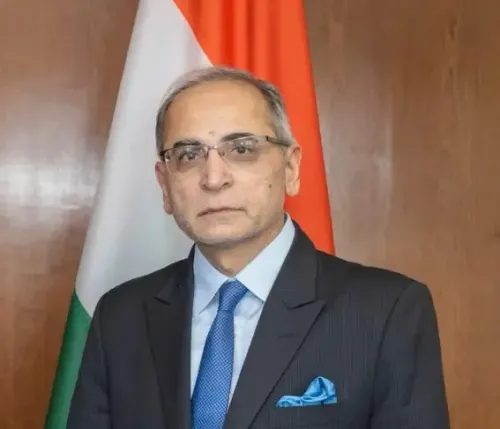
India's Growth & Security Drive Historic Transformation: Ambassador Kwatra
Synopsis
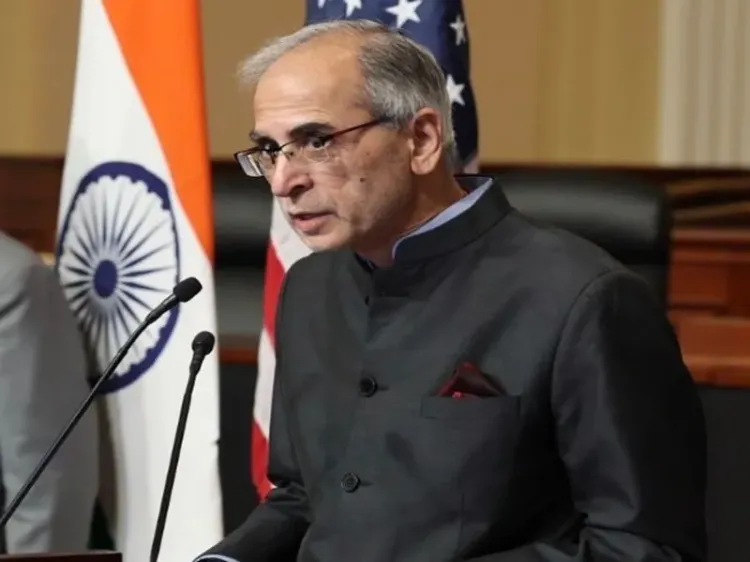
India's Ambassador to the US, Vinay Mohan Kwatra, revealed at The New India Conference in Washington that India's 7%+ GDP growth is backed by a sweeping transformation in governance, digital infrastructure, semiconductors, and nuclear energy — with a bold $500 billion bilateral trade target with the US by 2030.
Key Takeaways
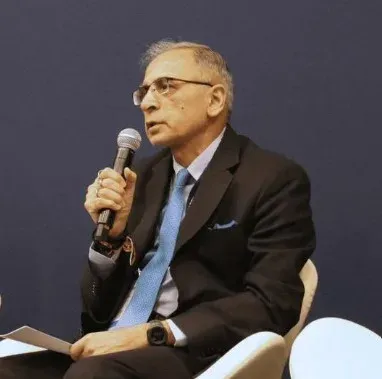
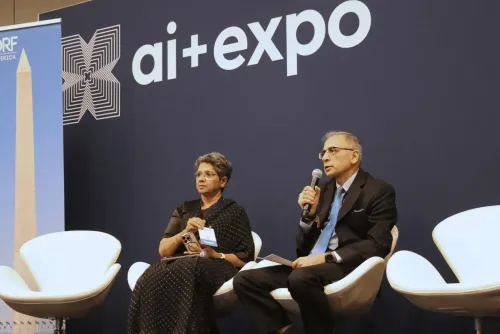
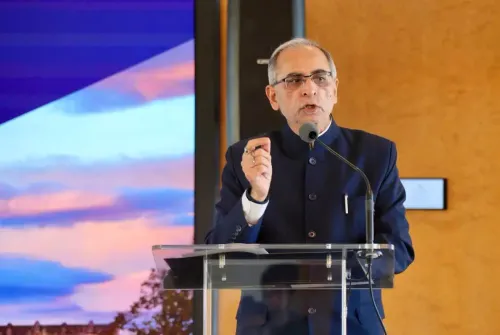
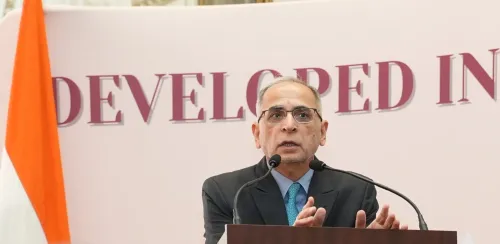
Ambassador Vinay Mohan Kwatra spoke at The New India Conference in Washington on April 23 , outlining India's multi-dimensional national transformation.
India's economy is growing at 7 per cent-plus GDP growth , with the government pursuing simultaneous reforms in governance, infrastructure, and technology.
Kwatra described a "total government transformation" focused on financial inclusion, transparency, and layered security — including energy, food, and economic security.
India–US bilateral trade stands at $200 billion annually , with a target of $500 billion by 2030 , driven by AI, semiconductors, and critical minerals.
India is making long-term bets on semiconductors, data centres, and nuclear energy to meet demand projected 10 years into the future .
India's Viksit Bharat 2047 vision — becoming a developed nation by independence centenary — was described as an empirical, measurable objective , not political rhetoric.
Washington, April 23: India's Ambassador to the United States, Vinay Mohan Kwatra, declared that India's sweeping national transformation is anchored in a "primary and core impulse" of economic growth, prosperity, and national security — outlining a multi-dimensional overhaul spanning governance, infrastructure, and cutting-edge technology. Speaking at The New India Conference in Washington, Kwatra offered one of the most comprehensive articulations yet of India's strategic trajectory as it races toward its 2047 developed-nation goal.
Economic Growth as the Core Engine
At the heart of India's transformation, Kwatra stressed, is a relentless focus on economic expansion. "The primary impulse remains economic growth and prosperity," he said, adding that threats to national security — including cross-border terrorism — are simultaneously being addressed as part of the same strategic framework.
India's economy is currently clocking 7 per cent-plus GDP growth, making it one of the fastest-growing major economies in the world. Kwatra argued that this growth is not occurring in isolation but is accompanied by multiple parallel structural transformations that are reshaping the country from the ground up.
This comes amid a global environment where economic predictability is, in Kwatra's words, "at a huge premium" — with supply chain disruptions, technology access restrictions, and geopolitical realignments redefining how nations plan their futures.
Governance Reform and Financial Inclusion
Kwatra identified governance reform as the first and perhaps most foundational transformation underway. He described it as a "total government transformation" — one designed to ensure that the dividends of economic growth reach every segment of the population, not just the elite.
Central to this shift is financial inclusion — bringing unbanked populations into the formal economy, expanding access to finance, and embedding transparency into public service delivery. These are not aspirational goals, Kwatra suggested, but measurable outcomes being tracked year on year.
He also highlighted that governance today must address layered security concerns — including energy security, economic security, and food security — through a converged, citizen-first approach. Notably, India's Jan Dhan Yojana has already brought over 500 million bank accounts into the formal system, a milestone that underpins the ambassador's confidence in this transformation.
Digital and Physical Infrastructure: The Dual Engine
The second major transformation Kwatra outlined is in infrastructure — both physical and digital. He described digital infrastructure as serving a dual role: it is simultaneously "an enabler of the transference of the fruits of development" and "the driver" of growth itself.
India's Unified Payments Interface (UPI), which now processes billions of transactions monthly, and its rapidly expanding broadband and 5G networks, are concrete manifestations of this digital backbone. Physical infrastructure — highways, ports, airports, and railways — is being built in parallel at an unprecedented scale under programs like PM Gati Shakti.
The convergence of physical and digital infrastructure is what allows India to leapfrog traditional development stages — a model that is increasingly drawing attention from both investors and policymakers globally.
Technology, Semiconductors, and the Innovation Loop
The third transformation Kwatra highlighted is in technology, innovation, and manufacturing. He described a "virtuous loop" where innovation feeds manufacturing and manufacturing, in turn, accelerates innovation — spanning the "leading edge, middle layer, and application layer" of the technology stack.
He pointed specifically to India's growing ambitions in semiconductors, data centres, and nuclear energy — sectors where policy decisions being made today are deliberately aimed at meeting demand 10 years from now. "Realising what we might need 10 years from now, we are setting the basis for it," Kwatra said.
This forward-looking industrial policy mirrors strategies employed by South Korea and Taiwan in earlier decades — nations that transformed themselves into technology powerhouses through deliberate, state-backed investment in high-tech manufacturing. India's semiconductor incentive scheme, launched in recent years with billions in subsidies, reflects exactly this long-game thinking.
India–US Partnership: $500 Billion Trade Target and Beyond
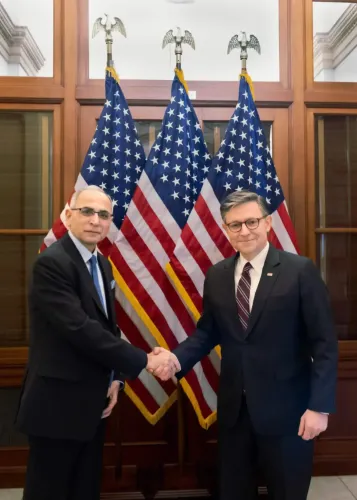
Against this backdrop of domestic transformation, Kwatra described the India–United States relationship as the "most consequential" bilateral partnership of this era — one built on "broadly fundamental convergences" and mutual benefits across multiple sectors.
Bilateral trade currently stands at approximately $200 billion annually, with both sides targeting $500 billion by the end of the decade — a 150 per cent increase that would require sustained momentum in sectors ranging from defence to digital services.
Kwatra identified artificial intelligence, semiconductors, quantum technologies, and critical minerals as the defining pillars of the future India–US partnership. He also underscored the importance of people-to-people exchanges — the Indian-American diaspora, students, and professionals — as the "true bedrock" of the relationship.
He also flagged a critical shift in global economic logic: "Cost alone is no longer a parameter… I need them to be available reliably," he said — a direct reference to the post-COVID and post-Ukraine war realisation that supply chain resilience now trumps pure cost efficiency. This shift plays directly into India's pitch as a reliable manufacturing and sourcing partner for the West.
Looking ahead, India's Viksit Bharat 2047 vision — the ambition to become a fully developed nation by the centenary of independence — remains the north star of this entire transformation. Kwatra called it "an empirical objective with absolute measurable metrics year after year", signalling that this is not political rhetoric but a structured, trackable national mission. As India deepens its strategic partnerships and accelerates domestic reforms, the coming years will test whether the momentum of today's transformation can be sustained at the scale and speed required.
Point of View
Allies, and rivals that India is no longer playing catch-up. The explicit linkage of economic growth with national security, particularly the reference to cross-border terrorism, reflects a hardened strategic doctrine that ties prosperity directly to sovereignty. What the mainstream narrative misses is the significance of Kwatra's comment on reliability over cost — this is India positioning itself as the anti-China supply chain alternative, not just for cheap goods, but for critical, resilient, high-technology partnerships. The $500 billion trade target with the US is ambitious, but the real story is whether India's domestic reforms can keep pace with the global expectations being set in rooms like this.
NationPress
20 Sept 2026
Frequently Asked Questions
What did India's Ambassador Vinay Mohan Kwatra say at The New India Conference?
Ambassador Vinay Mohan Kwatra said India's transformation is driven by economic growth, national security, governance reform, digital infrastructure, and technology innovation. He highlighted India's 7 per cent-plus GDP growth and outlined a vision for India to become a developed nation by 2047.
What is the India–US bilateral trade target mentioned by Ambassador Kwatra?
Ambassador Kwatra stated that India–US bilateral trade currently stands at approximately $200 billion annually, with a shared target of reaching $500 billion by the end of the decade. Key sectors driving this growth include AI, semiconductors, quantum technologies, and critical minerals.
What is India's Viksit Bharat 2047 goal?
Viksit Bharat 2047 is India's national ambition to become a fully developed nation by the 100th anniversary of its independence. Ambassador Kwatra described it as an empirical objective with measurable annual metrics, not merely a political slogan.
Why did Ambassador Kwatra emphasise reliability over cost in global trade?
Kwatra argued that post-pandemic supply chain disruptions have shifted global economic priorities from cost efficiency to supply reliability. He said 'cost alone is no longer a parameter,' positioning India as a resilient and dependable partner for Western nations diversifying away from single-source dependencies.
What are the key sectors of India–US cooperation highlighted by Kwatra?
Ambassador Kwatra identified artificial intelligence, semiconductors, quantum technologies, critical minerals, and defence as the defining pillars of future India–US cooperation. He also emphasised people-to-people exchanges, including the Indian-American diaspora, as the foundational bedrock of the relationship.