Vinay Kwatra: India’s Vision for 2047 Grounded in Policy Framework
Synopsis
India's Ambassador to the U.S., Vinay Kwatra, underscores the significance of policy discussions in shaping India's development journey towards becoming a developed nation by 2047 during a conference in Texas.
Key Takeaways
India’s Vision 2047 is founded on robust policy discussions.
The Austin India Conference emphasizes collaborative growth.
India-US relations are strengthening through various engagement pillars.
Subnational partnerships are pivotal for regional economic cooperation.
Academic institutions play a key role in fostering dialogue.
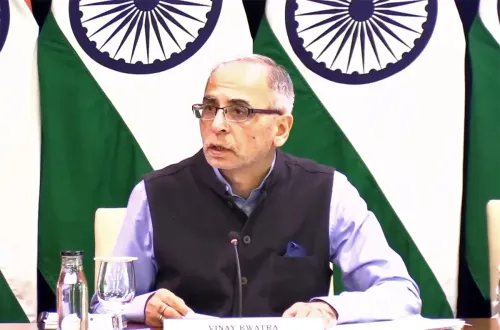
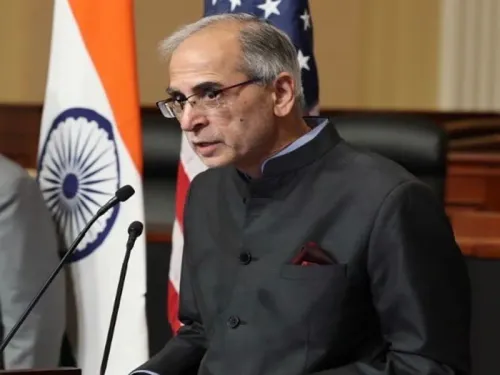
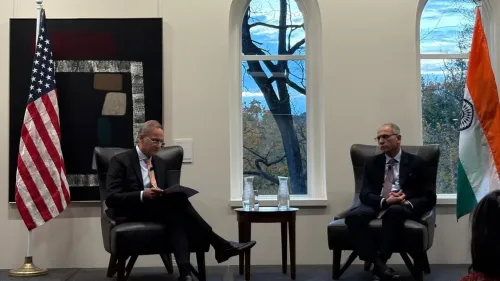
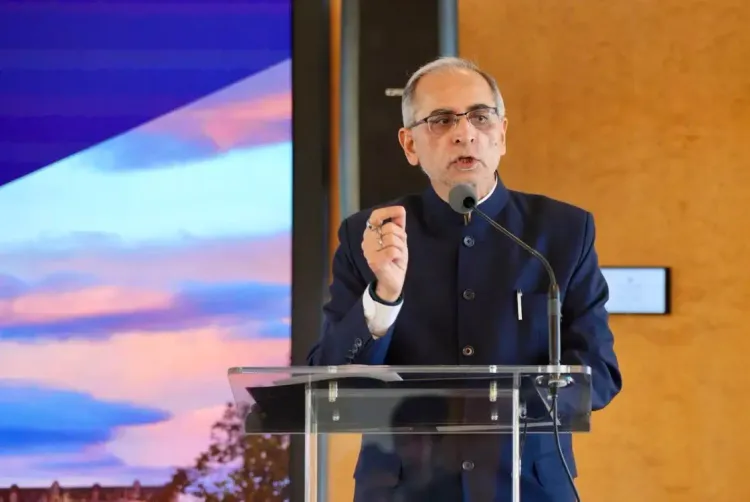
On April 12 in Washington, India's Ambassador to the United States, Vinay Kwatra, emphasized that India's aspiration to evolve into a developed nation by 2047 is fundamentally rooted in comprehensive academic and policy discussions. He made these observations during a significant conference in Texas.
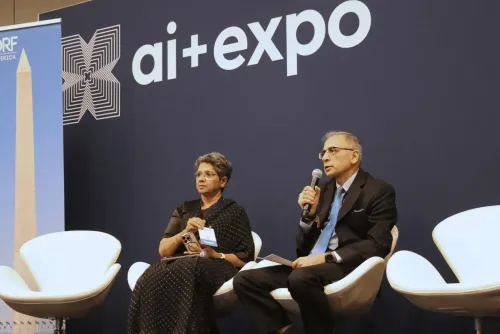
Kwatra delivered his insights virtually at the inaugural Austin India Conference, which was themed “India at 100: Decades of Decisions” and organized by the McCombs School of Business at the University of Texas, Austin.
He praised the conference organizers for uniting scholars, students, and industry practitioners, underscoring that such forward-thinking initiatives are essential for contemplating India’s roadmap towards Vision 2047, also known as “Viksit Bharat”.
The Ambassador highlighted that the choices influencing India’s development are grounded in thorough policy analysis, which will serve as the bedrock for the country’s transformative advancement in the future.
Kwatra expressed that India’s journey of development and innovation will yield mutual benefits for both India and the United States, noting a strengthening of strategic and economic alignment between the two nations.
The conference, centered around India’s long-term growth trajectory, gathered key stakeholders to explore the country’s changing policy environment and developmental goals.
In a different segment titled “The Growth Triangle,” D C Manjunath, India’s Consul General in Houston, remarked that the India-US partnership is continually reinforcing itself across various sectors, including government-to-government, business-to-business, and people-to-people interactions.
He pointed out that these three pillars have been crucial in maintaining the upward momentum of bilateral relations, enhancing collaboration across diverse fields.
Recognizing the increasing relevance of subnational partnerships, Manjunath noted that cooperation between India and Texas plays a pivotal role in the broader India-US dynamic.
He acknowledged that such regional collaborations are becoming increasingly vital in fostering economic interaction, innovation, and institutional cooperation.
The event also shed light on India’s evolving policy landscape and developmental priorities, marking a rise in academic and policy interest in India's growth narrative.
Manjunath extended gratitude to the leadership and faculty at the University of Texas, Austin, reiterating the Consulate’s dedication to enhancing partnerships with academic and research institutions throughout Texas.
He asserted that this engagement would facilitate dialogue, nurture innovation, and promote a unified vision of growth and progress.
Point of View
It is essential to recognize the strategic importance of informed policy dialogue in shaping India's future. The discussions led by figures like Vinay Kwatra reveal a commitment to a collaborative approach between India and the United States, reinforcing the notion that shared growth is achievable through mutual understanding and cooperation.
NationPress
19 Sept 2026
Frequently Asked Questions
What is India’s Vision 2047?
India's Vision 2047 aims to transform the country into a developed nation by its 100th anniversary of independence, focusing on comprehensive development and strategic partnerships.
Who is Vinay Kwatra?
Vinay Kwatra is India’s Ambassador to the United States, actively involved in promoting bilateral relations and strategic dialogues between India and the U.S.
What was the theme of the Austin India Conference?
The theme of the Austin India Conference was 'India at 100: Decades of Decisions,' focusing on India's long-term development and policy evolution.
How do India and the U.S. collaborate?
India and the U.S. collaborate across various sectors, including government, business, and cultural exchanges, which strengthen bilateral ties.
Why are subnational partnerships important?
Subnational partnerships, such as those between India and Texas, are crucial for enhancing economic engagement and fostering innovation.