US-India relationship is the future, says State Dept official at Capitol Hill event
Synopsis
A senior US State Department official told a Capitol Hill audience that the US-India relationship 'is the future' — and backed it with specifics: a near-final trade deal, $149 billion in 2025 goods trade, a signed 10-year defence pact, and a Trump-Modi tech initiative spanning AI and semiconductors. The pace of engagement, she said, is being measured in results, not meetings.
Key Takeaways
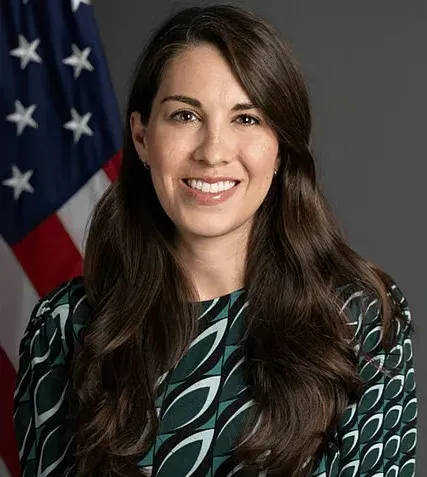
Deputy Assistant Secretary Bethany Poulos Morrison called the US-India relationship 'the future' at a Capitol Hill event on 24 June 2026 .
Washington and New Delhi announced in February 2026 their intent to conclude a historic trade agreement; Morrison said they are 'very, very close.' Bilateral goods trade reached $149 billion in 2025 , with US exports to India up 9.8 per cent ; the 'Mission 500' goal targets $500 billion by 2030 .
A 10-year US-India defence framework was signed in October 2025 , covering co-development and co-production.
The Trump-Modi Trust Initiative focuses on AI , semiconductors , and critical minerals .
More than 330,000 Indian students are currently enrolled in US educational institutions.
Deputy Assistant Secretary of State for South and Central Asia Bethany Poulos Morrison declared that the US-India relationship is the future on 24 June 2026, speaking at the fourth annual Capitol Hill advocacy event hosted by the Foundation for India and Indian Diaspora Studies (FIIDS) in Washington. Morrison said the Trump administration is moving rapidly to deepen cooperation with New Delhi across trade, technology, energy, and defence, describing India as one of America's most consequential strategic partners.
Key Developments at the FIIDS Event
Morrison, who spent 11 years in the US Senate before joining the State Department, said she specifically sought the South and Central Asia portfolio because she viewed it as among the most important in Washington's diplomatic portfolio. 'I thought this was one of the most important relationships,' she said. She framed the bilateral partnership as one being measured by outcomes, not meetings: 'We're not measuring meetings — we're measuring by result.'
Praising the Indian-American community as the US prepares to mark its 250th anniversary, Morrison called it 'a vibrant community' that has 'contributed immensely.' She specifically cited Indian-American leaders at Microsoft, Google, IBM, and Adobe as central to advancing America's economic standing.
Trade: 'Very, Very Close' to a Historic Agreement
Trade emerged as a central pillar of Morrison's remarks. She noted that Washington and New Delhi announced in February 2026 their intention to conclude what she described as a historic trade agreement. 'We are very, very close,' she said, adding that the deal would open India's market of 1.4 billion people to American goods 'on terms that are reciprocal and mutually beneficial.'
She highlighted the 'Mission 500' goal of expanding bilateral trade to $500 billion by 2030, noting that bilateral goods trade reached $149 billion in 2025, with US exports to India rising 9.8 per cent that year. '2025 was a historic year when it comes to trade with the US and India,' Morrison said.
Technology, Energy and Defence Cooperation
On technology, Morrison pointed to the Trust Initiative launched jointly by President Donald Trump and Prime Minister Narendra Modi, describing it as a framework centred on artificial intelligence, semiconductors, critical minerals, and other emerging technologies. Upcoming meetings between India's Information Technology Ministry and US officials are expected to advance concrete technology projects.
Energy cooperation has also expanded sharply, according to Morrison. US-India hydrocarbon trade — spanning oil, gas, and coal — has grown significantly since 2025, reaching $14.4 billion. She also pointed to expanding opportunities in civil nuclear cooperation following the passage of India's new nuclear legislation.
On defence, Morrison said the two countries signed a 10-year defence framework agreement in October 2025, calling it a 'generational commitment' to co-development, co-production, and deeper security cooperation. 'Our defence relationship is moving at rapid speed,' she told attendees.
People-to-People Ties Underpin the Partnership
Morrison repeatedly returned to the importance of human connections in sustaining the relationship. She noted that more than 330,000 Indian students are currently enrolled in US educational institutions. 'Deals, trade deals can be signed, defence frameworks can be negotiated, but it's these human connections that make all of this possible,' she said.
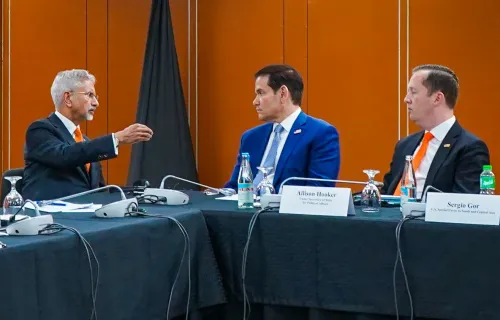
She also highlighted Secretary of State Marco Rubio's recent visit to India — which included stops in Kolkata, New Delhi, Agra, and Jaipur — as evidence of tangible momentum in bilateral ties. This comes amid a broader two-decade deepening of the US-India relationship across trade, defence, and technology, with both governments increasingly viewing the partnership as central to Indo-Pacific stability. With a trade deal reportedly imminent and a 10-year defence pact already signed, the structural architecture of the relationship is being locked in at speed.
Point of View
A signed 10-year defence pact, and a named technology initiative. That level of detail from a working-level official, at a diaspora advocacy event rather than a formal diplomatic setting, signals that the Trump administration is treating the India relationship as a deliverable, not a talking point. The harder question is sequencing: a trade deal that opens India's market 'on reciprocal terms' could yet collide with New Delhi's own industrial and agricultural sensitivities, and the gap between 'very, very close' and signed is where past US-India trade negotiations have stalled before.
NationPress
23 Sept 2026
Frequently Asked Questions
What did the US State Department official say about US-India relations?
Deputy Assistant Secretary of State Bethany Poulos Morrison said the US-India relationship 'is the future,' describing it as one of America's most consequential strategic partnerships. Speaking at a Capitol Hill event on 24 June 2026, she outlined accelerating cooperation across trade, technology, energy, and defence.
How close is the US-India trade deal in 2026?
Morrison said Washington and New Delhi are 'very, very close' to concluding a historic trade agreement, following a February 2026 announcement of their intention to finalise one. The deal is intended to open India's market of 1.4 billion people to American goods on reciprocal terms.
What is the Mission 500 goal between the US and India?
Mission 500 is the bilateral target to expand US-India trade to $500 billion by 2030. Bilateral goods trade stood at $149 billion in 2025, with US exports to India growing 9.8 per cent that year.
What is the US-India Trust Initiative?
The Trust Initiative is a framework launched jointly by President Donald Trump and Prime Minister Narendra Modi, focused on cooperation in artificial intelligence, semiconductors, critical minerals, and other emerging technologies. Upcoming meetings between India's IT Ministry and US officials are expected to advance concrete projects under the initiative.
What defence agreement have the US and India signed?
The two countries signed a 10-year defence framework agreement in October 2025, covering co-development, co-production, and deeper security cooperation. Morrison described it as a 'generational commitment' to the bilateral defence relationship.