Capitol Hill backs India-US ties: trade, tech, defence on agenda
Synopsis
More than 150 Indian-American delegates from 25 states took their case to Capitol Hill on 24 June, winning bipartisan pledges on trade, tech and defence — but the loudest moment was a warning: anti-Hindu and anti-India prejudice is rising inside the United States, and lawmakers from both parties say it must be confronted head-on.
Key Takeaways
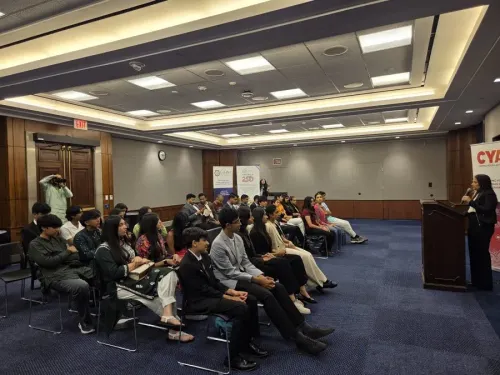
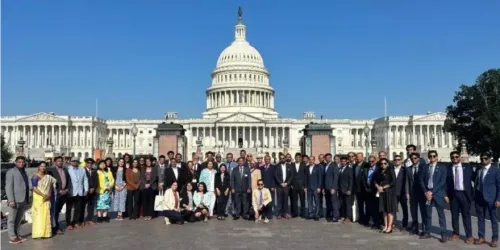
The FIIDS fourth annual Capitol Hill advocacy event on 24 June drew more than 150 delegates from 25 states to meet members of Congress and Senate offices.
Bipartisan support was expressed for deeper cooperation on trade, technology, defence and immigration between India and the US.
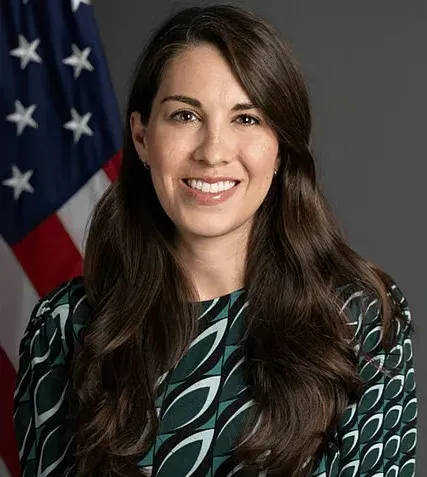
Bilateral goods trade stood at $149 billion in 2025 , according to Deputy Assistant Secretary of State Bethany Poulos Morrison .
Congressman Raja Krishnamoorthi and others flagged a rise in anti-Hindu and anti-India hate within the United States.
Lawmakers called for reform of country-cap rules and H-1B visa pathways, citing lengthy green-card backlogs for Indian professionals.
India's Deputy Chief of Mission Namgya C.
Khampa called the partnership 'one of the most seminal and defining partnerships of the 21st century.'
More than 150 Indian-American delegates from 25 states converged on Capitol Hill on 24 June for the fourth annual advocacy event organised by the Foundation for India and Indian Diaspora Studies (FIIDS), drawing bipartisan support from US lawmakers, senior administration officials and Indian diplomats for deeper India-US cooperation on trade, technology, defence and immigration. The event also surfaced growing concern over anti-India and anti-Hindu sentiment within the United States.
Key Voices from Congress
Senator Roger Marshall of Kansas opened with a pointed defence of legal immigration, calling Indian Americans 'the answer' to sceptics. 'Every single time someone watches the questions whether legal immigration works. You're the answer, you're not the argument, you're the answer,' Marshall said. He noted that Indian Americans represent less than 2% of the US population yet punch well above their weight in business, medicine and innovation, describing India as 'a democracy, English-speaking, a Quad security partner aligned with us on China' whose GDP was growing at 6.6% — the fastest of any major economy.
Congressman Sanford Bishop of Georgia drew on the historical thread linking Mahatma Gandhi's non-violent philosophy to the American civil rights movement, and urged lawmakers to protect H-visa and student-visa pathways. 'We must be vigilant in our efforts to recognise and address Hindu phobia here in the United States,' Bishop said, also calling for tighter supply-chain cooperation and expanded counterterrorism efforts.
Congressman James Walkinshaw of Virginia described India as 'an indispensable partner' in maintaining a free and open Indo-Pacific and pressed for reform of country-cap rules that trap Indian professionals in decade-long green-card queues. 'We have to modernise our immigration system and ensure that America remains the premier destination for innovative researchers, professionals,' he said.
Veteran California Congressman Brad Sherman, a long-standing advocate of the bilateral relationship, pointed to exponential growth in trade over his three decades in Congress and cited his own efforts to reduce visa backlogs for Indian professionals. Congressman Bill Huizenga of Michigan, chairman of the House Foreign Affairs Subcommittee on South and Central Asia, expressed optimism about ongoing trade negotiations, saying discussions were 'at the one yard line.'
Alarm Over Anti-Hindu, Anti-India Prejudice
One of the sharpest interventions came from Congressman Raja Krishnamoorthi of Illinois, who warned that Indian Americans were encountering rising identity-based hostility despite their community's achievements. 'There is the rise of anti-Hindu, anti-Indian, anti Desi hate,' Krishnamoorthi said, adding that he personally had faced recent attacks. 'I'm not going anywhere,' he declared, urging Indian Americans to seek elected office at every level of government. 'If you don't have a seat at the table, you're on the menu,' he said.
Congressman Suhas Subramanyam of Virginia echoed concerns about immigration delays, noting that his parents received their green card at the airport when they arrived in 1978 — a process that now takes decades. Community leader Bob Peckar, representing the Jewish community, drew a parallel between rising antisemitism and anti-Hindu bias, announcing the formation of the Hindu Jewish Coalition of America to address both challenges jointly.
Administration and Diplomatic Signals
Deputy Assistant Secretary of State Bethany Poulos Morrison described India as one of Washington's 'most consequential partners,' pointing to collaboration in artificial intelligence, semiconductors, critical minerals and advanced technologies. She noted that bilateral goods trade reached $149 billion in 2025. 'The US-India relationship is the future,' Morrison said.
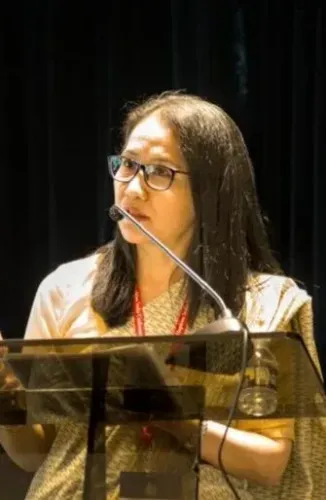
India's Deputy Chief of Mission Namgya C. Khampa called the partnership 'one of the most seminal and defining partnerships of the 21st century,' crediting the Indian diaspora with elevating the relationship beyond government-to-government ties into a broader societal bond. 'People are the ultimate custodians of this partnership,' Khampa said.
FIIDS Delegation: Issues on the Table
FIIDS leader Khanderao Kand said delegates spent the day discussing Indo-Pacific security, supply-chain resilience, critical minerals, trade, H-1B visas, immigration reform and the rise of anti-India and anti-Hindu rhetoric. Delegates reported broad bipartisan support across both chambers for expanding engagement with India and deepening people-to-people ties.
Strategic Context
The event reflects the steady institutionalisation of the India-US relationship over two decades, with successive governments in New Delhi and Washington increasingly treating the partnership as central to Indo-Pacific stability and as a counterweight to China's growing regional influence. The Indian-American community, now numbering more than 5 million, has emerged as a pivotal constituency in shaping the political and policy dimensions of that relationship. With trade negotiations reportedly close to a deal and immigration reform gaining bipartisan traction, the coming months are likely to test whether the goodwill on Capitol Hill translates into legislative outcomes.
Point of View
But it coexists with live friction points — country-cap backlogs, an unresolved trade deal and the spectre of reciprocal tariffs — that could stall the very outcomes delegates came to Washington to advance. The alarm over anti-Hindu prejudice, voiced by lawmakers from both parties, signals that the Indian-American community's political maturation is accelerating; a community that once lobbied quietly is now naming the problem publicly and demanding legislative action. What is missing from the conversation is accountability: bilateral goods trade at $149 billion is impressive, but the structural asymmetries in market access that Senator Marshall acknowledged remain unaddressed. The trade deal being described as 'at the one yard line' has been at that position before.
NationPress
22 Sept 2026
Frequently Asked Questions
What was the FIIDS Capitol Hill advocacy event on 24 June?
It was the fourth annual advocacy event organised by the Foundation for India and Indian Diaspora Studies (FIIDS), which brought more than 150 Indian-American delegates from 25 states to Washington to meet members of Congress and Senate offices on issues affecting the India-US relationship and the Indian-American community. Key topics included trade, technology, defence, immigration reform and rising anti-Hindu sentiment.
How large is bilateral trade between India and the US?
Bilateral goods trade between India and the United States reached $149 billion in 2025, according to Deputy Assistant Secretary of State Bethany Poulos Morrison, who described India as one of Washington's most consequential partners. Lawmakers noted the relationship remains well below its potential and called for expanded market access.
Why are US lawmakers concerned about anti-Hindu sentiment?
Congressman Raja Krishnamoorthi of Illinois warned of 'the rise of anti-Hindu, anti-Indian, anti Desi hate' and said he himself had faced recent attacks. Congressman Sanford Bishop of Georgia also called on lawmakers to 'recognise and address Hindu phobia' in the United States. Community leaders announced the formation of the Hindu Jewish Coalition of America to address identity-based prejudice jointly.
What immigration reforms are Indian Americans pushing for?
Delegates and lawmakers called for reform of country-cap rules that create decade-long green-card backlogs for Indian nationals, as well as protection of H-visa and student-visa pathways. Congressman Walkinshaw argued that modernising the immigration system is essential for America to remain the top destination for skilled researchers and professionals.
Where does the India-US trade deal stand?
Congressman Bill Huizenga, chairman of the House Foreign Affairs Subcommittee on South and Central Asia, said trade negotiations were 'at the one yard line' and expressed optimism about an imminent resolution. No finalised deal has been announced, and specific timelines have not been confirmed publicly.