Rubio-Jaishankar Manila meet: defence pacts and trade deal 'almost complete'
Synopsis
On the sidelines of the ASEAN Foreign Ministers' meetings in Manila, Rubio and Jaishankar moved the India-US needle on two fronts simultaneously: defence pacts tied to Trump-Modi commitments, and an interim trade deal Washington is now calling 'almost complete.' With the Quad also meeting in the same city on the same day, Manila just became the most consequential diplomatic venue for India's strategic interests this month.
Key Takeaways
US Secretary of State Marco Rubio and EAM S.
Jaishankar met in Manila on 22 July on the sidelines of ASEAN Foreign Ministers' meetings.
Both sides agreed to accelerate finalisation of key defence agreements stemming from commitments made between President Trump and PM Modi .
The US State Department described the interim India-US bilateral trade deal as 'almost complete.' The Quad foreign ministers — from the US , India , Australia , and Japan — issued a joint statement reaffirming a free and open Indo-Pacific and support for ASEAN centrality.
Rubio called ASEAN 'the engine of economic growth in the 21st century' and announced expanded US strategic investments in Southeast Asia.
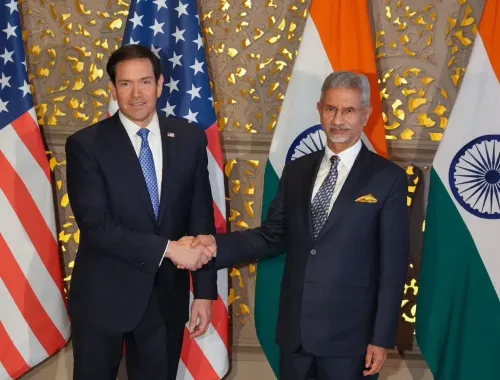
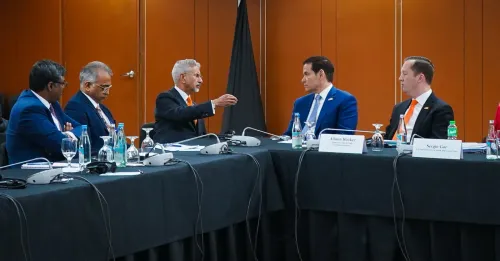
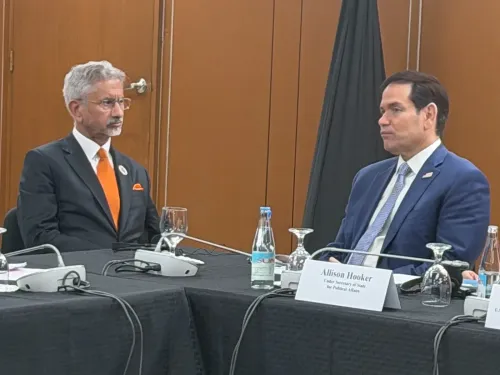
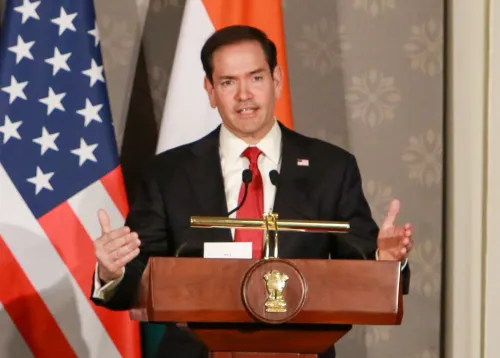
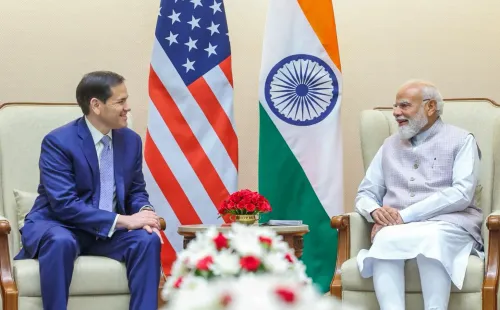
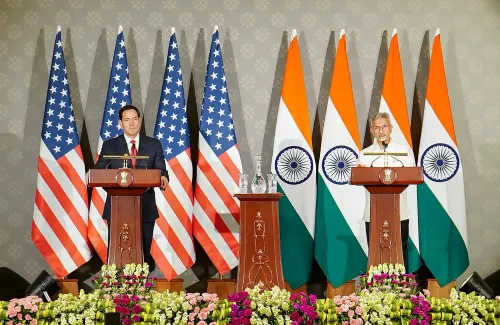
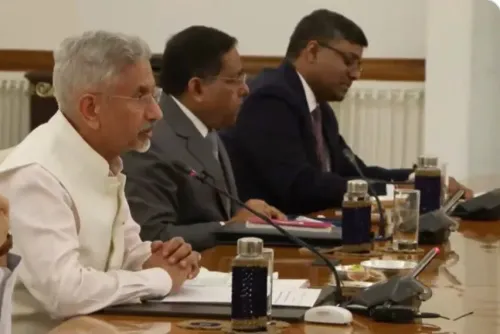
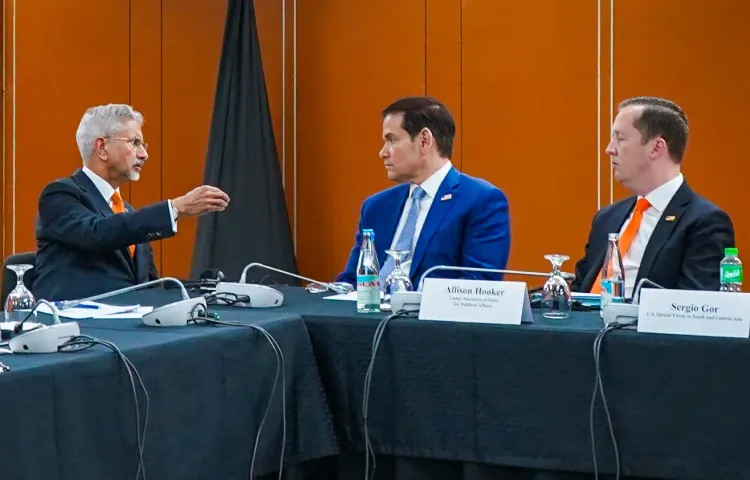
US Secretary of State Marco Rubio and External Affairs Minister S. Jaishankar agreed on Wednesday, 22 July in Manila to accelerate finalisation of key defence agreements and push through an interim bilateral trade deal that Washington described as 'almost complete', injecting fresh momentum into the India-US strategic partnership.
The two leaders met on the sidelines of the ASEAN Foreign Ministers' meetings, using the multilateral forum to advance a bilateral agenda that spans security, commerce, and regional stability.
Defence Agreements in Focus
According to the US State Department readout, Rubio and Jaishankar discussed 'finalizing key defense agreements in fulfillment of commitments made between President Trump and Prime Minister Modi last year.' The language signals that the groundwork laid at the leadership level is now being converted into binding frameworks at the ministerial level.
The State Department did not specify which agreements are under discussion, but the India-US defence relationship has been anchored by foundational pacts covering logistics, communications, and geospatial intelligence cooperation — areas where implementation has historically lagged political intent.
Interim Trade Deal: Washington Says 'Almost Complete'
Trade featured prominently in the Manila talks, with both sides acknowledging that negotiations have been under way for several months. 'The Secretary and Minister Jaishankar agreed on the importance of finalizing the interim trade deal, which is almost complete,' the State Department said in its official readout.
The characterisation of the deal as 'almost complete' is the most optimistic public signal either government has sent on the trade front in recent months. An interim agreement would mark a significant milestone, given that a comprehensive bilateral trade deal has eluded the two countries for years despite repeated high-level commitments.
Quad Meets in Manila, Reaffirms Indo-Pacific Stance
Beyond the bilateral, the Quad foreign ministers — representing the United States, India, Australia, and Japan — also convened in Manila and issued a joint statement reaffirming support for ASEAN unity and a rules-based Indo-Pacific.
'As ASEAN Comprehensive Strategic Partners, we met today in Manila to reaffirm our commitment to strengthening a free and open Indo-Pacific and our unwavering support for ASEAN unity and centrality,' the joint statement read. The four nations said they had discussed cooperation in maritime security, critical and emerging technologies, economic resilience, and humanitarian assistance.
Rubio Doubles Down on US-ASEAN Commitment
Rubio used the broader ASEAN Post-Ministerial Conference to underscore Washington's engagement with Southeast Asia, calling the regional grouping 'the primary mechanism by which we engage the region.' He cited President Trump's earlier statement — 'we're with ASEAN 100 per cent' — and announced expanded US strategic investments in the region, describing Southeast Asia as 'the engine of economic growth in the 21st century.'
The Manila meetings come amid heightened great-power competition in the Indo-Pacific, and the convergence of bilateral India-US progress with a Quad ministerial signals that both tracks are being pursued simultaneously rather than in sequence. Whether the interim trade deal crosses the finish line — and on what terms — will be the next key test of the partnership's momentum.
Point of View
A formula Washington has used before to manage expectations. The more substantive signal is on defence: tying agreement finalisation explicitly to Trump-Modi commitments suggests the political calendar, not bureaucratic readiness, is now driving the pace. India has historically been cautious about defence foundational agreements; the question is whether 'almost complete' on trade is being used as leverage to accelerate defence sign-offs, or whether the two tracks are genuinely moving in parallel. The Quad meeting in the same city on the same day is not incidental — it frames the bilateral within a broader multilateral architecture, giving both sides political cover to move faster than they might bilaterally alone.
NationPress
21 Oct 2026
Frequently Asked Questions
What did Rubio and Jaishankar agree on in Manila?
Rubio and Jaishankar agreed on 22 July in Manila to accelerate finalisation of key defence agreements and to push through an interim bilateral trade deal that the US State Department described as 'almost complete.' The meeting took place on the sidelines of the ASEAN Foreign Ministers' meetings.
What is the India-US interim trade deal?
The interim trade deal is a bilateral trade agreement between India and the United States that has been under negotiation for several months. Washington described it as 'almost complete' following the Rubio-Jaishankar meeting in Manila, making it the most optimistic public signal either side has sent on the trade front in recent months.
Which defence agreements are India and the US finalising?
The State Department readout referred to 'key defense agreements in fulfillment of commitments made between President Trump and Prime Minister Modi last year,' without specifying them by name. India-US defence cooperation has historically centred on foundational pacts covering logistics, communications, and geospatial intelligence.
What did the Quad foreign ministers discuss in Manila?
The Quad foreign ministers from the US, India, Australia, and Japan met in Manila and issued a joint statement reaffirming support for a free and open Indo-Pacific and ASEAN unity. They discussed maritime and transnational security, critical and emerging technologies, economic prosperity, and humanitarian assistance.
What did Rubio say about the US-ASEAN relationship?
Rubio described ASEAN as 'the primary mechanism by which we engage the region' and called Southeast Asia 'the engine of economic growth in the 21st century.' He also announced expanded US strategic investments in the region and reiterated President Trump's earlier pledge to be 'with ASEAN 100 per cent.'