India calls for legally-binding space weapons treaty at UN
Synopsis
India drew a firm line at the UN on 21 October: voluntary norms are welcome, but only a legally-binding, verifiable space weapons treaty will do. The call came as a US Air Force Secretary openly acknowledged deploying on-orbit weapons — raising the stakes for a global disarmament debate that has been deadlocked since Russia and China first tabled the PPWT in 2008.
Key Takeaways
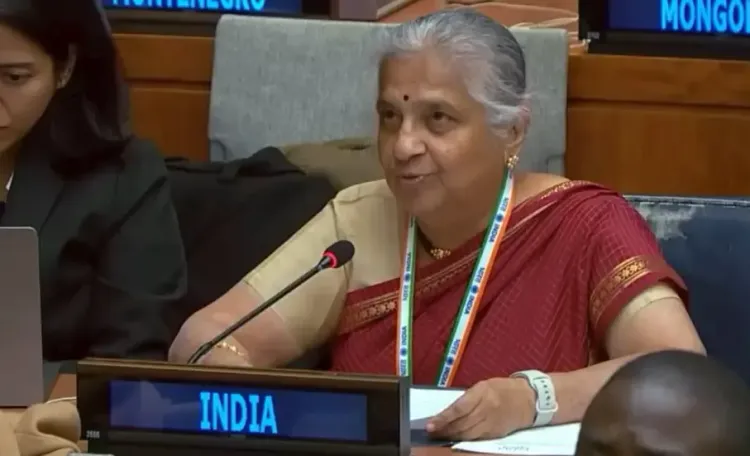
Rajya Sabha member Sudha Murty called for a legally-binding, verifiable space weapons treaty at the United Nations on 21 October 2026 .
India named the UN Conference on Disarmament in Geneva as the correct forum for negotiations.
US Air Force Secretary Troy Meink confirmed earlier this month that the US has deployed ‘on-orbit space control weapons.’ The China-Russia PPWT draft of 2008 was cited as a basis for discussion, though the US has long opposed it as inadequate.
A US-Japan Security Council resolution on nuclear weapons in space was vetoed by Russia in 2024 .
India said non-binding norms can complement but not replace a legally-binding instrument.
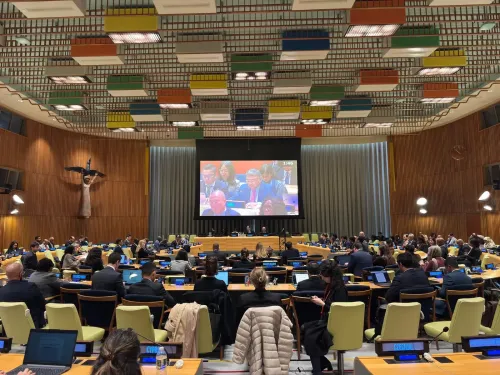
India on Tuesday, 21 October 2026 renewed its call at the United Nations for a comprehensive, legally-binding international treaty to ban the placement of weapons in outer space, warning that selective approaches to the growing threat of space militarisation would be “counterproductive.”
India’s Position at the UN
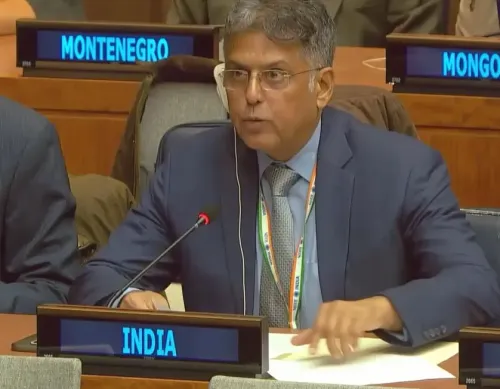
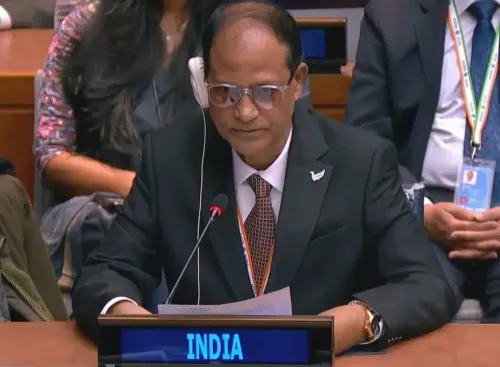
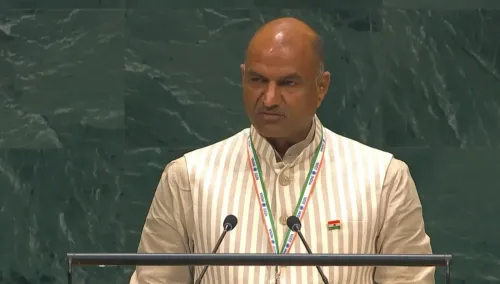
Rajya Sabha member Sudha Murty, part of the second contingent of Indian Members of Parliament joining India’s UN delegation, made the statement on behalf of New Delhi. “India reiterates its preference for a legally binding instrument, one that is universally acceptable, verifiable and multilaterally negotiated,” she said.
Murty emphasised that any such treaty must take a holistic view of the threats involved. “India notes that threats to the safety, security and sustainability of outer space, the risk of misunderstanding and miscalculation, and the threshold for what constitutes a use of force in outer space must all be considered together,” she said, adding that “a selective focus on some threats over others would be counterproductive.”
The Negotiating Forum and Dual-Use Concerns
India identified the UN Conference on Disarmament, based in Geneva, as the appropriate multilateral forum for negotiating such a treaty. Murty also flagged the growing problem of dual-use space technologies — assets developed for civilian purposes but capable of military application — as a key driver of urgency.
Her remarks come at a moment of heightened concern over space militarisation. US Air Force Secretary Troy Meink acknowledged earlier this month that the United States has deployed “on-orbit space control weapons,” without disclosing their precise nature — marking one of the most explicit admissions by a major power of placing armaments in orbit.
The Existing Draft Treaty Debate
India acknowledged the draft Treaty on the Prevention of the Placement of Weapons in Outer Space, the Threat or Use of Force against Outer Space Objects (PPWT), introduced jointly by China and Russia in 2008, as a basis for further discussion. “We take note of the draft treaty on the prevention of the placement of weapons in outer space as a basis for further discussion,” Murty said.
The PPWT has faced persistent opposition, particularly from the United States, which has argued the draft is vague, fails to address Earth-based anti-satellite (ASAT) systems, and lacks an adequate verification mechanism. In 2024, the US and Japan co-sponsored a UN Security Council resolution aimed at preventing nuclear weapons in space, but the measure was vetoed by Russia.
Non-Binding Norms: Complementary, Not a Substitute
India signalled a nuanced but firm stance on non-binding transparency measures. While Murty acknowledged that “India is open to universal and non-discriminatory, non-binding norms and transparency and confidence-building measures,” she stressed that “these can complement, but not substitute for, a legally binding instrument.”
This comes amid a broader international disagreement on the “Prevention of an Arms Race in Outer Space” (PAROS) agenda, with nations divided on which approach — binding treaty or voluntary norms — should take priority. India’s call for a verifiable, multilateral framework places it in a distinctive diplomatic position, distinct from both the Western preference for soft norms and the China-Russia PPWT bloc. How major space powers respond in Geneva in the months ahead will shape whether a legally binding instrument moves closer to reality.
Point of View
Carving out a third position that could give New Delhi diplomatic leverage in Geneva. The timing is significant: a sitting US official has now confirmed on-orbit weapons exist, which undercuts Washington’s traditional argument that a binding treaty is premature. The core tension the international community has never resolved is verification — any treaty that cannot confirm compliance will face the same fate as past disarmament frameworks. India’s insistence on universality and verifiability is the right instinct, but without major-power buy-in, it risks remaining a rhetorical position rather than a negotiating reality.
NationPress
21 Oct 2026
Frequently Asked Questions
What did India call for at the United Nations on space weapons?
India called for a comprehensive, legally-binding and verifiable multilateral treaty to ban the placement of weapons in outer space. Rajya Sabha member Sudha Murty, speaking at the UN on 21 October 2026, said the treaty should be negotiated at the UN Conference on Disarmament in Geneva.
Why is a space weapons treaty being discussed now?
Concern has escalated after US Air Force Secretary Troy Meink confirmed this month that the United States has deployed ‘on-orbit space control weapons,’ one of the most explicit admissions by a major power of arming space. This has intensified long-running debates over the Prevention of an Arms Race in Outer Space (PAROS) at the UN.
What is the PPWT and why is it controversial?
The PPWT — Treaty on the Prevention of the Placement of Weapons in Outer Space — is a draft treaty introduced by China and Russia in 2008. The United States has opposed it on the grounds that it is vague, does not cover Earth-based anti-satellite systems, and lacks adequate verification.
What is India’s stance on non-binding space norms?
India said it is open to non-binding transparency and confidence-building measures but insists they can only complement, not substitute for, a legally-binding treaty. New Delhi wants any framework to be universally acceptable and independently verifiable.
Who is Sudha Murty and why was she speaking at the UN?
Sudha Murty is a Rajya Sabha member and part of the second contingent of Indian MPs joining India’s United Nations delegation. She is also the wife of Infosys co-founder Narayana Murthy and the mother-in-law of former British Prime Minister Rishi Sunak.