India offers to legalise No First Use nuclear pledge in multilateral treaty
Synopsis
India has put a remarkable offer on the table at the UN: legally binding multilateral arrangements for its No First Use nuclear doctrine and its pledge against using nuclear weapons on non-nuclear states. With only India and China among nuclear powers having disavowed first use, New Delhi is asking whether voluntary commitments are enough — or whether the world needs a treaty to make them stick.
Key Takeaways
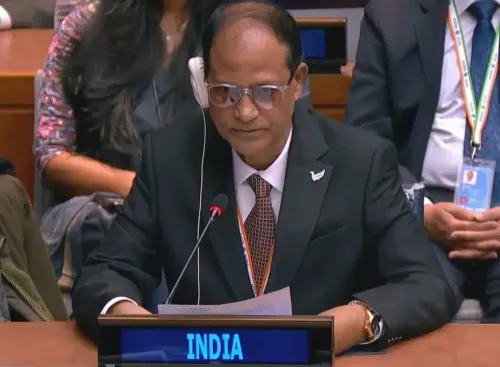
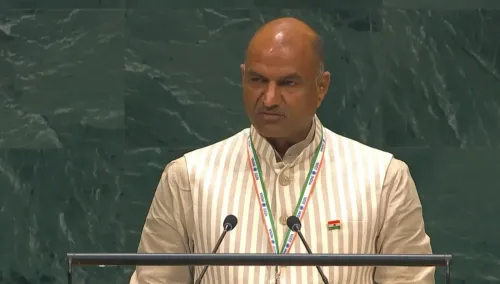
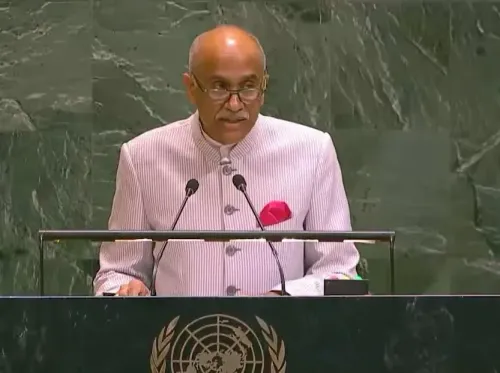
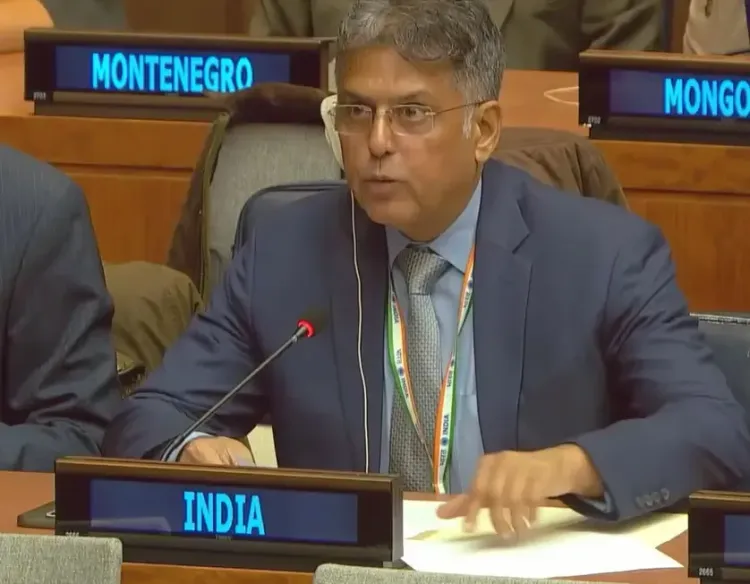
Congress MP Manish Tewari delivered India's nuclear statement at the UNGA First Committee in New York on 20 October 2026 .
India offered to convert its No First Use pledge and non-use commitment against non-nuclear states into a multilateral legal agreement .
India and China are the only nuclear-armed nations to have officially disavowed first use of nuclear weapons.
India has tabled a resolution on reducing nuclear danger annually since 1998 , calling for de-alerting and de-targeting of arsenals.
India raised concerns about artificial intelligence in nuclear command systems, asserting that humans must retain control over nuclear decisions.
India reaffirmed its voluntary unilateral moratorium on nuclear testing and its commitment to non-proliferation.
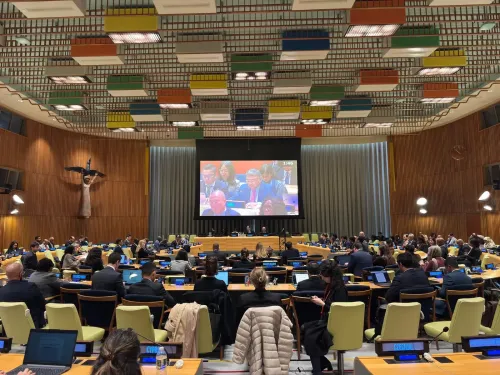
India has reiterated its offer to formalise its No First Use (NFU) nuclear doctrine and its pledge not to deploy nuclear weapons against non-nuclear weapon states into a binding multilateral legal agreement, Congress MP Manish Tewari said at the United Nations General Assembly (UNGA) First Committee in New York on 20 October 2026. Tewari, who represents Chandigarh in the Lok Sabha, delivered India's official statement on nuclear weapons and related issues as part of the country's delegation to the UN.
India's Core Position on Nuclear Disarmament
Manish Tewari outlined India's three-pillar approach: universal nuclear disarmament, non-proliferation, and the reduction of nuclear risks. “India remains committed to nuclear disarmament that is universal, non-discriminatory and verifiable. This goal can be achieved by a step-by-step process underwritten by universal commitment to an agreed non-discriminatory multilateral framework,” he said.
Tewari noted that India had first articulated this framework in its 2006 working paper to the First Committee, and again in 2007 at the Conference on Disarmament through document CD/1816. He underlined that the approach remains as relevant today as it did then.
The No First Use Pledge and Its Legal Formalisation
India continues to maintain a policy of credible minimum deterrence anchored in a No First Use posture and a commitment not to use nuclear weapons against non-nuclear weapon states. “We are prepared to convert these undertakings into multilateral legal arrangements,” Tewari said, signalling India's readiness for a legally binding framework.
Notably, among all nuclear-armed nations, only India and China have officially disavowed the first use of nuclear weapons. India's offer to codify this stance in international law is therefore significant in the context of the broader global disarmament debate, where most nuclear powers continue to reserve the right to first use.
AI in Nuclear Command: A New Concern
India also addressed emerging risks posed by artificial intelligence (AI) in nuclear command and control systems. “We espouse the principle that the decisions to use nuclear weapons should be taken by humans,” Tewari said, reflecting a growing international consensus on keeping AI out of the nuclear trigger chain.
India has tabled a resolution on reducing nuclear danger every year since 1998, which calls for de-alerting and de-targeting of nuclear arsenals to lower the risk of accidental or unintentional use. This year's statement reaffirmed that initiative.
The 1992 Convention Initiative and Non-Proliferation Commitments
Tewari also highlighted India's longstanding proposal, introduced in 1992, calling on the Conference on Disarmament to begin negotiations on an international convention prohibiting the use or threat of use of nuclear weapons. “Such a universal legally binding agreement will build the political will needed for the total elimination of nuclear weapons,” he said.
India clarified that the Treaty on the Prohibition of Nuclear Weapons does not create obligations for it, but added that its commitment to global nuclear disarmament and non-proliferation remains unchanged. India also reiterated its voluntary unilateral moratorium on nuclear testing and its commitment to preventing nuclear materials from reaching terrorist organisations or non-state actors.
Strategic Context
India's renewed push at the UNGA First Committee comes at a time of heightened global nuclear anxiety — from the war in Ukraine, where nuclear rhetoric has been repeatedly deployed, to rising tensions in East Asia. India's position as a responsible nuclear-weapon state with a declared NFU doctrine stands in contrast to the postures of several other nuclear powers. This comes amid ongoing international debate over the relevance and enforceability of nuclear doctrines, and whether voluntary commitments need stronger legal underpinning.
The next steps will depend on whether India can build consensus among UN member states for co-sponsorship of its two resolutions and garner political will for the disarmament framework it has proposed.
Point of View
But its traction at the UN depends on nuclear powers that have never embraced NFU — the US, Russia, the UK, France, and Pakistan — agreeing to a framework that constrains their own options. That is unlikely in the near term. India's position is consistent and credible, but the gap between voluntary doctrine and binding multilateral law is where disarmament proposals have gone to stall for decades. The AI-in-nuclear-command concern is arguably the sharper, more urgent signal in this statement — one that the international community has been slow to institutionally address.
NationPress
20 Oct 2026
Frequently Asked Questions
What did India propose at the UNGA First Committee on nuclear weapons?
India reiterated its offer to convert its No First Use (NFU) nuclear doctrine and its pledge not to use nuclear weapons against non-nuclear weapon states into a binding multilateral legal agreement. The statement was delivered by Congress MP Manish Tewari at the UNGA First Committee in New York on 20 October 2026.
Which countries have a No First Use nuclear policy?
Among all nuclear-armed nations, only India and China have officially disavowed the first use of nuclear weapons. All other nuclear powers — including the United States, Russia, the United Kingdom, France, and Pakistan — have not adopted a formal No First Use doctrine.
What is India's resolution on reducing nuclear danger?
India has tabled a resolution on reducing nuclear danger at the UN every year since 1998. It draws attention to the hair-triggered alert status of nuclear arsenals and calls for de-alerting and de-targeting measures to lower the risk of accidental or unintentional use of nuclear weapons.
What is India's position on artificial intelligence and nuclear weapons?
India has stated that decisions to use nuclear weapons must remain with humans and not be delegated to artificial intelligence systems. This concern was raised at the UNGA First Committee as part of India's broader nuclear risk-reduction agenda.
Does India support the Treaty on the Prohibition of Nuclear Weapons?
India has clarified that the Treaty on the Prohibition of Nuclear Weapons does not create obligations for it. However, India maintains that its commitment to global nuclear disarmament and non-proliferation remains unchanged, and it continues to pursue its own multilateral disarmament framework at the UN.