CM Rekha Gupta Bans Sub-BS6 Vehicles From Delhi This Winter

Synopsis
Delhi CM Rekha Gupta has announced that non-Delhi vehicles below BS-6 norms will be barred from entering the capital from 1 November to 31 January, with no valid PUCC meaning no fuel. A Winter Action Plan covering construction curbs, AI site monitoring, 50% WFH and EV mobility runs through 28 February.
Key Takeaways
Non-Delhi vehicles below BS-6 emission standards are banned from entering Delhi between 1 November and 31 January 2026-27 .
Vehicles without a valid PUCC will be denied fuel at Delhi petrol pumps — enforcement at both borders and fuel stations.
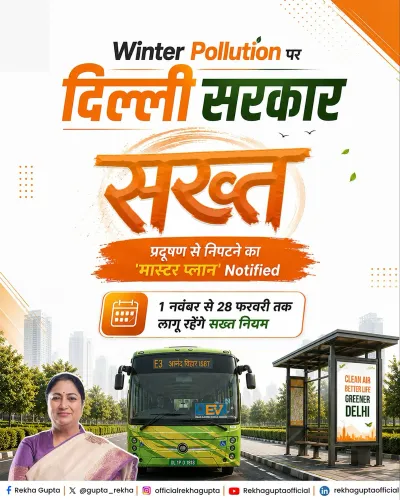
A Winter Action Plan runs from 1 November to 28 February , covering construction and demolition curbs and AI-based site monitoring.
50% Work From Home and staggered office timings are part of the plan to reduce vehicular load during peak hours.
Cleaner mobility push includes EV buses, Metro, last-mile connectivity and carpooling as alternatives.
Delhi has operated seasonal anti-pollution measures since 2016 ; enforcement effectiveness and AQI trends from November will be the critical test.
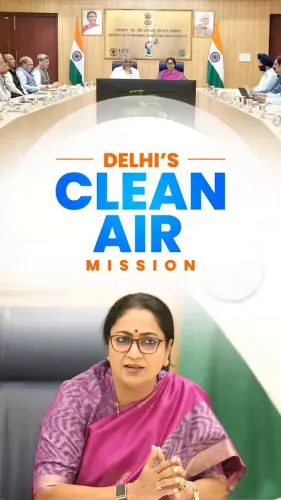
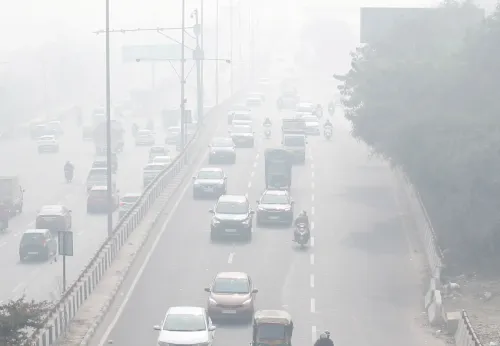
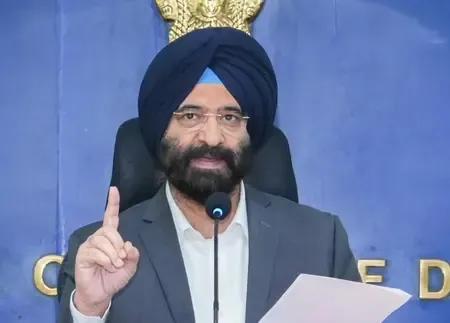
Delhi's worst air months are still days away — and the government is already drawing the line at the city's borders. Delhi Chief Minister Rekha Gupta on Tuesday, 20 October 2026, announced that non-Delhi vehicles not meeting BS-6 emission norms will be barred from entering the capital between 1 November and 31 January, with no valid Pollution Under Control Certificate (PUCC) meaning no fuel at Delhi pumps.
What the entry ban means at Delhi's borders
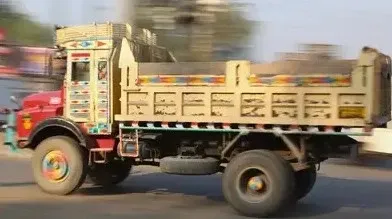
The restriction targets the steady stream of inter-state trucks, buses and private vehicles that pour into Delhi from neighbouring states every day — many of them older, heavier-polluting machines well below the Bharat Stage 6 threshold that became mandatory nationwide in April 2020. Under the new diktat, any such vehicle without a valid PUCC will be denied fuel, making enforcement at petrol pumps a second line of control beyond border check-posts. It is a sharper operational design than previous winters' odd-even schemes, which applied only to Delhi-registered cars and were riddled with exemptions.
The Winter Action Plan: four months, multiple fronts
The vehicle ban is one plank of a broader Winter Action Plan that CM Gupta says will run from 1 November to 28 February. The plan activates construction and demolition curbs — a key source of particulate matter — alongside AI-based monitoring of building sites. Offices will be asked to operate with 50% Work From Home and staggered timings to cut the morning and evening vehicle surge that can spike AQI readings in minutes.
On the mobility side, the government is pushing EV buses, Metro expansion, last-mile connectivity and carpooling as the cleaner alternatives. The framing — 'Right to Breathe' — signals that the administration wants this cast not as an inconvenience to commuters but as a public-health entitlement for Delhi's roughly 33 million residents.
Delhi's decade-long battle with winter smog
Delhi has been running layered winter pollution controls since the first odd-even trial in 2016, followed by further vehicle restrictions in 2019 and 2022. The Graded Response Action Plan (GRAP), first notified in 2017 and significantly tightened by the Commission for Air Quality Management (CAQM) from 2021, provides the legal scaffolding under which these seasonal orders operate. Successive governments have widened the toolkit — from water sprinklers and anti-smog guns to real-time satellite monitoring — because no single measure has cracked the problem alone.
The core challenge remains stubble burning in Punjab and Haryana, whose smoke travels into Delhi as temperatures drop and wind speed falls, trapping pollutants in a low inversion layer. Vehicle and construction curbs address local sources; they cannot fully offset the agricultural smoke. That is why the CAQM and, intermittently, the Supreme Court continue to watch Delhi's AQI trajectory through December — and why enforcement at the border and at fuel stations from 1 November will be the real test of this plan.
What enforcers and commuters face from 1 November
The immediate pressure falls on border check-post officers and fuel station staff, who must verify BS-6 compliance and PUCC validity in real time — a logistically demanding ask during peak hours. For the millions of inter-state workers, traders and transport operators who rely on Delhi roads, the message is unambiguous: upgrade or stay out. The #ViksitDelhi hashtag CM Gupta used places the measure inside the broader 'Developed Delhi' narrative her administration has been building — clean air as infrastructure, not just environment policy.
AQI readings in November and December will be the unforgiving scorecard.
Point of View
But the real test is inter-agency coordination at check-posts and whether CAQM and the Supreme Court accept Delhi's unilateral timeline. Politically, the BJP government in Delhi is clearly trying to pre-empt the annual Opposition charge that it acts only after AQI spikes go viral. Whether the plan outlasts November's media cycle depends almost entirely on what the AQI numbers say by December.
NationPress
20 Oct 2026
Frequently Asked Questions
Which vehicles are banned from entering Delhi this winter?
Non-Delhi registered vehicles that do not meet BS-6 emission norms are banned from entering Delhi between 1 November and 31 January . Vehicles without a valid Pollution Under Control Certificate (PUCC) will also be denied fuel at Delhi petrol pumps.
What is the Delhi Winter Action Plan 2026?
Delhi's Winter Action Plan runs from 1 November to 28 February 2026-27 and includes the BS-6 vehicle entry ban, construction and demolition curbs, AI-based monitoring of construction sites, 50% Work From Home mandates, staggered office timings, and a push for EV buses, Metro use and carpooling.
What is a PUCC and why is it required in Delhi?
A Pollution Under Control Certificate (PUCC) is a mandatory document for all vehicles in India that certifies their emissions comply with prescribed norms. Under the new Delhi order, any vehicle without a valid PUCC will be denied fuel at Delhi petrol stations during the winter restriction period.
What are BS-6 emission norms in India?
Bharat Stage 6 (BS-6) are India's strictest vehicular emission standards, rolled out nationwide in April 2020 . They replaced BS-4 norms and require significantly lower levels of particulate matter and nitrogen oxide emissions, bringing Indian standards close to Euro 6 levels.
Has Delhi done vehicle bans for winter pollution before?
Yes. Delhi introduced the odd-even vehicle scheme in 2016 and repeated vehicle and movement restrictions during the winters of 2019 and 2022 . The city also operates under the Graded Response Action Plan (GRAP) , first notified in 2017 , which triggers tiered restrictions based on AQI levels.