Rajnath Singh Pitches SCO Unity on Trade, Supply Chains
Synopsis
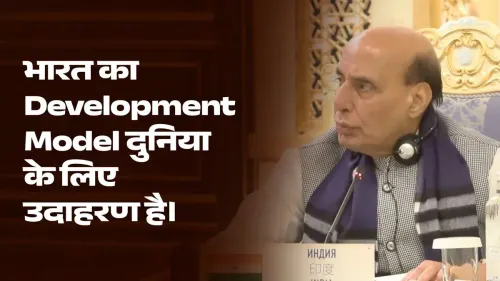
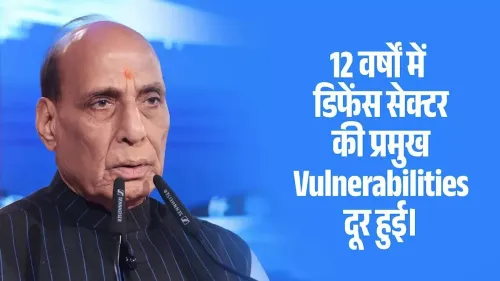
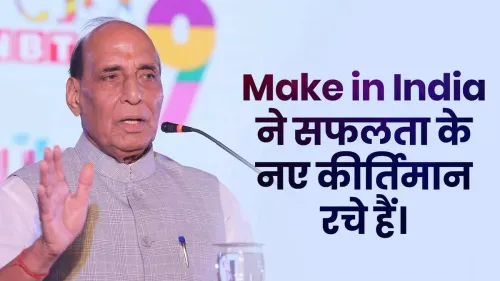
Union Defence Minister Rajnath Singh on 20 October 2026 called on SCO nations to jointly pursue resilient supply chains, better trade and investment, and technology-driven development, anchoring India's position in the bloc around security, connectivity and opportunity.
Key Takeaways
Union Defence Minister Rajnath Singh addressed SCO member nations on 20 October 2026 , urging collective action on economic resilience.
India's stated SCO framework rests on three pillars: security , connectivity , and opportunity .
Singh called for joint work on resilient supply chains , improved trade and investment, and technology-driven development.
India has been a full SCO member since 2017 and chaired the bloc in 2023 , hosting its annual summit.
India's approach consistently favours inclusive, rules-based regional mechanisms over bloc-centric or unilateral infrastructure models.
The SCO spans eight full members including India, China, Russia and Central Asian states, founded in 2001 .
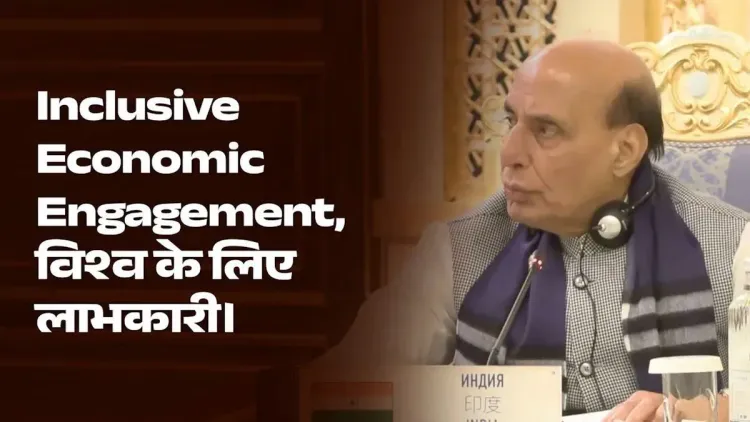
As global trade routes buckle under geopolitical stress and supply-chain shocks ripple across Eurasia, Union Defence Minister Rajnath Singh on Tuesday, 20 October 2026 set out India's prescription for the Shanghai Cooperation Organisation — resilient supply chains, deeper trade and investment flows, and technology-driven development, built together by all member states.
Posting in Hindi on X, Singh stated: 'बदलते ग्लोबल इकोनॉमिक एनवायरनमेंट में SCO देशों को रेजिलिएंट सप्लाई चेन्स, बेहतर ट्रेड और इन्वेस्टमेंट तथा टेक्नोलॉजी-ड्रिवन डेवलपमेंट पर मिलकर काम करना होगा।' — ('In a changing global economic environment, SCO nations must work together on resilient supply chains, better trade and investment, and technology-driven development.') He then distilled India's position to three pillars: security, connectivity, and opportunity — the triad through which New Delhi believes inclusive growth for every member can be guaranteed.
India's SCO Playbook: Three Words That Do a Lot of Work
The formulation is deliberate. 'Security, connectivity, opportunity' is not casual rhetoric — it is a compressed statement of how India distinguishes its regional vision from unilateral infrastructure-centric approaches that have drawn criticism within the bloc. Since joining the SCO as a full member in 2017, India has consistently resisted frameworks it views as tilted toward any single power's strategic interests, instead advocating rules-based, inclusive mechanisms.
That position crystallised further when India chaired the SCO in 2023 and hosted the annual summit, placing counter-terrorism cooperation and connectivity at the centre of the agenda. Singh's post lands as a continuation of that institutional voice — signalling that the stance has not shifted even as the global economic environment has grown more turbulent.
Why the SCO Economic Agenda Is Heating Up Now
The Shanghai Cooperation Organisation, founded in 2001, brings together eight full members including India, China, Russia, and the Central Asian republics — a combined bloc spanning the bulk of Eurasia's landmass and a significant share of global energy and commodity flows. When geopolitical tensions fracture those flows, as they have repeatedly since 2022, the pressure on intra-SCO economic architecture becomes acute.
Supply-chain diversification, digital trade frameworks, and technology partnerships have consequently risen up the bloc's working agenda. Singh's framing — that these are areas where member nations 'must work together' — reflects both urgency and a pitch for India's own industrial and digital sectors as partners in regional resilience, not merely observers of it.
What Rajnath Singh's Role in SCO Dialogues Means Here
Singh brings particular institutional weight to this conversation. As Union Defence Minister since 2019 and a former Union Home Minister, he has been India's face in SCO security and defence dialogues — forums where economic and strategic concerns increasingly overlap. His statement is not merely a diplomatic pleasantry; it arrives with the credibility of someone who has sat across the table from SCO counterparts on hard security questions and understands how economic interdependence and security architecture feed each other.
Watch the next SCO summit's outcomes and any dedicated working-group sessions on supply-chain resilience or digital trade — those will be the real test of whether Singh's three-pillar vision translates from declaration into deliverables.
Point of View
Connectivity, opportunity' triad is India's counter-architecture to frameworks it views as strategically asymmetric. Coming from the Defence Minister rather than the External Affairs portfolio, the statement also signals that New Delhi sees SCO economic resilience as inseparable from its strategic calculus. The consistency of this messaging across successive governments and ministers suggests it is institutionalised policy, not improvisation.
NationPress
20 Oct 2026
Frequently Asked Questions
What did Rajnath Singh say about SCO at the 2026 meeting?
Rajnath Singh called on SCO member nations to work together on resilient supply chains, better trade and investment, and technology-driven development, anchoring India's vision in security, connectivity and opportunity.
When did India join the Shanghai Cooperation Organisation?
India became a full member of the Shanghai Cooperation Organisation in 2017 .
What is India's position on SCO economic cooperation?
India advocates inclusive, rules-based economic frameworks within the SCO, emphasising supply-chain resilience, digital trade and technology partnerships over unilateral infrastructure-driven models.
Which countries are members of the SCO?
The SCO has eight full members including India, China, Russia and the Central Asian states of Kazakhstan, Kyrgyzstan, Tajikistan, Uzbekistan and Pakistan, with the bloc founded in 2001 .
What role does Rajnath Singh play in SCO dialogues?
As Union Defence Minister since 2019 , Rajnath Singh represents India in SCO security and defence dialogues, where economic and strategic issues increasingly intersect.