Rajnath Singh: Strategic vulnerability now spans tech, energy, supply chains
Synopsis
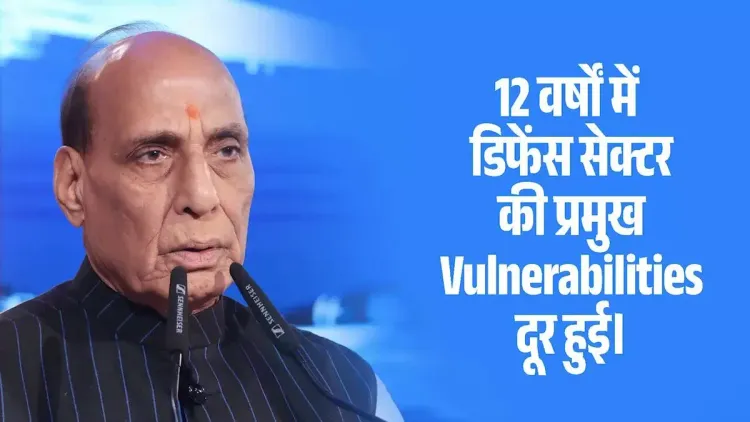
Union Defence Minister Rajnath Singh says strategic vulnerability today extends beyond borders to technology, energy and supply chains, and credits 12 years of policy effort — anchored by Make in India and Atmanirbhar Bharat — with strengthening India's defence preparedness and domestic manufacturing.
Key Takeaways
Defence Minister Rajnath Singh expanded the definition of strategic vulnerability to include technology, energy and supply-chain dependencies, not just territorial borders.
Singh credited 12 years of sustained policy — dating to 2014 — with addressing these vulnerabilities while building domestic defence manufacturing capacity.
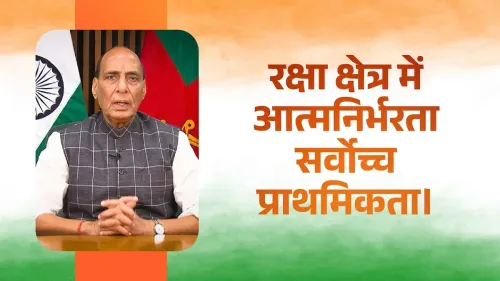
The Make in India programme ( September 2014 ) and Atmanirbhar Bharat Abhiyan ( May 2020 ) form the two main policy pillars behind India's defence indigenisation drive.
Successive negative import lists issued from 2020 onwards have progressively restricted foreign procurement of items India can produce domestically.
Singh's framing signals that New Delhi treats semiconductor, energy, and supply-chain security as first-order defence priorities alongside conventional military readiness.
The next measurable tests will be the Union Budget's defence allocation and any updates to the negative import list or the Defence Production and Export Promotion Policy targets.
Strategic vulnerability, Union Defence Minister Rajnath Singh declared on Sunday, September 27, 2026, is no longer a problem that stops at a border — it now runs through every circuit board, every fuel import, and every global supply chain that a modern military depends on. In a pointed post on X, Singh argued that India has spent the last 12 years systematically closing those gaps.
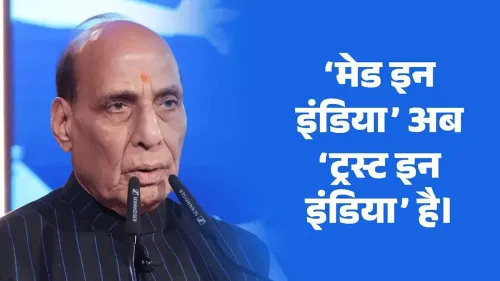
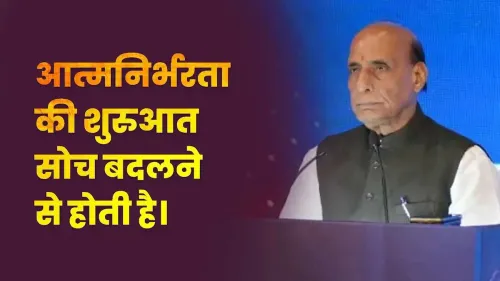
Singh's message, posted in Hindi, states: 'Today, strategic vulnerability is not confined only to borders, but extends to technology, energy and supply chains. Over the past 12 years, India has continuously strengthened its defence preparedness and domestic defence manufacturing alongside addressing these vulnerabilities.'
From borders to bytes: redefining what 'defence' means
The framing is deliberate and significant. For most of India's post-independence history, strategic vulnerability was measured in kilometres of contested frontier. Singh's formulation widens the aperture dramatically — a semiconductor chokepoint, a diesel import dependency, or a single-source component in a weapons platform now carries the same strategic weight as an unguarded mountain pass. It is a worldview shaped, in no small part, by the supply-chain fractures that global disruptions since 2020 exposed across every major military power.
12 years of indigenisation: the policy spine behind the claim
The 12-year window Singh cites traces back to September 2014, when the Make in India programme placed defence manufacturing at the heart of a broader industrial ambition. The architecture deepened in May 2020 with Atmanirbhar Bharat Abhiyan, which introduced dedicated indigenisation lists and explicit production targets for the armed forces — and backed them with successive negative import lists that progressively barred foreign procurement of items India can now make at home.
The logic of those lists is precisely the logic Singh articulated on Sunday: if a foreign supplier can cut you off, that dependency is a vulnerability. Denying that leverage to adversaries — whether in jet-engine alloys, drone electronics, or naval propulsion — is defence policy by another name. Domestic manufacturers and the three armed services have been the primary audience for, and beneficiaries of, that structural shift.
Why the message lands differently in 2026
Singh's post arrives against a backdrop of intensified global competition over critical minerals, semiconductor supply chains, and energy corridors — the very nodes he flags. India's parallel pushes in electronics manufacturing, battery supply chains, and strategic petroleum reserves are not separate stories; they are the same story told in different ministries. A Defence Minister linking them together is a signal that New Delhi increasingly treats economic and technological interdependence as a first-order security question, not an afterthought to conventional military readiness.
The next hard test of that thesis will come in the Union Budget's defence allocation and in any fresh additions to the negative import list — both of which will reveal how much the rhetoric of the last 12 years has been converted into durable, funded capability.
Point of View
He is making a bipartisan-resistant argument: the indigenisation architecture predates his tenure at South Block and has survived multiple budget cycles, lending it institutional weight. The timing also reads as a prelude to a harder push on the negative import list and defence export targets, both of which face an inflection point in the next budget cycle. Whether the claim holds up will depend less on the minister's rhetoric and more on whether domestic manufacturers can deliver on the specifications the armed forces actually need.
NationPress
27 Sept 2026
Frequently Asked Questions
What did Rajnath Singh say about strategic vulnerability in India?
Singh stated that strategic vulnerability is no longer limited to borders but now extends to technology, energy and supply chains, and that India has spent 12 years addressing these vulnerabilities while strengthening domestic defence manufacturing.
What is India's negative import list in defence?
India's negative import list is a series of notifications issued from 2020 onwards under the Atmanirbhar Bharat policy that bar defence procurement of specific items from foreign sources, pushing the armed forces to source them from Indian manufacturers instead.
What is the connection between Make in India and defence manufacturing?
Make in India, launched in September 2014, included defence production as a priority sector, laying the groundwork for subsequent indigenisation drives including the Atmanirbhar Bharat Abhiyan announced in 2020.
Why does Rajnath Singh say supply chains are a defence vulnerability?
A dependence on foreign suppliers for critical components — from electronics to propulsion systems — gives adversaries or disrupted global markets the power to cut off a military's equipment pipeline, making supply-chain security a strategic priority equivalent to border defence.
What is Atmanirbhar Bharat Abhiyan's role in Indian defence policy?
Atmanirbhar Bharat Abhiyan, announced in May 2020, set explicit targets for indigenous defence manufacturing, introduced negative import lists, and prioritised supply-chain self-reliance to reduce India's dependence on foreign defence equipment.