Rajnath Singh hails Make in India milestones in defence, semiconductors
Synopsis
Union Defence Minister Rajnath Singh on 4 July 2026 declared that Make in India has set new records, citing advances from semiconductor manufacturing to defence production as proof of India's strengthening global industrial identity.
Key Takeaways
Rajnath Singh on 4 July 2026 highlighted Make in India's achievements across semiconductors and defence production on X.
The Make in India initiative was launched in September 2014 with defence as one of 25 priority sectors .
The India Semiconductor Mission , approved in December 2021 , carries an outlay of Rs 76,000 crore to build domestic chip fabrication and assembly capacity.
Positive Indigenisation Lists notified from August 2020 onwards ban the import of specified defence items in a phased manner.
The Atmanirbhar Bharat campaign, launched May 2020 , made indigenisation of defence equipment an explicit national policy priority.
Singh's statement signals sustained Cabinet-level commitment to domestic defence and semiconductor manufacturing as strategic national goals.
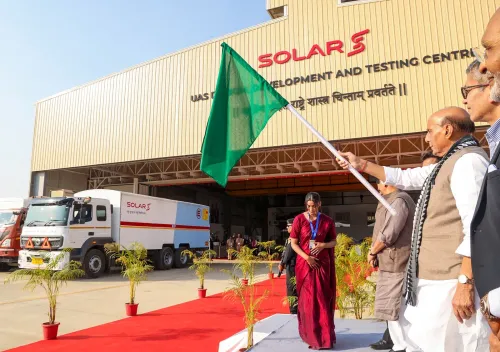
Union Defence Minister Rajnath Singh on Saturday, 4 July 2026, invoked the decade-long arc of India's manufacturing ambition, asserting that the Make in India initiative has set new benchmarks of success. Posting on X, he declared that sectors once questioned for their capability now stand as proof of India's rising global manufacturing stature — spanning semiconductors to defence production.
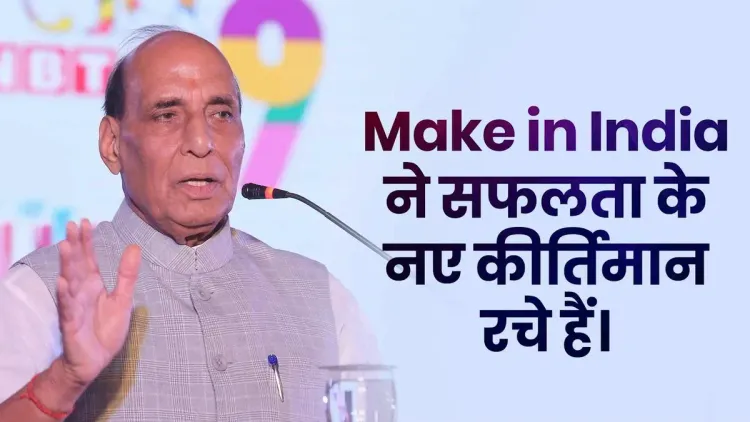
In his post, Singh wrote: 'मेक इन इंडिया' पहल ने सफलता के नए कीर्तिमान रचे हैं — 'The Make in India initiative has set new records of success.' He added that India is now 'writing a new chapter of its manufacturing capability on the global stage' in areas where its potential was once doubted, and that the country is 'strengthening its identity on the world stage with new achievements' from semiconductors to defence production.
Context
The Make in India programme was launched in September 2014 as a flagship initiative to position India as a global manufacturing hub across 25 priority sectors, with defence as a central pillar. Successive revisions to the Defence Procurement Procedure — in 2016 and 2020 — progressively tilted procurement rules in favour of domestically produced platforms and components.
The Atmanirbhar Bharat campaign, announced in May 2020, further intensified this push by making indigenisation of defence equipment an explicit national priority. The Ministry of Defence has since notified multiple Positive Indigenisation Lists from August 2020 onwards, placing a phased ban on the import of specified defence items and compelling the armed forces to source them domestically.
Policy Backdrop
On the semiconductor front, the India Semiconductor Mission was approved in December 2021 with an outlay of Rs 76,000 crore under the Ministry of Electronics and IT. The programme aims to build domestic capabilities in semiconductor design, fabrication, and assembly — a strategic gap that policymakers have flagged as critical to both civilian industry and defence electronics.
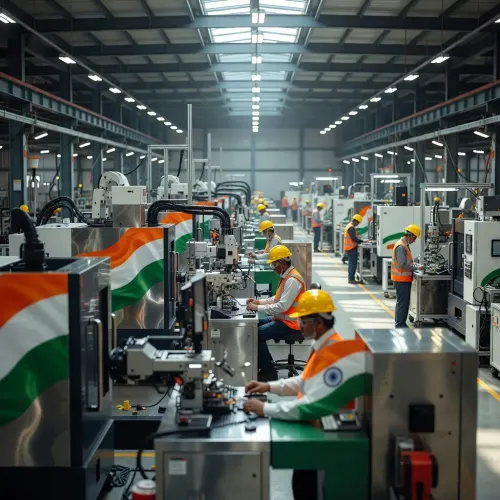
Singh's framing places semiconductors and defence production under a single narrative of industrial self-reliance, reflecting the government's view that strategic electronics and weapons platforms are two sides of the same Atmanirbhar Bharat coin. Production-linked incentive schemes across both sectors have sought to attract large-scale investment and reduce the country's historically high import dependence in these areas.
Stakeholders and Impact
The beneficiaries of this policy trajectory include domestic defence manufacturers, private and public-sector semiconductor firms, and the Indian armed forces, which have been directed to progressively source equipment from Indian industry. For the defence sector, indigenisation reduces foreign-exchange outflows and builds a domestic supply chain that can sustain platforms over their operational lifetimes.
For the broader economy, a credible semiconductor manufacturing base would reduce vulnerability to global supply-chain disruptions — a lesson underscored by chip shortages that affected automotive and electronics industries worldwide in the early 2020s. Singh's statement signals continued political commitment at the Cabinet level to see these programmes through to tangible industrial output.
What's Next
Attention will turn to the rollout timelines and investment announcements for approved semiconductor fabrication plants under the India Semiconductor Mission. Parliament is also expected to see updates on the next iteration of the Defence Production and Export Promotion Policy, which sets quantitative targets for domestic output and exports.
The Minister's post, coming on a Saturday, reads as a deliberate reaffirmation of the government's manufacturing narrative — one that is likely to intensify as India positions itself as an alternative global supply-chain node in both defence hardware and critical electronics in the years ahead.
Point of View
Linking two of its most politically visible programmes — Make in India and the India Semiconductor Mission — under a single arc of achievement. By invoking sectors 'where India's capability was once questioned,' he implicitly contrasts the present with the pre-2014 era, a rhetorical move that serves both policy communication and electoral positioning. The pairing of semiconductors with defence production is significant: it frames strategic electronics as an extension of national security, not merely an economic goal. This suggests the government intends to deepen institutional and budgetary linkages between the two domains in the near term.
NationPress
2 Oct 2026
Frequently Asked Questions
What is Make in India and what has it achieved in defence?
Make in India is a flagship government initiative launched in September 2014 to develop India as a global manufacturing hub across 25 sectors, with defence as a core focus. Achievements include successive Positive Indigenisation Lists that ban import of specified defence items and revised procurement rules favouring domestic industry.
What is the India Semiconductor Mission?
The India Semiconductor Mission is a government programme approved in December 2021 with an outlay of Rs 76,000 crore to build domestic semiconductor design, fabrication, and assembly capabilities under the Ministry of Electronics and IT.
What did Rajnath Singh say about Make in India on 4 July 2026?
Rajnath Singh posted on X that the Make in India initiative has set new records of success, stating that India is now writing a new chapter of its manufacturing capability on the global stage, from semiconductors to defence production.
What are Positive Indigenisation Lists in Indian defence?
Positive Indigenisation Lists are notifications issued by the Ministry of Defence from August 2020 onwards that place a phased ban on importing specified defence items, requiring the Indian armed forces to source them from domestic manufacturers instead.
How does Atmanirbhar Bharat relate to defence manufacturing?
Atmanirbhar Bharat, announced in May 2020, explicitly prioritised indigenisation of defence equipment and reduction of import dependence as part of a broader self-reliance campaign, complementing and accelerating the Make in India push in the defence sector.