Rajnath Singh: Defence self-reliance is India's new security doctrine
Synopsis
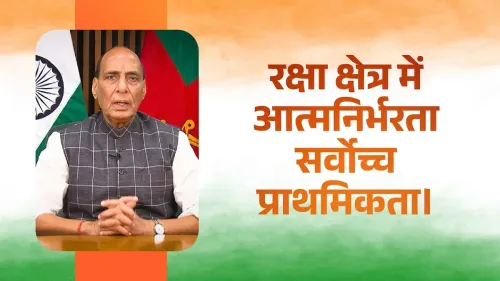
Union Defence Minister Rajnath Singh on 18 July 2026 declared that self-reliance in defence is India's new national security doctrine, marking the country's shift from dependency to domestic production and from consumer to producer of defence equipment.
Key Takeaways
Union Defence Minister Rajnath Singh posted on 18 July 2026 framing defence self-reliance as a national security doctrine, not just a manufacturing objective.
He described India's journey as moving from 'Dependency to Self-Reliance' and from 'Consumer to Producer' in the defence sector.
The statement aligns with Prime Minister Narendra Modi's Atmanirbhar Bharat initiative launched in May 2020 , which placed defence indigenisation at its core.
The Ministry of Defence issued successive Positive Indigenisation Lists between 2020 and 2023 , mandating domestic sourcing for hundreds of defence items.
The DRDO and an expanding private-sector base are central to building the 'robust Defence Ecosystem' Singh referenced.
Future milestones include updated indigenisation lists, defence budget allocations, and outcomes from events like DefExpo and Aero India .
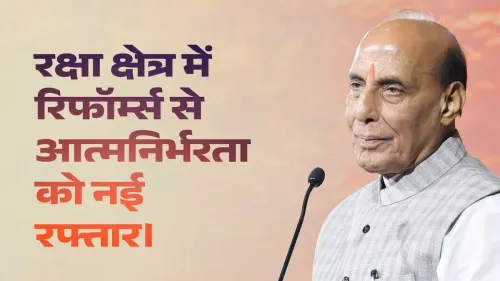
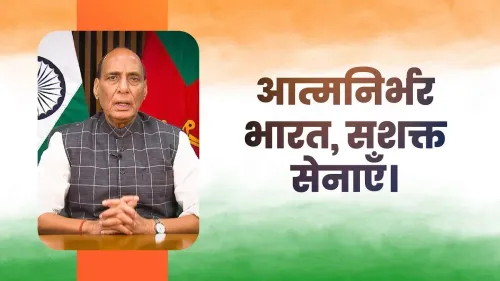
Union Defence Minister Rajnath Singh on Saturday, 18 July 2026, articulated a sweeping vision for India's defence sector, stating that self-reliance in defence is not merely a manufacturing goal but a fundamental reorientation of national security thinking. In a post on X, he underscored the country's ongoing transformation from a defence importer to a producer capable of meeting its own security requirements.
Context
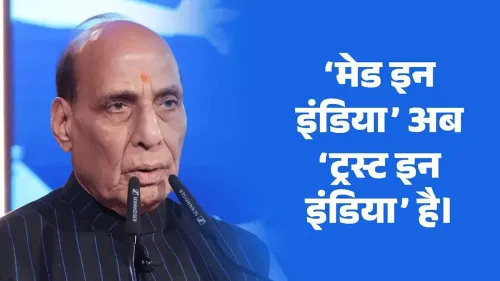
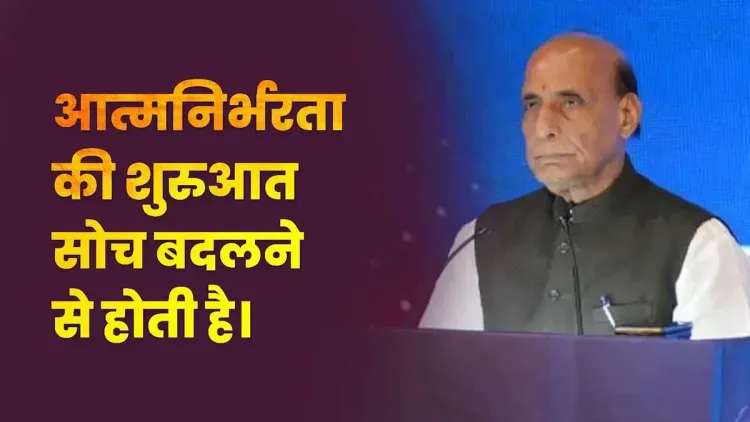
Singh's post, written in Hindi, states: 'Raksha kshetra mein atmanirbharta kewal hathiyar banane ka lakshya nahin, balki rashtriya suraksha ki nayi soch bhi hai' — 'Self-reliance in the defence sector is not merely the goal of manufacturing weapons, but also a new way of thinking about national security.' He added that this thinking has moved India from 'Dependency to Self-Reliance and from Consumer to Producer,' and that the country is now developing a robust Defence Ecosystem capable of fulfilling its own defence needs.
The statement is notable for framing indigenisation as a strategic doctrine rather than an industrial policy. By linking arms production to a broader national security philosophy, Singh elevates the conversation beyond procurement timelines and export figures.
Policy Backdrop
The ideological foundation Singh invokes traces directly to Prime Minister Narendra Modi's Atmanirbhar Bharat announcement in May 2020, which identified defence as a core pillar of domestic self-sufficiency. That initiative set in motion a series of structural reforms: the Ministry of Defence issued successive Positive Indigenisation Lists between 2020 and 2023, covering hundreds of defence items that can only be sourced domestically.
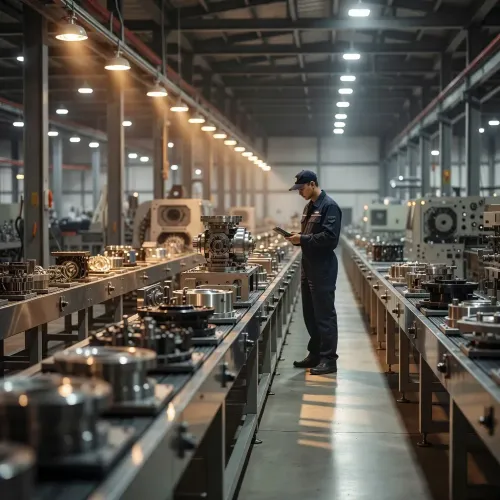
The Defence Research and Development Organisation (DRDO) has been central to this push, developing indigenous platforms ranging from missiles to advanced aircraft systems. Simultaneously, the government opened defence manufacturing to private-sector participation, aiming to build a competitive industrial base rather than relying solely on state-owned enterprises.
India's defence exports, negligible a decade ago, have grown substantially under this policy direction, with the government setting ambitious annual export targets as a marker of the 'Consumer to Producer' shift Singh referenced.
Stakeholders and Impact
The primary beneficiaries of this shift are the Indian Armed Forces — the Army, Navy, and Air Force — which serve as both end-users and demand drivers for domestic platforms. A self-sufficient defence ecosystem reduces operational dependence on foreign supply chains, a vulnerability that has historically constrained strategic decision-making.
The domestic defence industry — spanning public-sector undertakings, private manufacturers, and a growing base of MSMEs supplying components — stands to gain from sustained domestic procurement mandates. Foreign original equipment manufacturers (OEMs) with technology-transfer agreements are also stakeholders, as India's indigenisation push increasingly demands local production rather than outright imports.
What's Next
Observers will watch for the release of updated indigenisation lists, defence budget allocations directed at domestic procurement, and outcomes from major industry events such as DefExpo and Aero India. Singh's framing of self-reliance as a 'new security thinking' suggests the government may be preparing to articulate a more formal doctrine linking industrial policy to strategic autonomy.
As India deepens its defence manufacturing base, the question shifts from whether indigenisation is achievable to how quickly the ecosystem can mature to cover high-technology platforms — and whether export momentum can be sustained to make the domestic industry globally competitive.
Point of View
He connects factory-floor milestones to India's broader aspiration for strategic autonomy, a message aimed as much at domestic constituencies as at international partners and rivals. This kind of rhetorical consolidation typically precedes a policy announcement or a major industry event, suggesting the statement may be laying groundwork for a forthcoming initiative. It also reinforces the BJP's long-running effort to make defence manufacturing a visible marker of governance achievement ahead of any electoral or diplomatic moment.
NationPress
17 Oct 2026
Frequently Asked Questions
What did Rajnath Singh say about defence self-reliance?
Rajnath Singh said that self-reliance in the defence sector is not merely the goal of manufacturing weapons but a new way of thinking about national security, and that India is building a robust Defence Ecosystem to meet its own defence needs.
What is the Atmanirbhar Bharat initiative in defence?
Atmanirbhar Bharat is a Government of India initiative launched in May 2020 by Prime Minister Narendra Modi to promote domestic production across sectors, with defence as a core focus. In defence, it led to Positive Indigenisation Lists mandating domestic sourcing for hundreds of items.
How has India shifted from a defence importer to a producer?
India has reduced foreign arms imports through successive indigenisation lists, increased domestic R&D via DRDO, opened defence manufacturing to private players, and set targets for defence exports — moving from being primarily a consumer of foreign equipment to a domestic producer.
What is India's Positive Indigenisation List in defence?
The Positive Indigenisation List is a set of defence items that the Ministry of Defence has mandated must be sourced domestically rather than imported. Multiple such lists were issued between 2020 and 2023, covering hundreds of platforms, systems, and components.
What is the role of DRDO in India's defence self-reliance?
The Defence Research and Development Organisation (DRDO) is India's primary agency for indigenous defence technology, developing missiles, aircraft systems, and other platforms that reduce dependence on foreign suppliers and support the government's self-reliance goals.