Dr. Jitendra Singh: India ammo self-reliance hits 90% in 2026

Synopsis
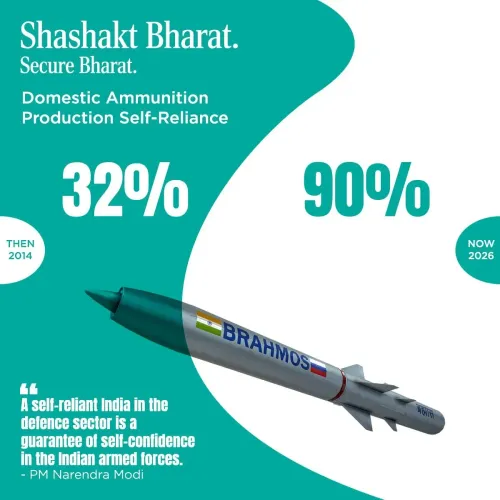
Union Minister Dr. Jitendra Singh says India's domestic ammunition production capability has leapt from 32 per cent in 2014 to 90 per cent in 2026, citing the milestone as proof of accelerating defence self-reliance under the #12YearsOfSurakshitBharat campaign.
Key Takeaways
Jitendra Singh posted on June 17, 2026 that domestic ammunition production capability has risen from 32% in 2014 to 90% in 2026 .
The post was made under the hashtag #12YearsOfSurakshitBharat , marking over a decade of the current government's defence policy.
India's first negative import list ( August 2020 ) banned 101 defence items , including ammunition categories, to spur domestic production.
The Union Budget 2022 earmarked 25 per cent of the defence capital procurement budget exclusively for domestic industry.
DRDO , ordnance factories and private manufacturers have collectively driven the expansion in indigenous ammunition capacity.
Official validation of the 90% figure is expected in the Ministry of Defence's 2025-26 annual report .
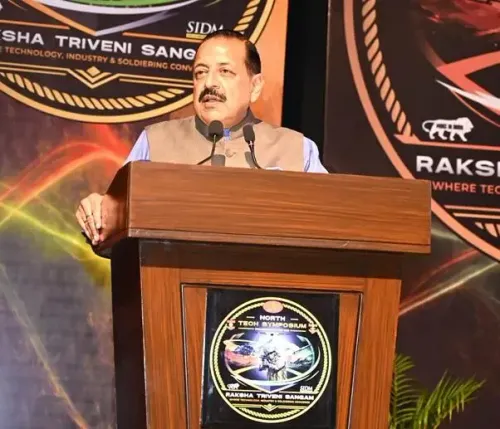
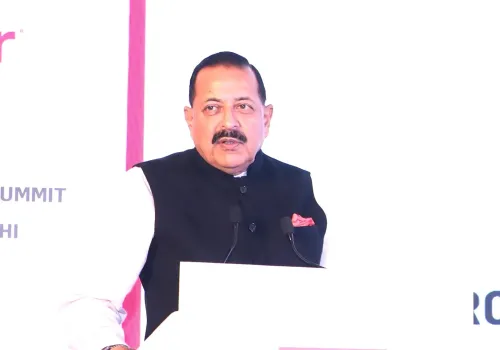
Union Science and Technology Minister Dr. Jitendra Singh on Wednesday, June 17, 2026, highlighted India's accelerating defence self-reliance, stating that domestic ammunition production capability has risen from 32 per cent in 2014 to 90 per cent in 2026 — a near-threefold jump that the minister linked to reduced import dependence and stronger operational readiness.
Context
Posting under the hashtag #12YearsOfSurakshitBharat (12 years of a secure India), Dr. Singh wrote: 'India's defence self-reliance journey has accelerated rapidly. Domestic ammunition production capability has risen from 32% in 2014 to 90% in 2026, strengthening operational readiness while reducing import dependence.' The post marks a milestone in the ruling dispensation's decade-plus narrative around defence indigenisation, with ammunition cited as a flagship success story.
Policy Backdrop
The figures cited by Dr. Singh sit within a well-documented policy arc. Defence Procurement Procedure 2016 introduced higher indigenous content thresholds, giving priority to locally designed and manufactured items. In August 2020, the Ministry of Defence issued its first negative import list banning 101 defence items — several of them in the ammunition category — explicitly to push domestic producers to fill the gap left by curtailed imports.
The Atmanirbhar Bharat initiative, launched in 2020, placed defence manufacturing at its core, and the Union Budget of March 2022 earmarked 25 per cent of the defence capital procurement budget exclusively for the domestic industry. Ammunition was an early focus area because of its high-volume consumption and comparatively lower technological barriers relative to complex platforms such as fighter aircraft or submarines.
The Defence Research and Development Organisation (DRDO) has played a central role in developing indigenous propellants, fuses and warhead technologies that underpin expanded production at ordnance factories and private defence manufacturers.
Stakeholders and Impact
The primary beneficiaries of this shift are the Indian Armed Forces, whose operational logistics become less vulnerable to global supply-chain disruptions or geopolitical pressure on import routes. Ordnance factories and Defence Public Sector Undertakings (DPSUs), alongside a growing cohort of private-sector manufacturers, have absorbed the production volumes previously sourced abroad.
A higher domestic share also has fiscal implications: foreign exchange outflows on ammunition procurement are reduced, and the manufacturing ecosystem generates employment and technology spillovers within India. Private players who entered the sector following liberalised licensing norms post-2014 stand to consolidate their position as long-term suppliers to the armed forces.
What's Next
Attention will now turn to the Ministry of Defence's 2025-26 annual report, which is expected to carry official production figures that will either corroborate or contextualise the numbers cited by Dr. Singh. Analysts and parliamentary committees are also watching for the next tranche of the negative import list, potential ammunition export orders that could validate India's production surplus, and any updates on stock-level adequacy across the three services.
If the 90 per cent figure is formally validated, it would represent one of the most significant shifts in India's defence supply chain since independence — and a strong data point for the government's broader Atmanirbhar Bharat pitch ahead of future procurement cycles.
Point of View
Anchoring the government's #12YearsOfSurakshitBharat messaging in a concrete, quantifiable metric rather than qualitative rhetoric. The jump from 32 per cent to 90 per cent in domestic ammunition capability — if officially validated — would be among the most cited statistics in India's defence indigenisation story, giving the ruling dispensation a durable talking point. The choice of ammunition, rather than more glamorous platforms, is strategically astute: it is the segment where indigenisation is most operationally consequential and most measurable. The post also signals that the government intends to use defence self-reliance as a sustained electoral and policy narrative well into the next procurement cycle.
NationPress
16 Sept 2026
Frequently Asked Questions
What is India's current domestic ammunition production capability?
According to Union Minister Dr. Jitendra Singh's post on June 17, 2026, India's domestic ammunition production capability stands at 90 per cent, up from 32 per cent in 2014.
What is #12YearsOfSurakshitBharat?
#12YearsOfSurakshitBharat — meaning '12 years of a secure India' — is a hashtag campaign marking over a decade of the current central government's governance, with a focus on national security and defence achievements.
What is the Atmanirbhar Bharat initiative in defence?
Atmanirbhar Bharat, launched in 2020, is India's self-reliance initiative that placed defence manufacturing at its core, including issuing negative import lists to ban procurement of certain items from abroad and pushing domestic producers to fill the gap.
What role does DRDO play in India's ammunition indigenisation?
The Defence Research and Development Organisation (DRDO) develops indigenous propellants, fuses and warhead technologies that ordnance factories and private manufacturers then produce at scale, underpinning India's growing domestic ammunition capacity.
What is India's negative import list for defence?
India's negative import list, first issued in August 2020, bans the import of specified defence items — including several ammunition categories — to compel the domestic industry to develop and manufacture them locally, reducing dependence on foreign suppliers.