UPI charges should not rise, says UP Minister Sanjay Nishad amid 0.4% MDR rollout
Synopsis
A BJP minister from Uttar Pradesh has publicly broken ranks to oppose the Centre's own UPI merchant charge policy — a rare intra-alliance dissent. With the 0.4% MDR framework set to kick in on 15 October, Sanjay Nishad's warning that democracy means reducing burdens, not adding them, puts political pressure on a policy that could reshape India's digital payments landscape.
Key Takeaways
UP Minister Sanjay Nishad publicly opposed the Centre's plan to levy a 0.4 per cent UPI charge on merchant transactions above ₹2,000 .
The new NPCI Merchant Discount Rate (MDR) framework is set to take effect from 15 October ; person-to-person UPI payments remain free.
Nishad warned the charge would add to consumer burden, invoking democratic principles of reducing public hardship.
The UP Cabinet has approved converting 14,429 primary schools into smart schools at a cost of ₹300 crore ; Nishad called for inclusion of economically weaker students.
Nishad also criticised Akhilesh Yadav's stance on the Uniform Civil Code , arguing equal rights under law are essential for social justice.
Uttar Pradesh Minister Sanjay Nishad on Wednesday voiced opposition to the Centre's move to introduce a 0.4 per cent charge on certain UPI merchant transactions exceeding ₹2,000, warning that the new levy would add to the financial burden on ordinary consumers. His remarks came as the National Payments Corporation of India (NPCI) confirmed the new Merchant Discount Rate (MDR) framework is set to take effect from 15 October.
The New UPI Charge Framework
Under the revised rules issued by the NPCI, a 0.4 per cent charge will apply to eligible consumer-to-merchant UPI transactions above ₹2,000. Crucially, person-to-person transfers will remain outside the new framework and will continue to be free of charge. The policy marks a significant shift from UPI's zero-MDR era, which had been credited with driving mass adoption of digital payments across India.
What Nishad Said
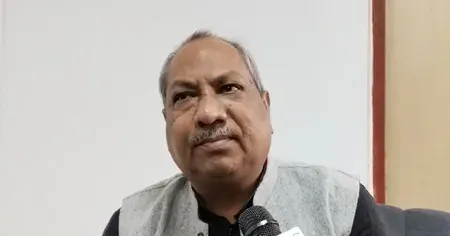
Speaking to reporters in Lucknow, Nishad said, 'Today, there are international issues, whether related to inflation or anything else. We feel that such charges should not be increased. Under what circumstances has it been increased? Since it affects customers and the public. Today, there is democracy in the world. Democracy always means reducing the burden, providing opportunities and facilities, and ensuring that people do not face any kind of hardship. Rather, democracy is the name of medicine for hardship.'
The minister's remarks are notable given that his party, the Bharatiya Janata Party (BJP), leads both the Uttar Pradesh state government and the Union government that oversees the payments policy — underscoring a rare instance of public intra-alliance dissent on a financial measure.
UP Smart Schools and Inclusive Education
Nishad also reacted to the Uttar Pradesh Cabinet's decision to convert 14,429 primary schools into smart schools at a cost of ₹300 crore. While welcoming the initiative in principle, he stressed that children from economically weaker sections must be genuine beneficiaries. 'A child born into a poor family should also study in a smart classroom, become smart and move forward,' he said, invoking the philosophy of Pandit Deendayal Upadhyaya.
Nishad on Akhilesh Yadav and the UCC
The minister also weighed in on Samajwadi Party chief Akhilesh Yadav assuming the presidency of the Lohia Trust, questioning whether trust — the literal meaning of the Hindi word 'Nyas' — was being upheld within Yadav's own political circle. 'If you do not have trust in your own blood relations, then what will you do with others?' Nishad said.
On Yadav's position regarding the Uniform Civil Code (UCC), Nishad argued that social justice could only be achieved through equal rights codified in law. 'The kind of advisers he has is the reason he is out of power today,' he said, adding that the Constitution's promise of social justice demanded a UCC.
What Happens Next
The new UPI MDR framework is scheduled to come into force on 15 October, and industry stakeholders are closely watching whether the government will respond to mounting pushback from consumer groups and politicians alike. With digital payments now deeply embedded in everyday commerce — particularly for small merchants and daily-wage earners — any increase in transaction costs could slow adoption gains that took years to build.
Point of View
Not just consumer-group noise. The zero-MDR model was a deliberate subsidy to drive digital adoption; reversing it now, when small merchants remain the backbone of UPI volume, risks penalising the very base that both the BJP and its allies depend on electorally. The government has not yet offered a clear rationale for why 15 October was chosen as the go-live date, nor has it detailed any relief mechanism for low-margin merchants. Without that, the optics of a charge on everyday transactions — however fractional — could become a liability heading into state election cycles.
NationPress
16 Sept 2026
Frequently Asked Questions
What is the new UPI charge announced by the Centre?
The Centre, through the NPCI, has introduced a 0.4 per cent Merchant Discount Rate (MDR) on UPI transactions made by consumers to merchants for amounts above ₹2,000. The framework takes effect from 15 October, while person-to-person UPI transfers remain free.
Why is UP Minister Sanjay Nishad opposing the UPI charge?
Nishad argues that increasing charges on digital transactions adds to the financial burden on consumers and the general public, which he says runs counter to democratic principles of reducing hardship. He made these remarks in Lucknow on Wednesday.
When will the new UPI MDR framework come into effect?
The new UPI Merchant Discount Rate framework issued by the NPCI is scheduled to come into effect on 15 October. Only consumer-to-merchant transactions above ₹2,000 will attract the 0.4 per cent charge.
What did Nishad say about the UP smart schools initiative?
Nishad welcomed the UP Cabinet's decision to convert 14,429 primary schools into smart schools at a cost of ₹300 crore, but stressed that children from economically weaker sections must equally benefit from the upgraded facilities.
What did Nishad say about Akhilesh Yadav and the Uniform Civil Code?
Nishad questioned the trustworthiness of Akhilesh Yadav's leadership after Yadav became president of the Lohia Trust, and argued that Yadav's opposition to the Uniform Civil Code reflected poor advice. He maintained that the UCC is essential for achieving constitutional social justice.