Raj Thackeray slams 0.4% UPI charge as 'digital trap' set for citizens
Synopsis
Raj Thackeray's attack on the UPI MDR isn't just opposition noise — he's backed it with a 2022 government screenshot that explicitly promised free UPI forever. By framing Demonetisation, UPI adoption, and the new 0.4% charge as a three-stage 'dependency trap', the MNS chief is putting consumer wallets at the centre of a politically charged debate that could embarrass the ruling coalition ahead of any merchant-facing rollout.
Key Takeaways
MNS chief Raj Thackeray on 19 September 2026 condemned the Central government's plan to levy a 0.4% MDR on UPI transactions above ₹2,000 .
Thackeray cited an official government post from 21 August 2022 that had explicitly promised UPI would remain completely free.
He rejected the government's claim that the charge falls only on merchants, warning businesses will pass the cost to consumers.
An additional 18% GST on top of the MDR drew separate criticism, with Thackeray accusing the Finance Ministry of excessive revenue extraction.
The MNS formally registered its protest and urged merchants, small business owners, and trade bodies across Maharashtra and India to resist the new levy.
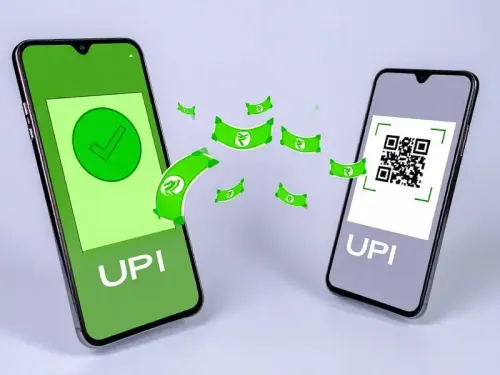
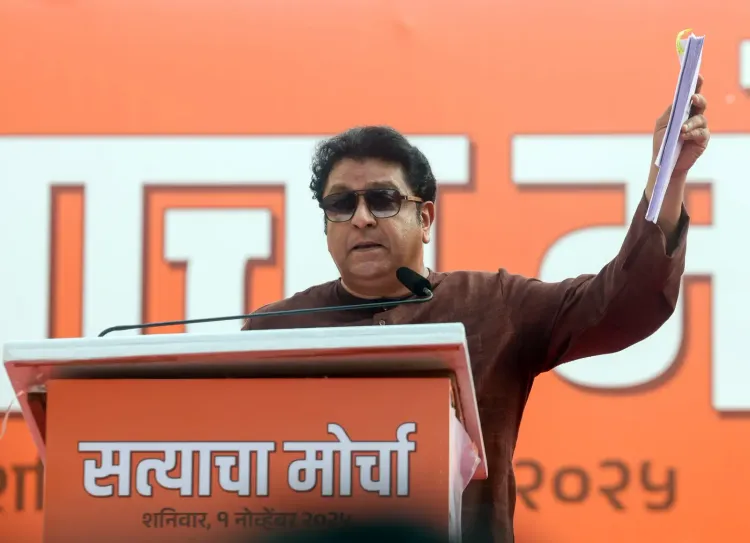
Maharashtra Navnirman Sena (MNS) chief Raj Thackeray on Saturday, 19 September 2026, launched a sharp political offensive against the Central government's decision to introduce a 0.4 per cent Merchant Discount Rate (MDR) on select Unified Payments Interface (UPI) transactions exceeding ₹2,000, alleging that the administration had deliberately lured Indian citizens into a 'digital trap' by first making services free and then quietly imposing fees once dependency was established.
The Allegation: A Planned Digital Dependency
In a detailed post on social media platform X, Raj Thackeray traced the origins of what he described as a calculated strategy — beginning with the 2016 Demonetisation and continuing through the nationwide promotion of UPI adoption. He argued that the trajectory was deliberately designed to make citizens reliant on digital payment infrastructure before levying charges.
'First came Demonetisation; then the UPI system was introduced with great fanfare to showcase the push for digital transactions. They trumpeted its success, basked in self-praise, got people habituated to it, and then suddenly announced that fees would apply. In short, they lulled citizens into a false sense of security and quietly ensnared them in a digital trap,' Thackeray said in his statement.
Thackeray's Key Charges Against the Government
Thackeray rejected the Union government's position that the 0.4 per cent MDR burden falls exclusively on merchants, asserting that no credible monitoring mechanism exists to prevent businesses — small or large — from passing the additional operational cost directly onto consumers. He warned that the charge would ultimately hit end users at the checkout counter.
He further criticised the levy of 18 per cent Goods and Services Tax (GST) on top of the MDR, accusing the Finance Ministry of attempting to 'dip into citizens' pockets wherever possible.' He also questioned why long-term budgetary provisions for system maintenance and cybersecurity were not established during the initial investment phase, if the stated intent was genuinely to simplify transactions.
The 2022 Government Promise: Free UPI Forever
In a pointed move, Raj Thackeray released a screenshot of an official government post dated 21 August 2022, which had explicitly promised that UPI services would remain completely free of charge. He cited the document as evidence of what he called 'unclear and non-transparent intentions,' drawing a direct contrast between the government's past assurances and the current policy shift.
He added that he had consistently warned the public not to assume zero-fee digital services would remain permanent, saying the government's process of 'coming knocking at your door' to collect revenues had now officially begun.
Foreign Influence and Opposition Allegations
Raising broader questions around the origins of the policy, Thackeray cited opposition allegations regarding alleged US pressure and asked whether foreign card corporations and global payment networks had influenced the MDR decision. He did not present independent evidence for this claim, framing it as a question demanding a government response.
MNS Calls Merchants to Resist
Raj Thackeray formally registered the MNS's protest against the MDR implementation and called upon the trading community, small business owners, and retail associations across Maharashtra and the rest of the country to take a unified stand against paying the new transaction levies. The statement positions the MNS squarely against both the ruling MahaYuti coalition at the state level and the Bharatiya Janata Party (BJP)-led government at the Centre on a consumer-facing economic issue that critics argue could accelerate a partial retreat from digital payments.
Point of View
Now contradicted by policy. The MDR rollout hands opposition voices ready-made ammunition: a screenshot that shows the state actively misled citizens about the permanence of free UPI. More structurally, the claim that merchants alone bear the MDR burden ignores elementary economics — pass-through costs are a near-certainty in thin-margin retail. If the government cannot credibly rebut the 2022 promise or guarantee consumer-level price protection, the 0.4% charge risks becoming a symbol of broken digital-era trust at exactly the moment India is trying to deepen financial inclusion.
NationPress
20 Sept 2026
Frequently Asked Questions
What is the 0.4% UPI MDR charge that Raj Thackeray is opposing?
The Central government has announced a 0.4 per cent Merchant Discount Rate (MDR) on select UPI transactions above ₹2,000. The charge is formally levied on merchants, though critics including Raj Thackeray argue it will inevitably be passed on to consumers.
What was the 2022 government promise on UPI charges?
An official government post dated 21 August 2022 explicitly stated that UPI services would remain completely free of charge. Raj Thackeray released a screenshot of this post on 19 September 2026 to contrast it with the current MDR decision, calling it evidence of 'unclear and non-transparent intentions'.
Why does Raj Thackeray call the UPI charge a 'digital trap'?
Thackeray argues that the government used Demonetisation in 2016 and subsequent UPI promotion to deliberately create citizen dependency on digital payments, only to impose fees once that dependency was entrenched. He describes this as a planned three-stage process designed to monetise a captive user base.
Will consumers directly pay the 0.4% MDR charge?
The government's position is that the MDR falls on merchants, not consumers. However, Raj Thackeray argues the government has no monitoring mechanism to stop merchants from passing the cost to buyers, meaning end users could effectively absorb the charge through higher prices.
What has the MNS called for in response to the UPI charges?
The Maharashtra Navnirman Sena (MNS) has formally registered its protest against the MDR and called on the trading community, small businesses, and retail associations across Maharashtra and India to collectively refuse to pay the new transaction levies.