UPI MDR hike threatens zero-MDR model, warns Telangana CM Revanth Reddy
Synopsis
India's zero-MDR UPI promise is under scrutiny. The Centre's order protects transactions up to ₹2,000 but is silent on higher-value payments — and since that 5% slice of volume drives 65% of UPI's total transaction value, Telangana CM Revanth Reddy and Congress leaders argue a backdoor fee on merchants will hit consumers hardest, and small businesses most of all.
Key Takeaways
Revanth Reddy on 15 September 2026 warned that an MDR hike on UPI transactions above ₹2,000 threatens India's zero-MDR model.
The Centre's directive exempts transactions up to ₹2,000 and RuPay debit card payments from MDR, but is silent on higher-value merchant transactions.
Transactions above ₹2,000 account for just 5% of UPI volume but nearly 65% of total UPI transaction value, according to Rahul Gandhi .
Congress president Mallikarjun Kharge accused the government of adding to the burden on inflation-hit consumers.
Gandhi alleged the policy shift reflects pressure from American payment companies that have long opposed India's zero-MDR framework.
No government clarification on MDR for transactions above ₹2,000 had been issued as of Tuesday.
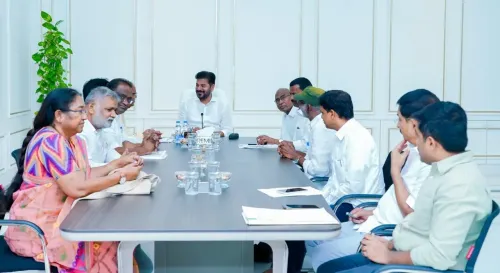
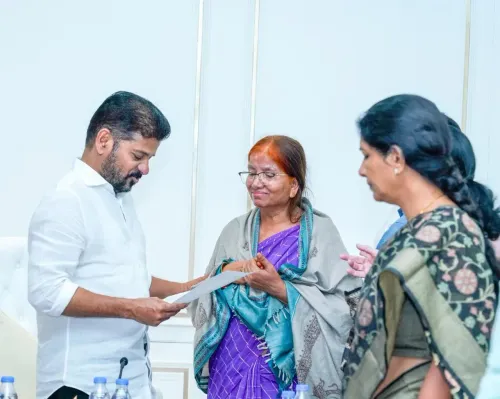
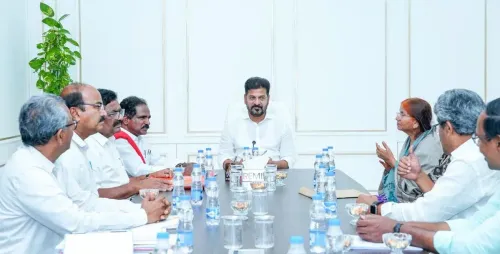
Telangana Chief Minister A. Revanth Reddy on Tuesday, 15 September 2026, warned that a proposed increase in the Merchant Discount Rate (MDR) on UPI transactions above ₹2,000 poses a direct threat to India's zero-MDR digital payment model. The Chief Minister's remarks, posted on X, came a day after the Centre directed banks and payment system providers not to levy charges on UPI transactions up to ₹2,000 or on payments made through RuPay debit cards — a carve-out that, critics argue, implicitly opens the door to fees on higher-value transactions.
What Revanth Reddy Said
'The BJP Government may claim that customers will not be charged directly. But if merchants are forced to pay, the cost will ultimately be passed on to the common consumer through higher prices,' the Chief Minister stated in his post. He called any MDR increase 'nothing but an indirect tax imposed by the Central Government on common people every day' and demanded a 'permanent commitment' to protecting all UPI transactions from MDR. 'Keep UPI ZERO-MDR,' he added.
Revanth Reddy also echoed the position of Leader of Opposition in the Lok Sabha, Rahul Gandhi, who alleged that the Modi government has 'quietly opened the door to imposing fees on UPI.'
Why the ₹2,000 Threshold Matters
According to Rahul Gandhi, while transactions above ₹2,000 account for just 5% of UPI's total volume, they represent nearly 65% of its total transaction value. This means that even a limited MDR levied on this segment could have an outsized financial impact on merchants — costs that, critics argue, will inevitably filter through to retail prices. 'Added to prices, straight out of the customer's pocket,' Gandhi stated.
Congress Leaders Escalate Attack
Indian National Congress (INC) president Mallikarjun Kharge alleged that the government is 'searching for a new way every day to rob the pockets' of an inflation-burdened public, rather than offering relief. Gandhi went further, accusing Prime Minister Modi of yielding to foreign commercial pressure: 'American payment companies have long opposed India's zero-MDR policy. Now, the Modi government has opened the path to changing the policy in exactly that direction,' he said, drawing a parallel to what he described as concessions in the US Trade Deal.
What the Government Order Actually Says
The Centre's directive explicitly protects transactions up to ₹2,000 and RuPay debit card payments from any MDR levy. The government has maintained that customers will not be charged directly. However, the order is silent on MDR applicability for merchant transactions exceeding the ₹2,000 threshold, which is the crux of the Opposition's concern. No official clarification has been issued on that specific question as of Tuesday.
What Comes Next
The controversy places pressure on the Centre to issue explicit policy guidance covering all UPI transaction bands. With UPI now processing transactions worth hundreds of lakh crore annually and serving as the backbone of India's retail payment ecosystem, any ambiguity in MDR policy carries wide economic consequences — for small businesses, consumers, and the broader digital payments growth story that India has championed globally.
Point of View
000 UPI transactions from MDR is politically astute but economically incomplete. By ring-fencing low-value payments while leaving the high-value segment — which drives nearly two-thirds of UPI's transaction value — in a grey zone, the Centre has handed the Opposition a credible grievance. The irony is that India's zero-MDR model was itself a policy intervention to outcompete Visa and Mastercard; now, critics allege it is being quietly unwound under pressure from the very foreign players it was designed to displace. The real casualty, if MDR creeps in, will be the small merchant who adopted UPI on the promise of no cost — a constituency neither the government nor the Opposition can afford to alienate.
NationPress
15 Sept 2026
Frequently Asked Questions
What is MDR and why does it matter for UPI?
MDR, or Merchant Discount Rate, is a fee charged to merchants for processing digital transactions. India adopted a zero-MDR policy for UPI and RuPay in 2020 to drive adoption; any rollback would raise costs for merchants, who may pass them on to consumers.
What exactly has the government announced on UPI fees?
The Centre has directed banks and payment system providers not to levy charges on UPI transactions up to ₹2,000 or on RuPay debit card payments. The order does not address MDR applicability on merchant UPI transactions above ₹2,000, which is the focus of Opposition concern.
Why is the ₹2,000 threshold significant?
According to Rahul Gandhi, transactions above ₹2,000 represent only 5% of UPI's total volume but account for nearly 65% of its total transaction value. An MDR on this segment alone would therefore affect a disproportionately large share of the money flowing through India's UPI ecosystem.
What has Telangana CM Revanth Reddy demanded?
Revanth Reddy has called for immediate policy clarity on UPI and a permanent commitment to keeping all UPI transactions free of MDR. He specifically demanded that the government 'Keep UPI ZERO-MDR' without any threshold-based exceptions.
Has the Congress linked this to foreign pressure on India?
Yes. Rahul Gandhi alleged that American payment companies have long opposed India's zero-MDR policy and that the Modi government is now changing course in response to that pressure, drawing a parallel to what he characterised as concessions made in the US Trade Deal.