CM Revanth Reddy Vows Full Paddy Procurement, Musi Rehab
Synopsis
Chief Minister Revanth Reddy assured a CPM delegation on 25 May 2026 that Telangana is procuring all farmer-grown grain, paying a Rs 500 bonus on fine paddy, and will house Musi project-displaced families locally, while also outlining education and river rejuvenation plans.
Key Takeaways
Telangana is procuring all farmer-grown paddy and maize, paying a Rs 500 bonus over MSP for fine-variety paddy.
CM Revanth Reddy said the Centre is procuring less than 30 per cent of the state's harvest despite announcing support prices.
A shortage of hamalis was attributed to their migration to West Bengal for assembly election-related work, and heat is slowing afternoon procurement.
All families displaced by the Musi River Rejuvenation Project will be rehabilitated at local sites; the project is also expected to generate youth employment and boost tourism.
Musi pollution is described as a life-and-death crisis for Nalgonda district residents downstream.
The state is setting up Telangana Public Schools and providing quality meals to students as part of a government education overhaul.
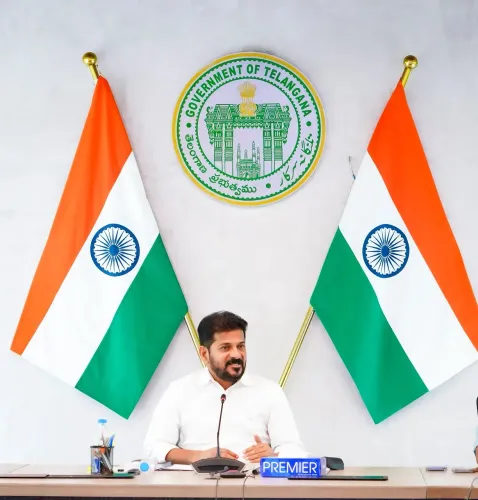
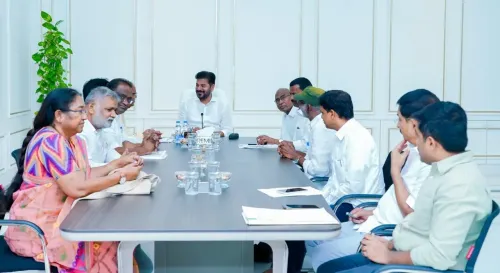
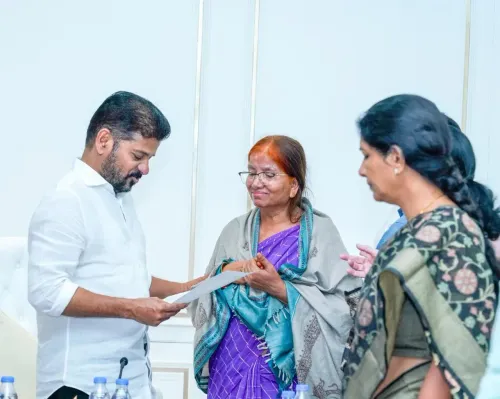
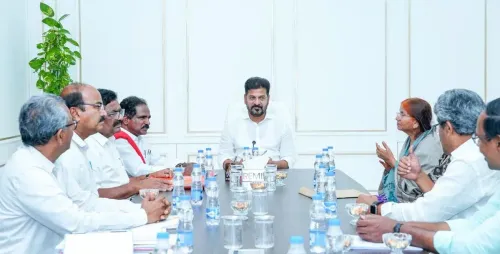
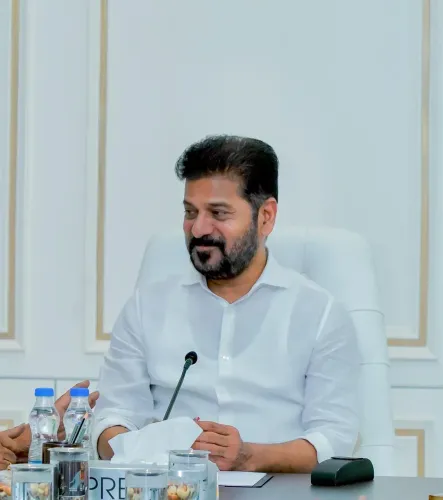
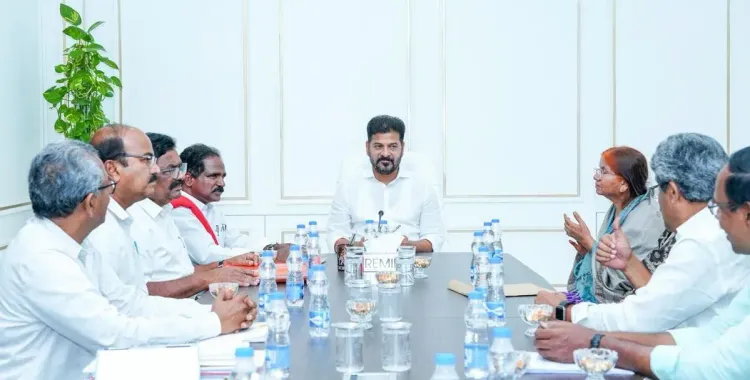
Chief Minister A. Revanth Reddy on Monday, 25 May 2026, assured that the Telangana government is purchasing every grain grown by farmers in the state, while also pledging local rehabilitation for all Musi River project-displaced residents. The assurances came during a meeting with a CPM Telangana delegation led by state secretary John Wesley at the Dr BR Ambedkar State Secretariat, Hyderabad.
Context
The CPM delegation called on the Chief Minister primarily to thank him for the long-pending revision of minimum wages for unorganised workers — a decision the party described as overdue. During the meeting, Revanth Reddy fielded a range of policy questions spanning paddy procurement, the Musi rejuvenation project, and government school reforms.
The meeting was attended by CPM leaders including former MLA Julakanti Rangareddy, P. Sudarshan, Jyothi, Nunna Nageswara Rao, Mallu Lakshmi, Samineni Swarajyam, M. Gopal Rao, and Rajya Sabha member Vem Narender Reddy.
Policy Backdrop
On paddy procurement, the Chief Minister stated that the Centre is not buying crops in the state and is not even procuring 30 per cent of the harvest despite announcing support prices. He said the state government is filling this gap and is conducting continuous reviews of grain purchases. A bonus of Rs 500 per quintal is being paid over and above the support price for fine-variety paddy (sanna vadlu), and maize is being purchased at the minimum support price.
He attributed a temporary shortage of hamalis (grain handlers) to their movement toward West Bengal ahead of assembly elections there, and noted that afternoon work has slowed due to summer heat. Telangana's shift to active direct procurement contrasts with the income-support model that preceded the current Congress government, and mirrors a recurring centre-state friction in rice-growing regions where state agencies step in when central procurement falls short.
Musi Rejuvenation and Displaced Residents
Addressing concerns about families displaced by the Musi River Rejuvenation Project, Revanth Reddy said no displaced person needs to worry, as housing will be provided at local sites itself. He urged political parties not to play politics over the issue. The Chief Minister described Musi pollution as a 'life-and-death problem' (jeevanmarana samasya) for the people of Nalgonda district downstream, and said the rejuvenation project will not only improve urban living standards in Hyderabad but also generate employment for youth.
The Musi rejuvenation initiative draws on a lineage of riverfront development proposals dating back to earlier Hyderabad Metropolitan Development Authority plans, but the current project adds a stronger emphasis on pollution abatement, local employment, and tourism — echoing the national model of river-cleaning drives elsewhere in India.
Education Reforms and What's Next
The Chief Minister also briefed the delegation on the state's push to overhaul public education, saying the government is providing quality breakfasts and mid-day meals to students as part of broader school improvement efforts. He announced the establishment of Telangana Public Schools and invited CPM leaders to visit the Arutla school as a model of the initiative.
Going forward, the key indicators to watch are whether state paddy and maize procurement reaches its seasonal targets, how the Musi project's land acquisition and pollution abatement works progress, and whether the revised minimum wage notifications translate into on-ground enforcement for unorganised workers across Telangana.
Point of View
Revanth Reddy is sharpening a centre-state contrast that has become a standard Congress playbook in non-BJP-ruled states. The Musi rehabilitation pledge, delivered directly to a Left audience, is also a pre-emptive move to neutralise opposition to a high-visibility urban project that carries displacement risks. Together, these positions suggest the government is trying to hold together a broad base stretching from Hyderabad's urban poor to paddy farmers in the delta districts.
NationPress
16 Oct 2026
Frequently Asked Questions
Is Telangana government buying all paddy from farmers in 2026?
Chief Minister Revanth Reddy stated on 25 May 2026 that the Telangana government is purchasing every grain grown by farmers in the state, and is conducting continuous reviews of procurement. He said the Centre is procuring less than 30 per cent of the harvest despite announcing support prices, leaving the state to fill the gap.
What is the bonus on fine paddy in Telangana?
The Telangana government is paying a bonus of Rs 500 per quintal over and above the minimum support price for fine-variety paddy, according to CM Revanth Reddy's statement on 25 May 2026.
Will Musi River project displaced families get houses nearby?
CM Revanth Reddy assured that all families displaced by the Musi River Rejuvenation Project will be provided housing at local sites itself, and urged political parties not to politicise the matter.
Why did CPM delegation meet CM Revanth Reddy?
The CPM Telangana delegation led by state secretary John Wesley met the Chief Minister primarily to thank him for revising minimum wages for unorganised workers, a decision that had been pending for several years. The meeting also covered paddy procurement, Musi rehabilitation, and education reforms.
What are Telangana Public Schools?
Telangana Public Schools are a state initiative to upgrade government schools with improved facilities, quality meals, and better learning standards. CM Revanth Reddy invited CPM leaders to visit the Arutla school as a model of the programme.