US visa curbs target far-left groups; Rubio hosts 60-nation ministerial
Synopsis
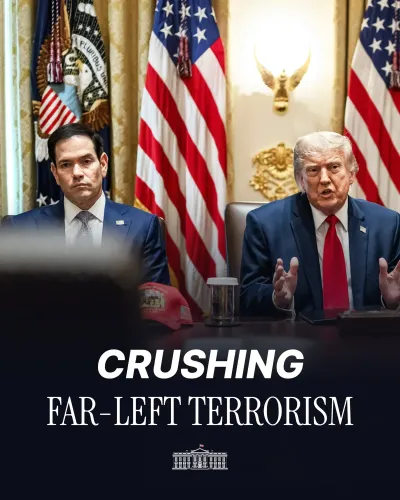
The Trump administration has redrawn its counterterrorism map — placing far-left networks at the centre. With visa bans, up to $10 million bounties, four new Foreign Terrorist Organization designations, and a 60-nation ministerial, Washington is building an international coalition around a threat framing that breaks sharply from the post-9/11 consensus.
Key Takeaways
The Trump administration announced visa restrictions on 17 July barring foreign nationals linked to far-left terrorist and aligned groups from entering the United States .
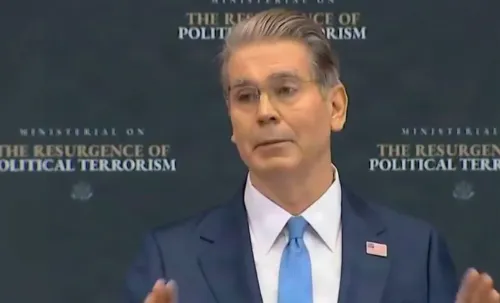
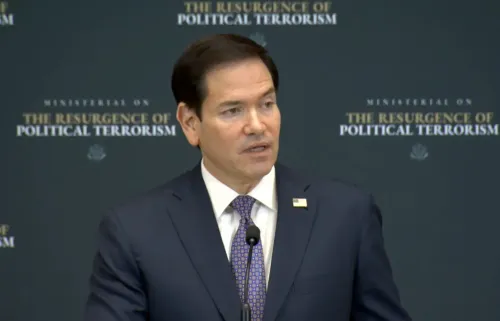
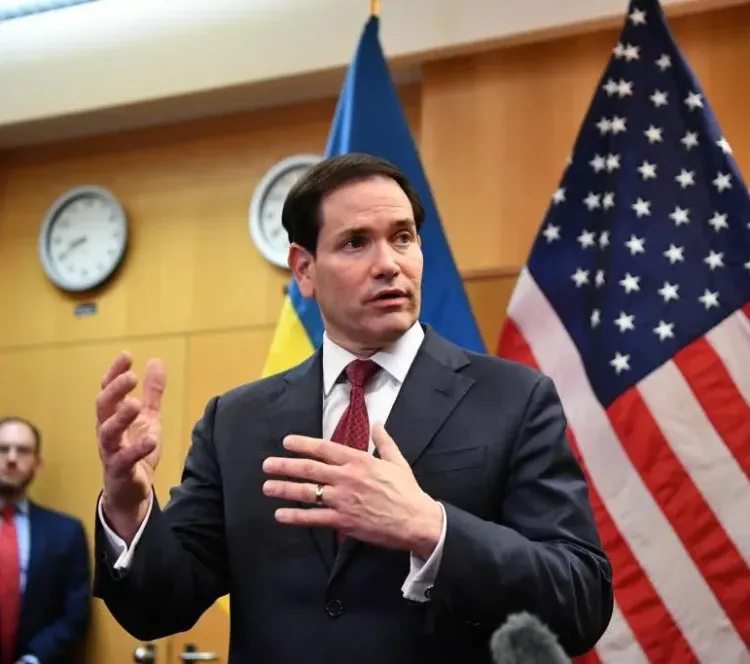
Secretary of State Marco Rubio hosted a Ministerial on the Resurgence of Political Terrorism with representatives from more than 60 countries .
The US has designated four violent far-left groups as Foreign Terrorist Organizations and offered up to $10 million via Rewards for Justice for information disrupting their financing.
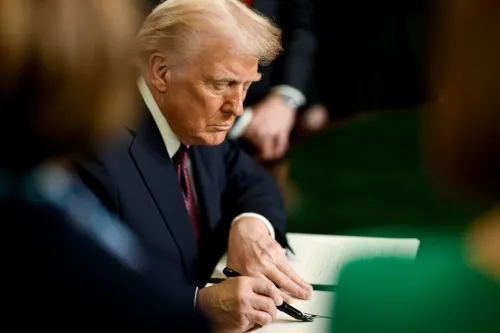
National Security Presidential Memorandum-7 directs all US law enforcement and intelligence agencies to jointly pursue far-left political terrorists.
Treasury Secretary Scott Bessent said financial sanctions and anti-money laundering tools will target funding networks, acting on conduct rather than political beliefs.
The State Department claims far-left anti-government terrorism now accounts for more US attacks and plots than any other ideological category.
Secretary of State Marco Rubio on 17 July announced sweeping new visa restrictions targeting foreign nationals linked to far-left terrorist networks, as the Trump administration hosted a Ministerial on the Resurgence of Political Terrorism in Washington with representatives from more than 60 countries. The move marks the administration's most coordinated international push yet against what it describes as a growing transnational far-left extremist threat.
What the Visa Policy Covers
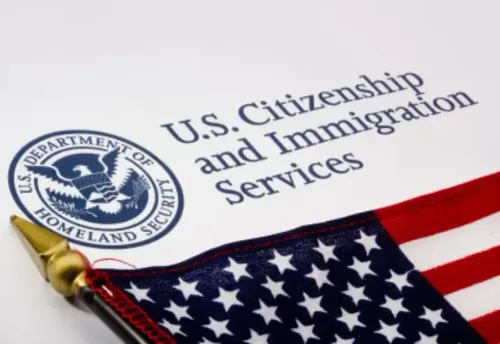
Under the new policy, the United States will restrict entry of foreign nationals who have 'supported or incited acts of terrorism; supported violent criminal activity; participated in economic sabotage; financed, recruited, or provided logistical support for violent or criminal actions committed by Far-Left Terrorist and other aligned groups; and/or facilitated the convergence of Far-Left Terrorist and other aligned networks for the purposes of violent action,' according to a State Department statement.
The measures are being implemented under Section 212(a)(3)(C) of the Immigration and Nationality Act. Rubio said the restrictions were aimed at 'safeguard[ing] the American homeland by restricting entry of foreign nationals who finance, recruit, incite, or otherwise enable terrorist, violent, and criminal Far-Left Terrorist networks.'
What the Administration Said
Opening the ministerial, Rubio argued that counterterrorism doctrine had long carried a 'blind spot when it comes to extremist violence from the political left.' He said, 'We can — and we must — identify and map this threat and rebuild our counterterrorism architecture to defeat it.'
Rubio confirmed that the administration had already designated four violent far-left groups as Foreign Terrorist Organizations and announced Rewards for Justice offers of up to $10 million for information disrupting their financing. 'There will be more designations soon,' he added.
White House Deputy Chief of Staff Stephen Miller said President Donald Trump's National Security Presidential Memorandum-7 had, for the first time, directed all US law enforcement and intelligence agencies 'to work together to disrupt, identify, defund, debank, arrest, and prosecute these political terrorists.'
Treasury Secretary Scott Bessent said the Treasury Department would deploy financial sanctions and anti-money laundering tools to target funding networks supporting political terrorism, acting on 'suspected unlawful conduct' rather than political beliefs.
Scale of the Threat, According to the Administration
A State Department fact sheet states that the administration believes far-left anti-government terrorism now accounts for more attacks and plots in the United States than any other ideological category — a claim that represents a significant reframing of the domestic threat landscape. Governments at the ministerial were urged to improve information sharing, restrict terrorist travel, and strengthen international cooperation against transnational extremist networks.
International Dimension
The ministerial brought together governments from the Western Hemisphere, Europe, and Asia, signalling Washington's intent to build a multilateral coalition around its expanded counterterrorism framing. The gathering focused on expanding coordination, strengthening intelligence sharing, and enhancing law enforcement cooperation — tools the administration says are essential to disrupting what it characterises as cross-border far-left organising.
The initiative reflects the Trump administration's broader emphasis on combating politically motivated violence through immigration enforcement, financial measures, and international coalition-building. How partner governments respond to the administration's ideological framing of the threat is expected to shape the durability of this coalition.
Point of View
Drawn from immigration law rather than a new legislative mandate, gives the executive branch broad discretionary power with limited judicial review. The 60-nation ministerial signals that Washington wants allies to adopt its threat framing, but governments in Europe and Asia have historically been cautious about conflating protest movements with terrorism. The durability of this coalition will depend on whether partner countries accept that framing — or merely attend the meetings.
NationPress
17 Jul 2026
Frequently Asked Questions
What are the new US visa restrictions on far-left groups?
The Trump administration announced on 17 July that foreign nationals who have supported, financed, recruited for, or facilitated far-left terrorist and aligned groups will be barred from entering the United States. The restrictions are implemented under Section 212(a)(3)(C) of the Immigration and Nationality Act.
Which far-left groups has the US designated as Foreign Terrorist Organizations?
The State Department confirmed that four violent far-left groups have been designated as Foreign Terrorist Organizations, with Secretary Rubio stating that more designations are forthcoming. The specific group names were not detailed in the administration's public statement.
What is the Ministerial on the Resurgence of Political Terrorism?
It is a State Department-hosted international conference held on 17 July in Washington, attended by representatives from more than 60 countries across the Western Hemisphere, Europe, and Asia. Its stated goals are expanding counterterrorism coordination, strengthening intelligence sharing, and enhancing law enforcement cooperation against transnational far-left extremist networks.
What financial measures is the US deploying against far-left networks?
Treasury Secretary Scott Bessent said the Treasury Department will use financial sanctions and anti-money laundering tools to target funding networks supporting political terrorism. He specified that action will be based on 'suspected unlawful conduct' rather than political beliefs.
What is National Security Presidential Memorandum-7?
It is a directive signed by President Donald Trump that, according to White House Deputy Chief of Staff Stephen Miller, for the first time instructs all US law enforcement and intelligence agencies to jointly work to disrupt, identify, defund, debank, arrest, and prosecute what the administration calls far-left political terrorists.